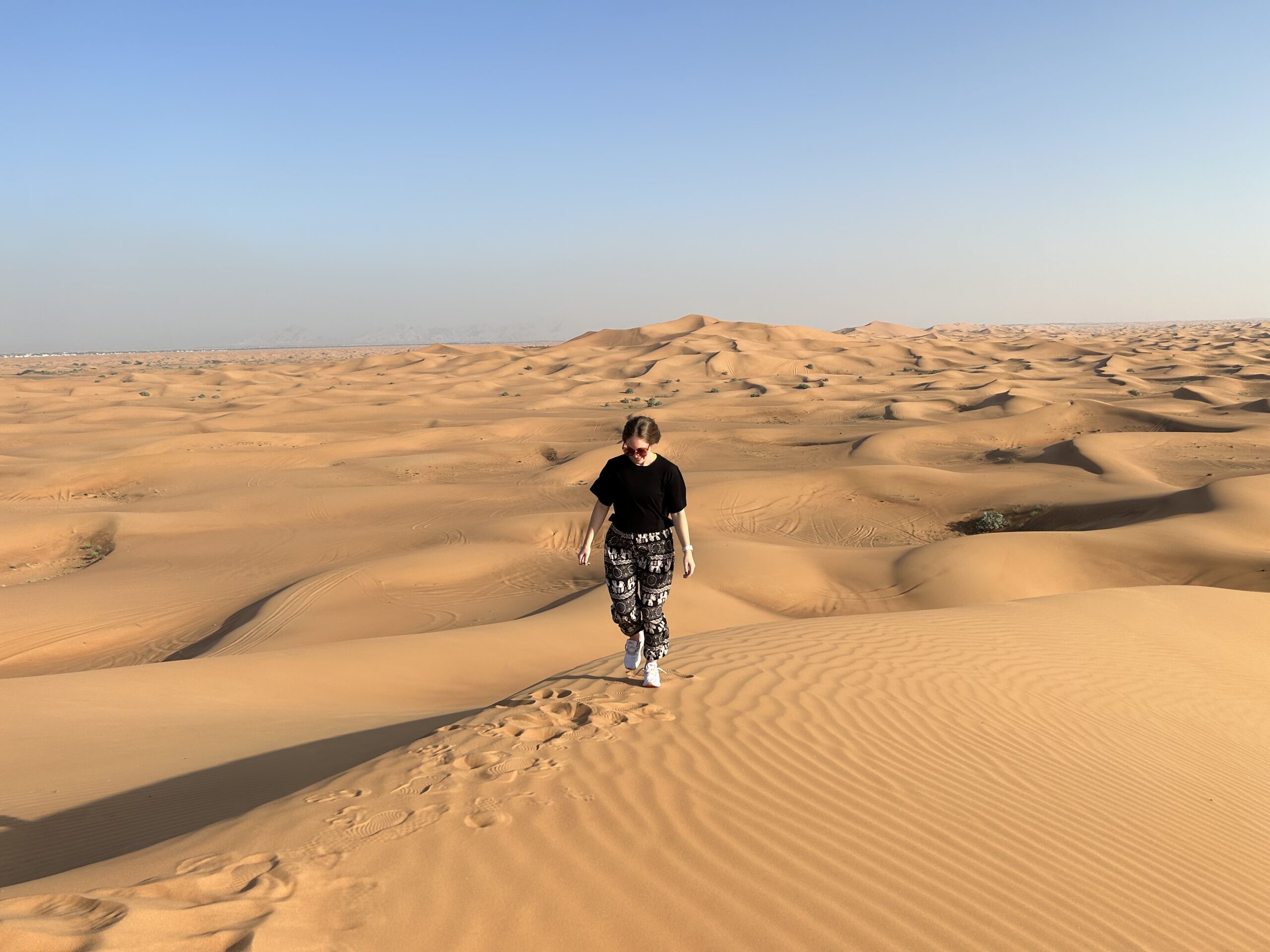
Points Miles and Bling (blog) contains referral or affiliate links. The blog receives a small commission at no additional cost to you. Thank you for your continued support. Credit Card issuers are not responsible for maintaining or monitoring the accuracy of information on this website. For full details, current product information, and Terms and Conditions, click the link included.
Over the last three years on five separate trips, I’ve visited nine countries across the Middle East: Bahrain, Egypt, Jordan, Kuwait, Lebanon, Oman, Qatar, Saudi Arabia, and the UAE.

Great Pyramids of Giza in Cairo, Egypt (Feb 2023)
Before my first trip, I did an enormous amount of research to better understand cultural norms, especially around dress and behaviour. I knew expectations varied from country to country but I wanted to understand the specifics of each place. I read countless travel blogs, consulted apps like International SOS, and watched hours of YouTube videos. Still, like most things in life, I learned the most through lived experience once I was actually there.

Beirut, Lebanon (Oct 2022)
Clothing
This was the biggest adjustment. The Middle East is extremely hot, with temperatures regularly hovering between 35 and 45°C during my travels. At the same time, women are expected to dress modestly in most places. Finding clothing that balanced breathability with full coverage took some trial and error.
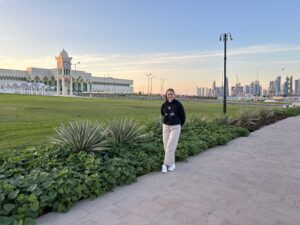
Doha, Qatar (Feb 2024)
The places where I needed to dress most conservatively were Kuwait, Oman, Saudi Arabia, and Abu Dhabi. In these destinations, I made sure my shoulders were covered, with sleeves reaching my wrists and pants that were flowy and ankle length. I mostly wore long-sleeve, full-length dresses or loose pants paired with lightweight tops.
Jeddah, Saudi Arabia (Feb 2024)
In Saudi, although it’s no longer legally required for women to be fully covered, I wore an abaya daily because that’s what most women did, including my Canadian colleagues. On one occasion in a restaurant in Riyadh, I removed my abaya, exposing my arms, and immediately felt uncomfortable as attention shifted toward me. While I’ve heard from other women who felt perfectly fine dressing more freely in Saudi, my experience reinforced that context matters. Just because something is allowed doesn’t always mean it’s advisable, depending on where you are and the environment you’re in.

Sharjah, UAE (Mar 2023)
Dubai and Lebanon felt the most relaxed in terms of dress. Outside of work, I truly felt free to wear whatever I wanted – shorts, tank tops, or shorter dresses – without drawing attention. I saw lots of other women dressed like that. You could even wear the same thing in both Miami and Dubai’s touristy areas.
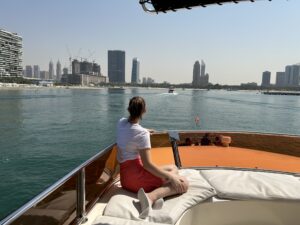
Boat Tour in Dubai, UAE (Oct 2022)
Then there were the places in between: Bahrain, Egypt, Jordan, and Qatar. Qatar is quite westernized, and Jordan feels relatively relaxed. In Bahrain and Egypt, I likely could have dressed less modestly, but for my own comfort, I chose to follow what most local women were wearing, which was closer to full coverage. These countries aren’t nearly as westernized as Qatar or the UAE, but they’re far less strict than Saudi or Kuwait.
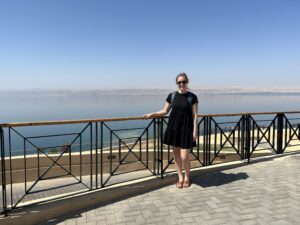
The Dead Sea in Jordan (Sept 2023)
I never had to cover my hair, except when visiting religious sites. The only time this was required was at the Sheikh Zayed Grand Mosque in Abu Dhabi, where all women must cover their hair and wear full-length clothing. I wore an abaya and headscarf. One important tip: dress lightly underneath…it gets very hot.
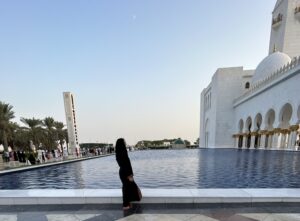
Sheikh Zayed Grand Mosque in Abu Dhabi, UAE (Sept 2023)
After a lot of trial and error, my biggest practical takeaway was this: affordable, breathable clothing matters more than anything else. I found some of my best options at Old Navy, where I picked up several lightweight, full-length dresses that were both modest and comfortable in extreme heat. Linen became my best friend – it’s breathable, forgiving, and far more wearable in high temperatures. Polyester and heavier fabrics, no matter how stylish or modest they looked, were simply unbearable.
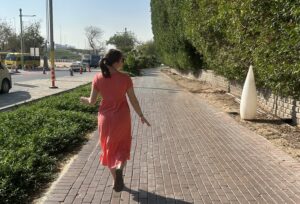
Dubai, UAE (Feb 2024)
Cultural Norms
One cultural difference that stood out to me early on was greeting etiquette, particularly in professional settings. I was raised to believe that a firm handshake is standard in business, but in much of the Middle East, it is not culturally appropriate for a man to initiate a handshake with a woman. Instead, the woman must extend her hand first. Once I learned this, I took the lead and initiated handshakes when appropriate.
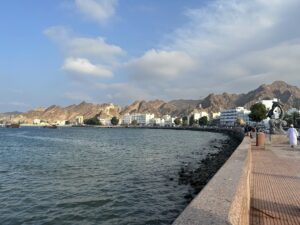
Muscat, Oman (Mar 2023)
Safety
Before my first trip especially, many people warned me to “be careful” or questioned whether going was a good idea at all and I understand the concern; for many people, perceptions of the Middle East are shaped almost entirely by headlines rather than lived experience. However, I have never once felt that my personal safety was truly at risk while travelling in the region. Cities feel orderly, public spaces are well monitored, and there’s a strong sense of structure and accountability.
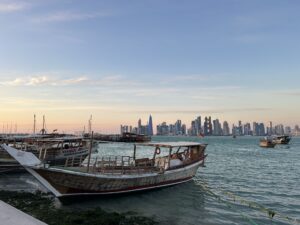
Doha, Qatar (Feb 2024)
That said, I’ve always travelled with a high degree of awareness, particularly when I’m on my own (read about unique challenges for female travellers). I don’t put myself in precarious situations, and I’m conscious of my surroundings. I’ve experienced moments of unwanted attention, comments and gestures from men, but nothing markedly different from what I’ve encountered in North America. In fact, I’ve consistently felt safer navigating Middle Eastern cities than I have walking through downtown Toronto alone.
The sense of safety in the region feels systemic rather than accidental, likely due to strict laws and a low tolerance for crime.
Being Treated with More Respect – Not Less
One of the main concerns my friends and family had before my first trip was how I would be treated as a woman in the region. Their worry was understandable but it didn’t reflect my reality. In fact, I’ve often been treated with more respect in the Middle East than in many other parts of the world.
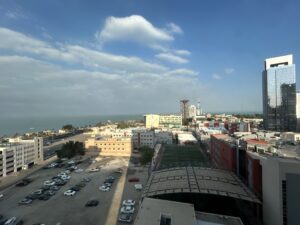
Kuwait (Feb 2024)
There’s no denying that my experience is shaped by privilege. Being a white woman has played a significant role in how I’ve been perceived and treated, and I’m very aware of that. Even so, the level of courtesy and attentiveness I’ve experienced has consistently stood out.
In airports, I’ve been ushered into shorter or priority lines for no obvious reason. In restaurants and shops, I’ve been offered complimentary items or extra care ‘just because.’ Service is often not just polite, but deeply attentive, sometimes to a degree that feels unfamiliar. One time, I walked into a Sephora in Doha to look for a specific product, and a staff member greeted me with huge excitement, asking if she could do my makeup. I agreed. People pay a lot of money to get a full face of makeup done by a professional at Sephora. She wanted to do mine for free. That would never happen in North America.
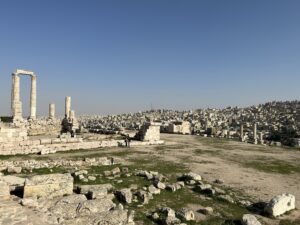
Amman, Jordan (Feb 2023)
Takeaway
Travelling throughout the Middle East has given me experiences that differ greatly from the assumptions many people hold (including myself before I ever went). The biggest adjustments were practical – learning how to dress for extreme heat while respecting local norms – but the most meaningful lessons were cultural.
What stood out most was the contrast between expectation and reality. Instead of feeling restricted or unsafe, I often felt welcomed, respected, and even put on a pedestal. The region challenged my assumptions, broadened my perspective, and deepened my appreciation for cultural nuance.
For women considering travel to the Middle East, my advice is simple: do your research, stay aware of your surroundings, and approach the experience with openness rather than fear. The Middle East is complex, diverse, and deeply human and for me, it’s been one of the most rewarding regions to travel through.