
Table of Contents
Points Miles and Bling (blog) contains referral or affiliate links. The blog receives a small commission at no additional cost to you. Thank you for your continued support. Credit Card issuers are not responsible for maintaining or monitoring the accuracy of information on this website. For full details, current product information, and Terms and Conditions, click the link included.
In your quest to fly around the world, you’ll hear terms thrown around like layover, stopover, and open-jaw. These concepts are especially useful when redeeming points and trying to maximize your itinerary. How exactly do they differ?
Layovers vs. Stopovers vs. Open-Jaws: What’s the Difference?
Layovers
Most people call layovers “connections” or “transit airports”. It’s when you spend less than 24 hours in a city before continuing onward. The typical layover is 2-4 hours long, which is enough for transit security, re-checking bags if required, and/or U.S. preclearance.
To maximize your experience, you can extend a layover to 12-24 hours, which is enough to head into the city and have a full day of exploring. One benefit of staying under 24 hours could be that the frequent flyer program you’re booking with doesn’t allow stops of over 24 hours on a single ticket, or that you avoid expensive UK Air Passenger Duty.

Hong Kong is perfect for a 24-hour layover
Stopovers
On a single ticket, a stopover is when you stay in one city for more than 24 hours. For example, from Toronto to Warsaw, spend a week in Warsaw, then continue on to Shanghai. Since this is more of a side quest than a connection, it’s a stopover and not a layover.
Frequent flyer programs that allow stopovers on the same ticket make it easy to visit multiple cities in one trip and it’s especially fun when they’re on separate continents.
Open-Jaws
An open-jaw is when you land in one city and then depart from another, but all on the same ticket. You could fly into Paris, then two weeks later, continue your ticket from Milan. While many frequent flyer programs allow stopovers, finding one that allows open-jaws is more difficult.
Maximizing Layovers, Stopovers, and Open-Jaws
Aeroplan
Obviously, all programs allow layovers as connections are often necessary. However, some loyalty programs are very generous in allowing you to craft custom layovers. The obvious one is Aeroplan, which allows you to build custom itineraries of up to six segments on a one-way ticket, as long as the routing is logical. Looking to fly from Toronto to Singapore? If you can find availability, feel free to fly Toronto–Zurich–Copenhagen–Singapore with 24 hour layovers in both Zurich and Copenhagen.
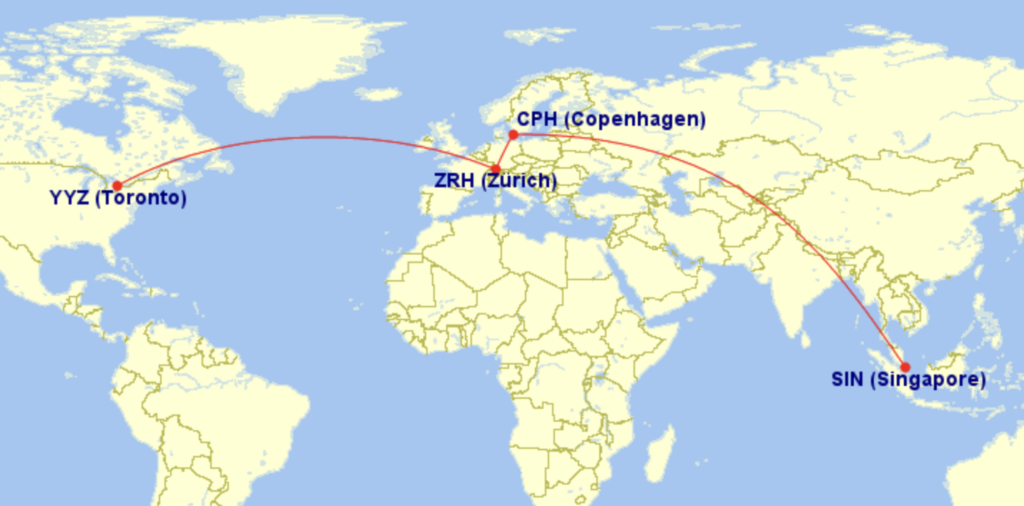
You will have to call in to book and if the Aeroplan agent is unable to piece it together to price as a single one-way ticket at 87,500 points, try booking Toronto–Zurich or Copenhagen–Singapore and then calling in to make a change to add the rest of the segments. You’ll pay a $100 change fee, but it’s well worth it for creating a custom itinerary.
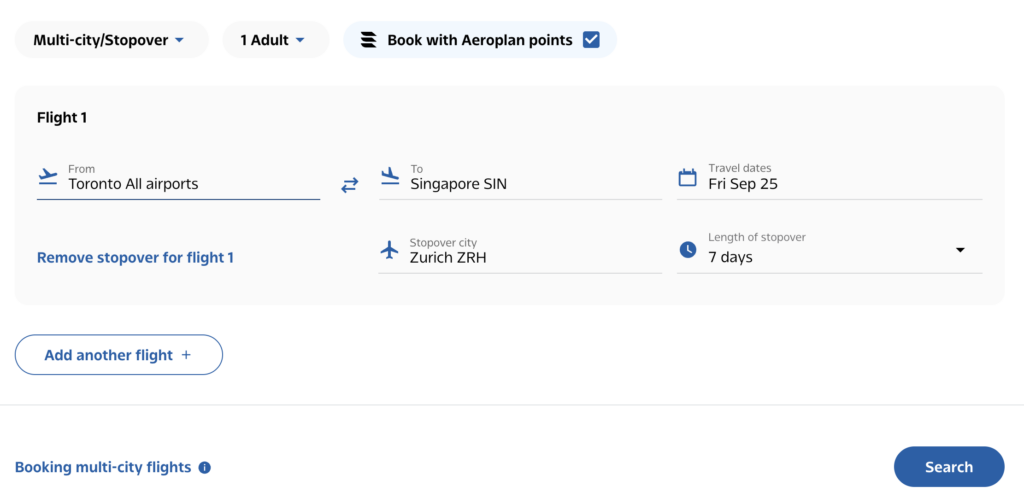
Aeroplan is also generous in allowing stopovers of up to 45 days for an additional 5,000 points. In the above example, say you want to spend a week in Zurich. That’s allowed, and it’ll cost 92,500 points instead of 87,500. You can try the multi-city tool online, but you’ll most likely still need to call in.
Alaska Atmos Rewards & Air France-KLM Flying Blue
Both Atmos Rewards and Flying Blue allow a stopover on one-way awards.
With Flying Blue, you’ll have to book by phone. While you are technically allowed to have a stopover anywhere and can also mix and match partners, my personal experience is that the stopover only works in Paris or Amsterdam, and pricing can also be inconsistent — sometimes all flights available at a saver price don’t piece together at the saver price.
I was able to book Toronto–Paris (stopover)–Amsterdam–Nairobi for 105,000 miles (saver at the time was 95,000), but the Paris–Amsterdam–Nairobi segment was going for 110,000 miles on its own (as it wasn’t available at the saver price), so the stopover pricing isn’t always clear.
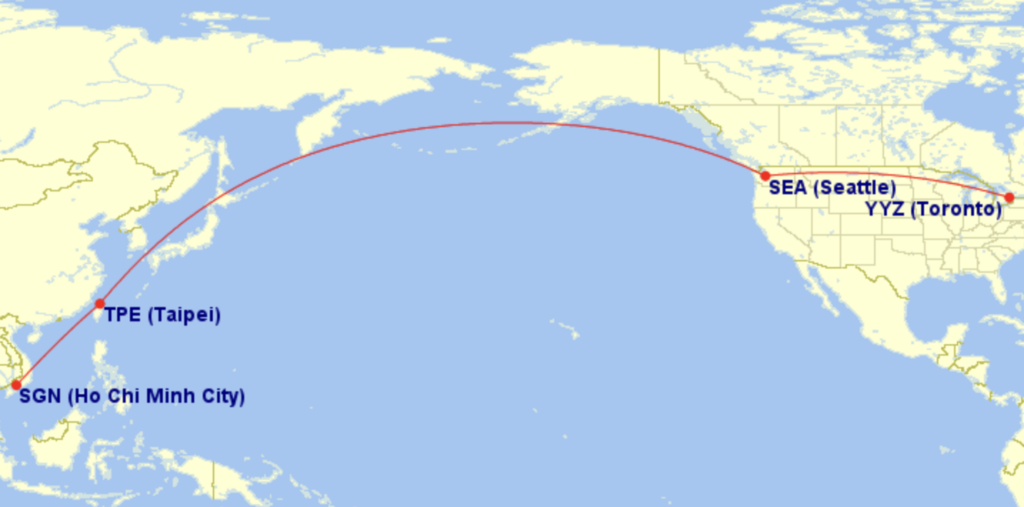
Stopovers on Atmos Rewards usually have to be at hub airports since Atmos doesn’t allow mixing partners (except Alaska or Hawaiian metal) on a single award. A great example would be Toronto–Seattle–Taipei (stopover)–Saigon for 85,000 Atmos Rewards points.
British Airways Avios Multi-Carrier Award
A lesser-known feature of British Airways Avios is the ability to book round-the-world awards with up to 8 segments, 7 stopovers, and 1 open-jaw. Pricing is based on the cumulative distance for the entire booking and varies by class of service.
Note that these are difficult to book, as all the award space must exist at the time of booking, and more than one phone call may be required, as agents are often unfamiliar with this award.
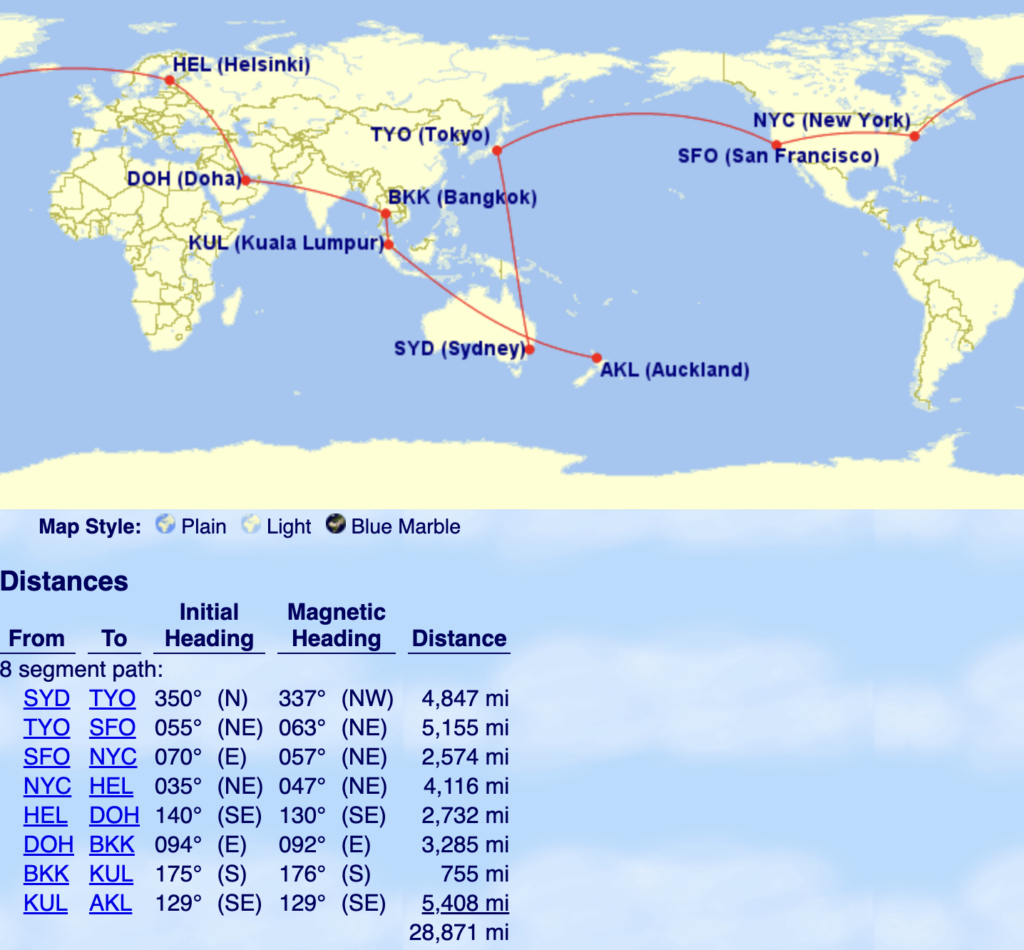
Stopovers: Tokyo, San Francisco, New York, Helsinki, Doha, Bangkok, Kuala Lumpur
Open-Jaw: Between Sydney and Auckland (origin and destination)
Takeaway
Layovers, stopovers, and open-jaws are powerful tools for getting more value from your points. Layovers are short connections of under 24 hours, stopovers are stays of over 24 hours, and open-jaws allow you to fly in and out of separate cities. These three features all let you visit additional destinations on the same ticket.
Take advantage of the stopover allowance with Aeroplan, Alaska Atmos Rewards, and Flying Blue; they can turn a single redemption into a multi-city trip and dramatically increase the value of your points. If you’re up for a challenge, try booking a British Airways Multi-Carrier Award with up to a staggering 7 stopovers and 1 open-jaw.
