Table of Contents
Points Miles and Bling (blog) contains referral or affiliate links. The blog receives a small commission at no additional cost to you. Thank you for your continued support. Credit Card issuers are not responsible for maintaining or monitoring the accuracy of information on this website. For full details, current product information, and Terms and Conditions, click the link included.
You know those people who board a long-haul flight, get settled, and are asleep before the seatbelt sign turns off? I am not one of them and never have been. I look at those people with deep envy.
Instead, I’m the one endlessly repositioning, cycling through the flight map every 20 minutes, browsing the movie list only to give up and put on music, and quietly calculating how long until the next meal service. If you recognize yourself in any of that, this one’s for you.
The Cabin Class Factor
It’s worth acknowledging that the seat makes a real difference in how easy it is to get comfortable, let alone sleep. In Economy, where I sit about 90% of the time, sleep is essentially off the table for me. In Premium Economy, I can sometimes get an hour or two, usually thanks to the extra recline and a bit more breathing room. Business Class, with its lie-flat seats, is the only setup I believe would solve the problem, but until I redeem enough points to get there, I’m working with what I’ve got.
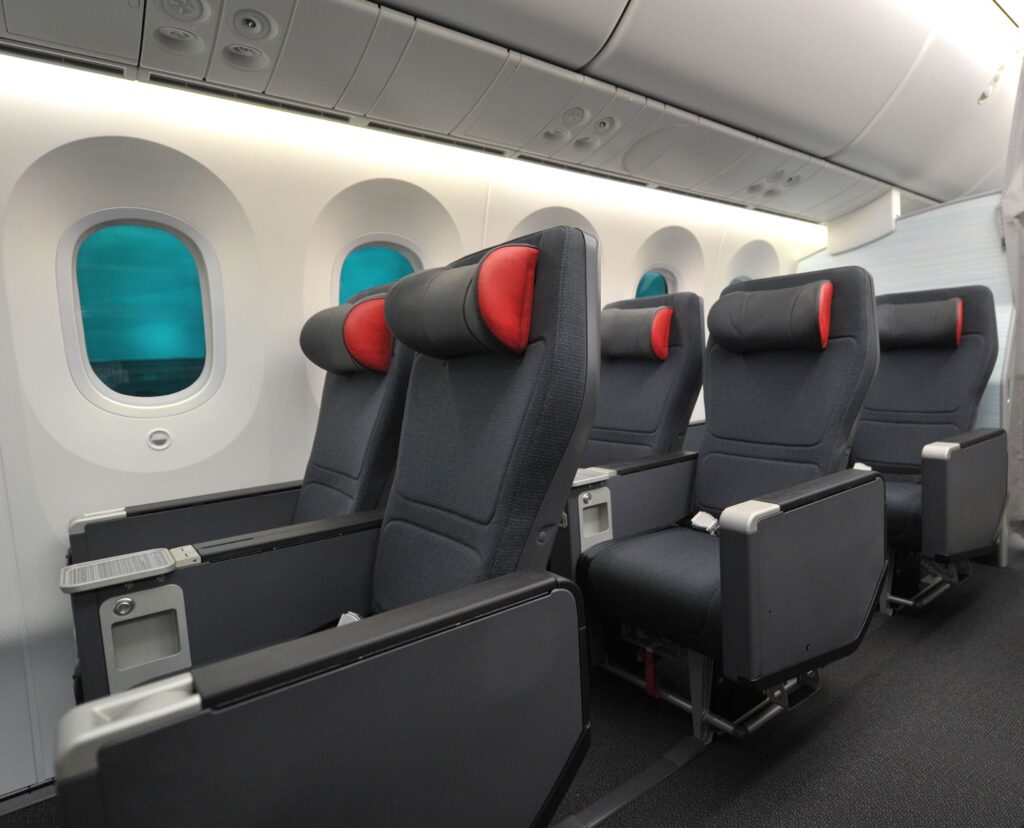
Air Canada Boeing 787 Premium Economy (source: Air Canada)
Melatonin helps a little bit. I take it on overnight long-hauls and on a good night, it buys me an hour, maybe two. There’s nothing worse than waking up from a nap and seeing that there’s still nine hours left to go.
Accidentally Raw-Dogging
Just a few months ago, I learned what raw-dogging a flight is: a trend of enduring long-hauls with zero entertainment, no sleep aids, and nothing but the flight map and sheer force of will. People are doing this on purpose, apparently for the mental clarity or the bragging rights, or both.
I’ve accidentally raw-dogged flights simply because motion sickness sometimes rules out movies and reading, and I can only listen to so many podcasts and playlists before I need to give my ears a break. But the difference between me and an intentional raw-dogger is that they’ve made peace with it. I’m just failing to find something else to do.
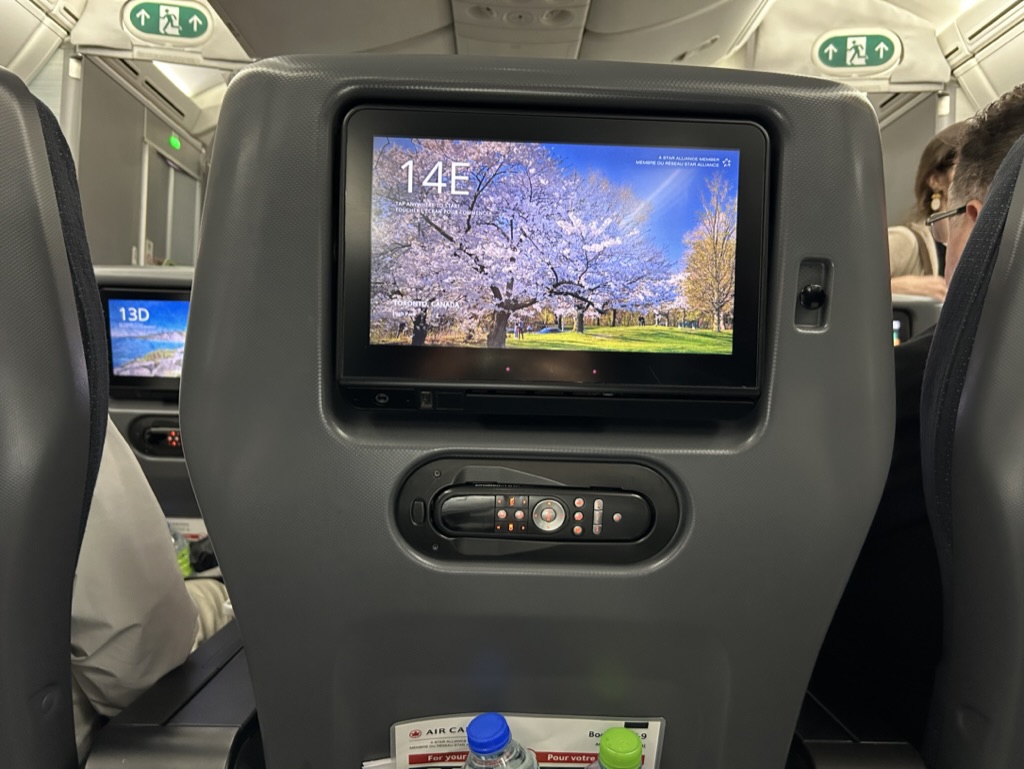
Air Canada Premium Economy In-Flight Entertainment System: DXB – YYZ
Things that Have Actually Helped
Since sleep is a rarity for me on long haul flights, I’m always searching for ways to make the long hours more bearable. I’m not here to position myself as a long-haul survival expert, as I’m very much still figuring this out. But a few things have made a small difference for staying comfortable, and they’re worth passing on.
A neck pillow (worn backwards) – this was a game changer once I learned it. Someone told me it’s actually the proper way to wear a neck pillow. Most neck pillows push your head forward when worn the standard way, which is uncomfortable on a seat with very little recline. Flip it so the opening faces the back and the bulk supports your chin at the front. It really only works if you have one with a clip or toggle to keep it in place.
A foot hammock – many people don’t know about this product. It attaches to the tray table and lets you elevate your feet slightly, which takes pressure off the lower back and gives your legs somewhere to go other than straight down. It also doubles as a useful tool for chronic re-positioners like myself. Having that extra option for your feet means one more position to cycle through when you’ve already exhausted everything else. It’s a small thing that makes a difference on longer flights, especially in Economy where legroom is already limited.
Good quality eye mask – even if sleep isn’t happening, blocking out cabin light reduces that low-grade overstimulation that makes long flights so draining. Look for one with contoured cups so it doesn’t press directly on your eyes, like these ones.
A tablet with downloaded content – most long-haul entertainment systems are fine, but the selection can be hit or miss, and personally, I find the seatback screens are often dim, laggy, or just awkward to look at for extended periods. Having an iPad or tablet loaded with your own shows gives you more control and, at least for me, is easier on the eyes.
Takeaway
These are a few things that have worked for me, to varying degrees. But I’m always on the lookout for more, so if you’ve found something that actually helps, whether it’s a product, a routine, or a weird trick that works, let me know!
