Table of Contents
Points Miles and Bling (blog) contains referral or affiliate links. The blog receives a small commission at no additional cost to you. Thank you for your continued support. Credit Card issuers are not responsible for maintaining or monitoring the accuracy of information on this website. For full details, current product information, and Terms and Conditions, click the link included.
We’ve written about whether you should accept a pre-approved credit card offer and apply for a Visa Infinite or Visa Infinite Privilege card. What if you don’t actually have to choose? A credit card product switch lets you change from one credit card to another without opening a new account. Sometimes, there may even be a benefit to doing so.
Downgrade to Preserve Credit Line
We’ve already written at length about which Avion card you should apply for, and it boils down to: get the RBC Avion Visa Infinite Privilege right now for the biggest chunk of Avion points earning. The all-time high of 100,000 Avion points will remain in effect until July 15, 2026.
Say you apply for that card today and then hold it past the one-year mark to receive the entire bonus. After that, you no longer need Visa Infinite Privilege and would rather pay the lower annual fee on the RBC Avion Visa Infinite. Well, instead of cancelling your existing credit card and applying for a new one, you can simply switch your credit card to the lower annual fee version.
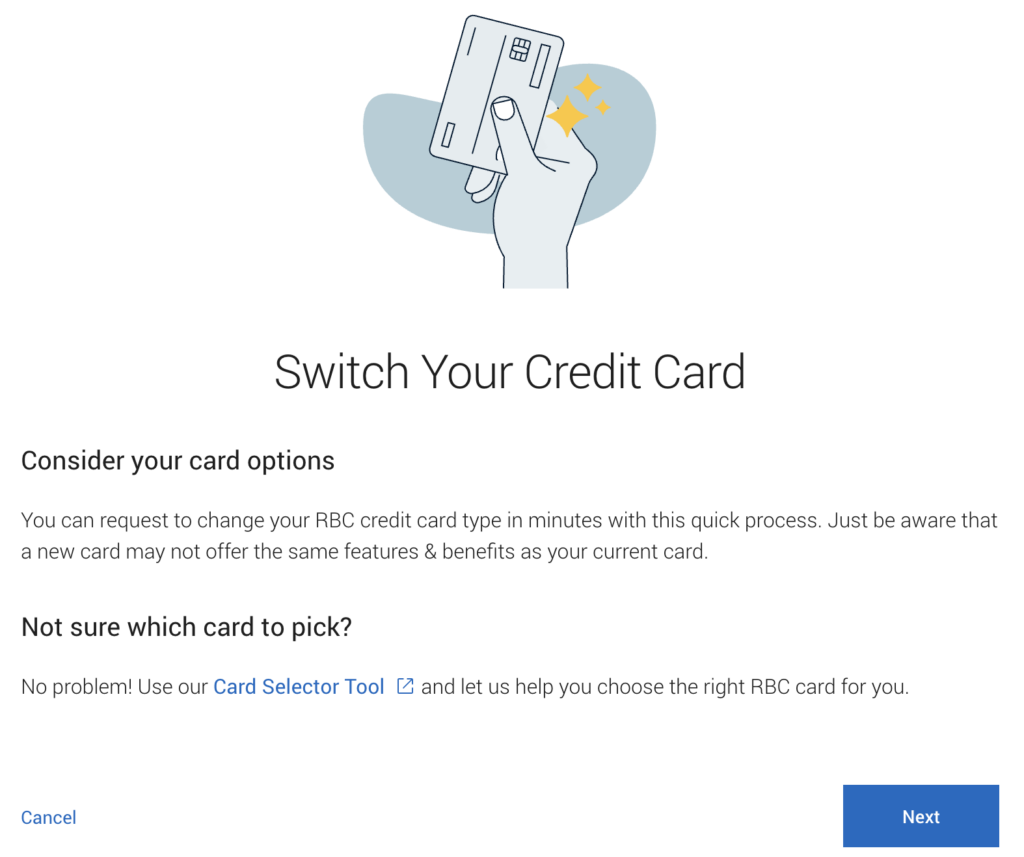
Switch your credit card to a no-annual-fee version to preserve the credit line
The main benefit is preserving your existing credit line, which is better for your credit score because it lengthens your “average age of accounts”. Because you’re keeping the same account open, the account history is preserved on your credit report rather than starting over with a brand-new account.
Keep in mind that product switching generally doesn’t qualify as opening a new account, so you typically won’t receive the public welcome bonus.
Upgrade for More Benefits: Pay Partial Annual Fee
In the opposite scenario, say you applied for the RBC Avion Visa Infinite, but you now want an RBC Avion Visa Infinite Privilege for the increased set of benefits, like six complimentary lounge passes and redeeming your Avion points at 2 cents per point for premium cabin flights.

This depicts 1 cent per point, but you get 2 cents per point on premium cabin redemptions when holding an Avion Visa Infinite Privilege or Avion Business Visa
Again, instead of applying for a new credit card, you can upgrade your existing RBC credit card, take advantage of the Visa Infinite Privilege benefits, and then downgrade it afterwards. By doing this, the bank prorates your annual fee, so you only pay for the months you hold the Visa Infinite Privilege. You’ll initially be charged the full $399 annual fee, then receive a prorated refund when you downgrade.
Upgrade for Welcome Bonus
Sometimes, banks will offer public or targeted welcome bonuses for switching your credit card to another card. Usually, it’ll be for the same product, but an upgraded version. For example, Amex is currently offering all Cobalt cardholders the opportunity to upgrade to the Amex Gold card and earn up to 30,000 Membership Rewards (MR).
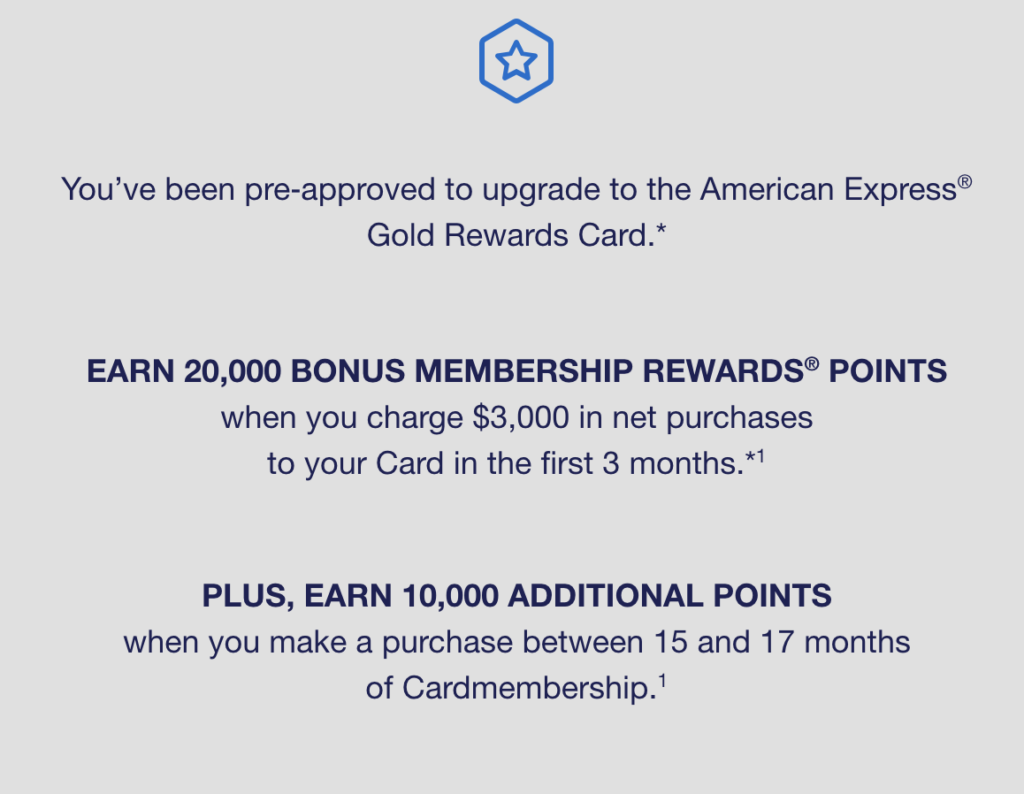
Upgrade offer from Amex Cobalt to Gold
CIBC will also offer targeted upgrade offers on your account dashboard. As an advanced tactic, you can downgrade your CIBC credit card and wait for an upgrade offer to pop up to earn another chunk of Aventura points; however, know that the offers can be random, so there is a chance you won’t get it.
Generally, product switching to Aeroplan co-branded cards, even with a welcome bonus attached, is not advised because Aeroplan is strict about the number of welcome bonuses allowed per card tier: 1 bonus per entry-level, core, and premium co-branded card.
Credit Card Product Switch Rules Differ by Bank
The ability to product switch credit cards, which cards are allowed to be switched to, if you can swap between different rewards families, if you can change online or only by phone, how frequently you’re allowed to switch, and more, all differ based on the bank and credit product.
For example, Amex does not allow product switching unless you have a targeted offer. And even if you do, it’s only ever within the same family, so you can’t switch from a Membership Rewards (MR)-earning card to a Marriott co-branded card in hopes of preserving that credit line.
While RBC will let you upgrade and downgrade at any time, Scotiabank does not allow switching from the Scotiabank Passport Visa Infinite Privilege to the Scotiabank Passport Visa Infinite+ within 12 months of first receiving the Visa Infinite Privilege. I’ll usually upgrade to the Visa Infinite Privilege before a long international trip (for 3X on travel purchases), knowing that I’ll have to keep it for at least 12 months.

Get 10 lounge visits a year with the Scotiabank Passport Visa Infinite Privilege
Takeaway
Product switching is one of the most underrated credit card strategies. Downgrading can preserve your credit line and average age of accounts, while upgrading can unlock better perks for only a prorated annual fee.
The key is knowing each bank’s rules before making a move. Some issuers make switching easy, while others restrict which cards you can switch to, how often you can switch, or whether you can receive an upgrade bonus. Used strategically, product switching can help you keep the right benefits at the right time without adding unnecessary complexity to your portfolio.
