Points Miles and Bling (blog) contains referral or affiliate links. The blog receives a small commission at no additional cost to you. Thank you for your continued support. Credit Card issuers are not responsible for maintaining or monitoring the accuracy of information on this website. For full details, current product information, and Terms and Conditions, click the link included.
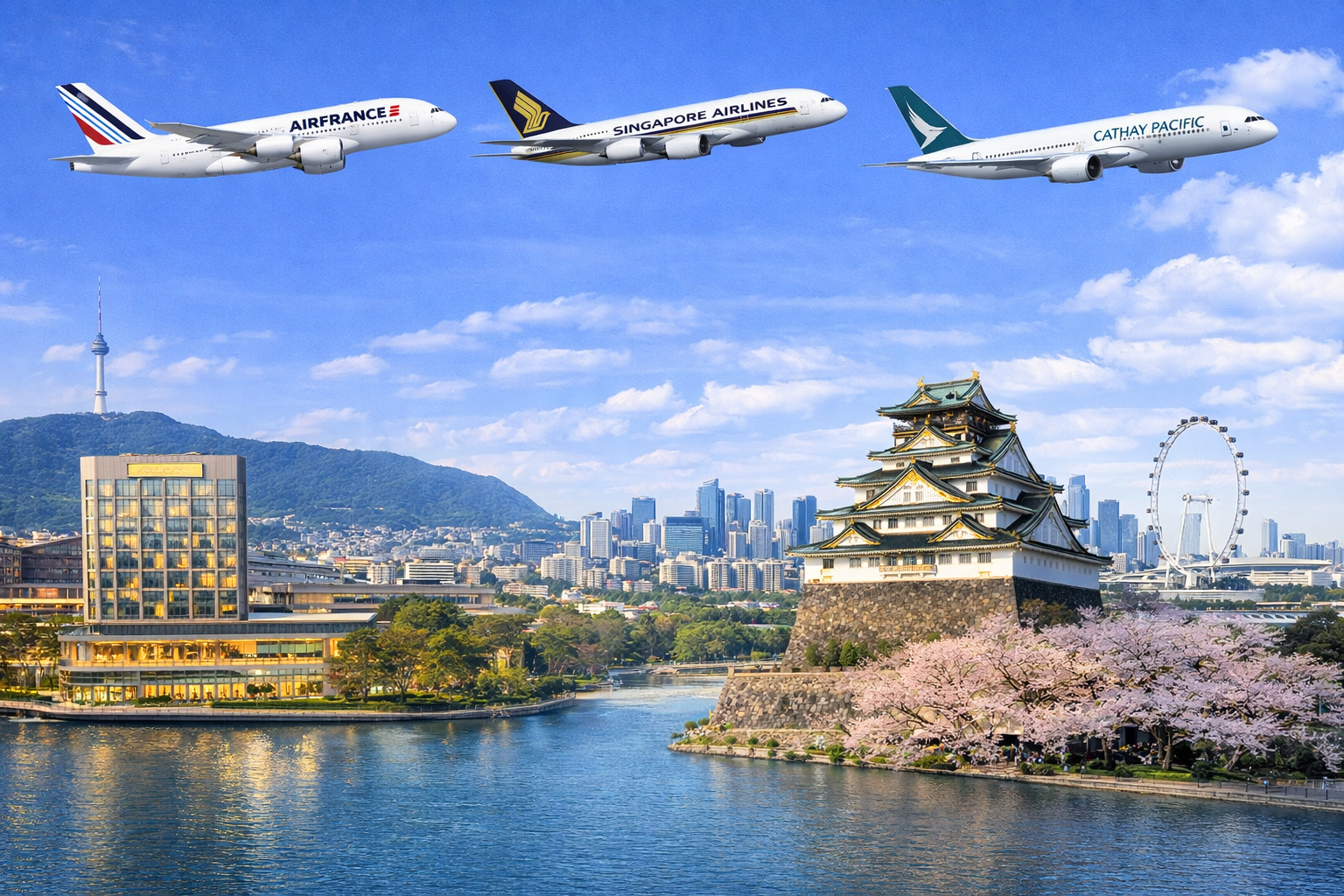
As March break approaches, we’re preparing for another family trip. While we once preferred warm destinations, recent years have shifted us toward urban experiences rich in culture. Originally, we had a two-week plan to Tahiti, but in January we decided to cancel it and instead choose a three-city tour of Seoul, Osaka, and Singapore. Making this change only about eight weeks prior posed a challenge, especially in securing business class award seats for a family of three, but we did manage to find some with some strategic planning and coordination.
Destinations
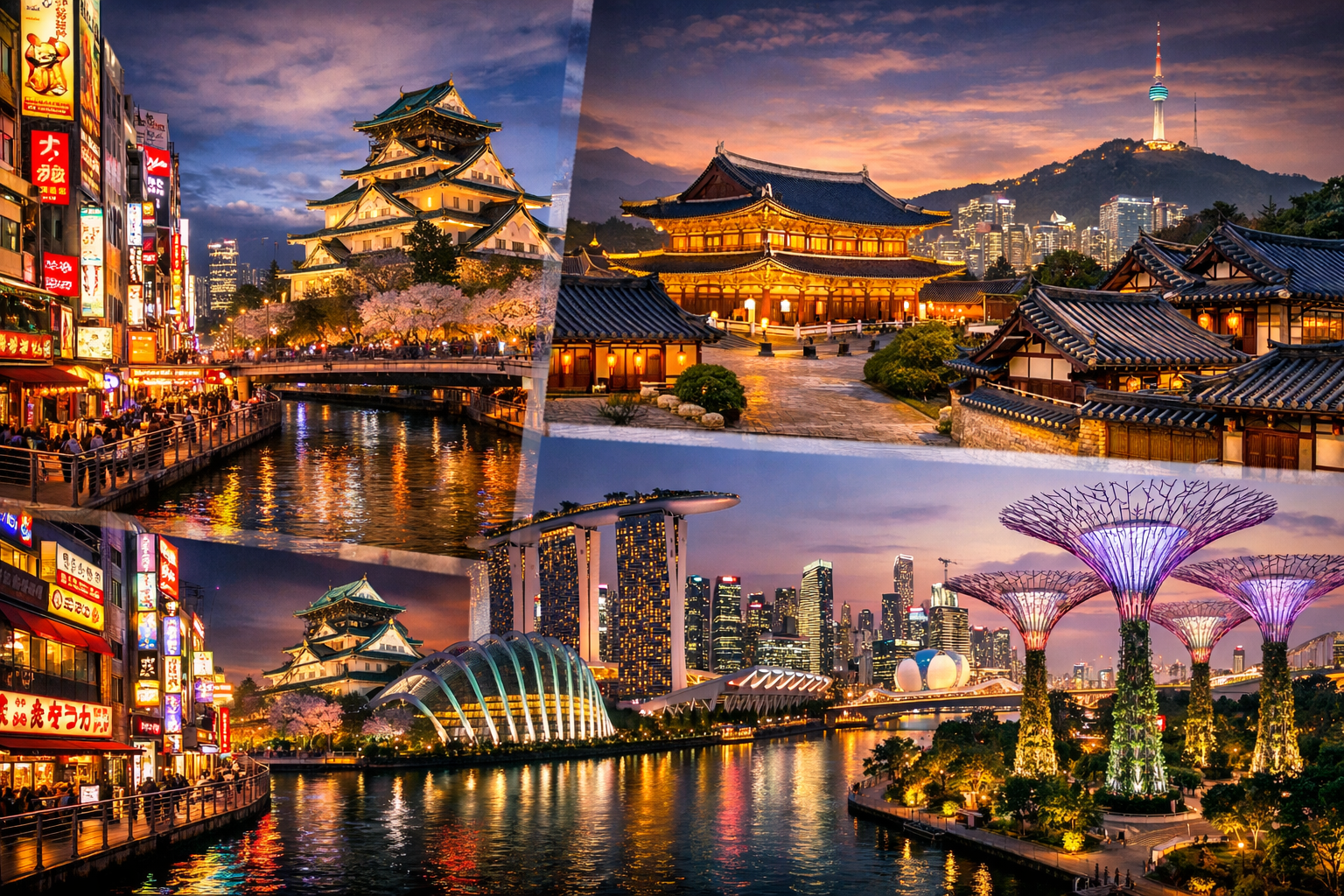
This 15-day trip will center around three cities: Osaka, Seoul, and Singapore. We will be staying at just three hotels for the entire trip, giving us the chance to slow down and really immerse ourselves in each destination, while also exploring nearby areas we have not yet had the chance to visit. There was a time when we approached travel by trying to check off as much as possible, but miles and points have given us the flexibility to revisit destinations we love and enjoy them in a far more relaxed and intentional way.
How We Booked Our Flights
Here is how our flight routing looks from Ottawa (YOW):

Air France (Ottawa-Paris-Seoul)
We begin the journey aboard Air France from Ottawa to Paris, and onward to Seoul. I was able to find this routing for 115,000 Flying Blue points per person in business class. Although the taxes were hefty at ~$700 each, the ease of routing was worth the expense. No repositioning was required to a large hub. Although these flights stray from my usual first-class flying, I’ll at least get to experience the refreshed Air France cabin on its A350. I also opted to pay an extra $350 to secure the business suite for the longer Paris to Seoul flight.
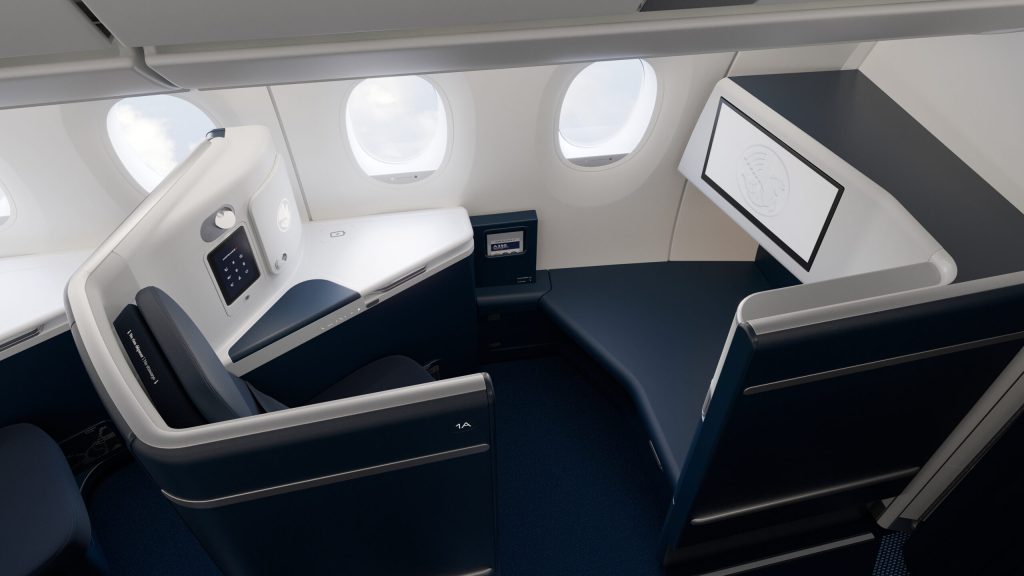
Air France A350 Business Suite
While I have heard that this seat can sometimes be upgraded to for free at check-in, this only seems to apply for flights between Paris and North America. I figured that $350 is a reasonable amount to secure this seat for a 12-hour flight.
Flying Blue Award Tip: Close-in award availability on Flying Blue can sometimes seem to appear out of nowhere, but more often than not, it is the result of searching the right routing combinations and city pairs. Also, sometimes, you might find availability, but it doesn’t appear in the search. A phone call can solve this problem. My booknig was definitely not found by pure luck.
Korean Air (Seoul-Osaka)
The next flight would be aboard Korean Air’s new 787-10 business class for the short hop from Seoul (ICN) to Osaka (KIX). The seat looks quite enticing, and I am looking forward to experiencing this new hard product:
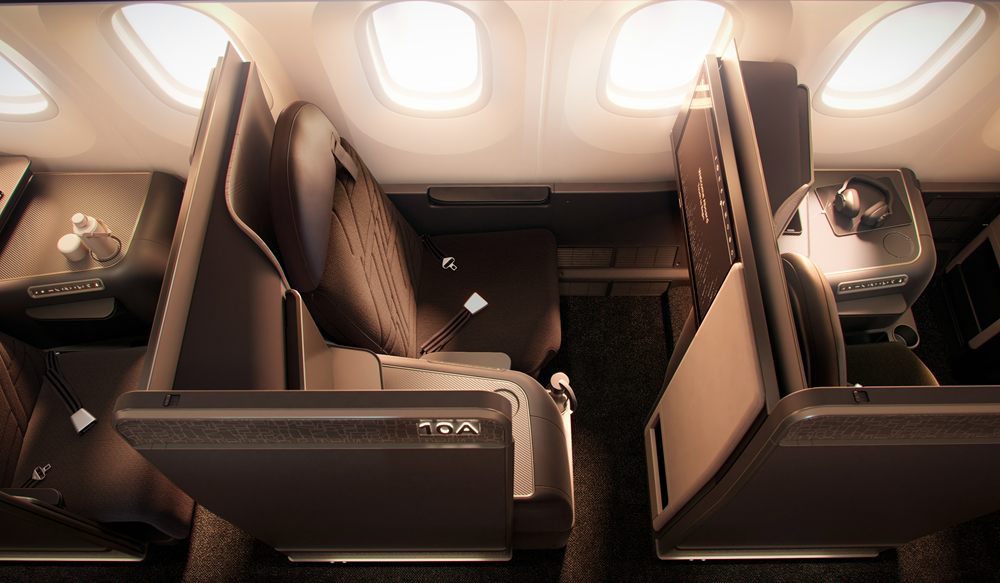
Korean Air 787-10 Business class, source: Korean Air
I booked this flight using my TD rewards points due to the lack of award space for three passengers between Seoul and Osaka on my preferred day. What’s great is that this business class flex ticket costs just 94,000 TD Reward Points ($470 per person). This was only a $120 upcharge from an economy-class ticket and definitely worth the upgrade. I also took advantage of a promo earlier this year that offered 10,000 TD points when redeeming at least 25,000 TD rewards points. Given the abundance of TD rewards points I continue to earn from the excellent promos on the First Class Travel Visa card, using these points made the most sense. Although 10,000 TD rewards is only a $50 savings, I booked three separate tickets to effectively get $150 off the total price.
Cathay Pacific (Osaka-Hong Kong-Singapore)
Getting from Japan to Singapore proved quite difficult to find award space for 3 passengers without convoluted routings. I ended up having to alter my plans slightly in order to make these Cathay Pacific award flights work. The flights were booked at 58,000 Asia Miles per person in business class plus $350 in taxes.
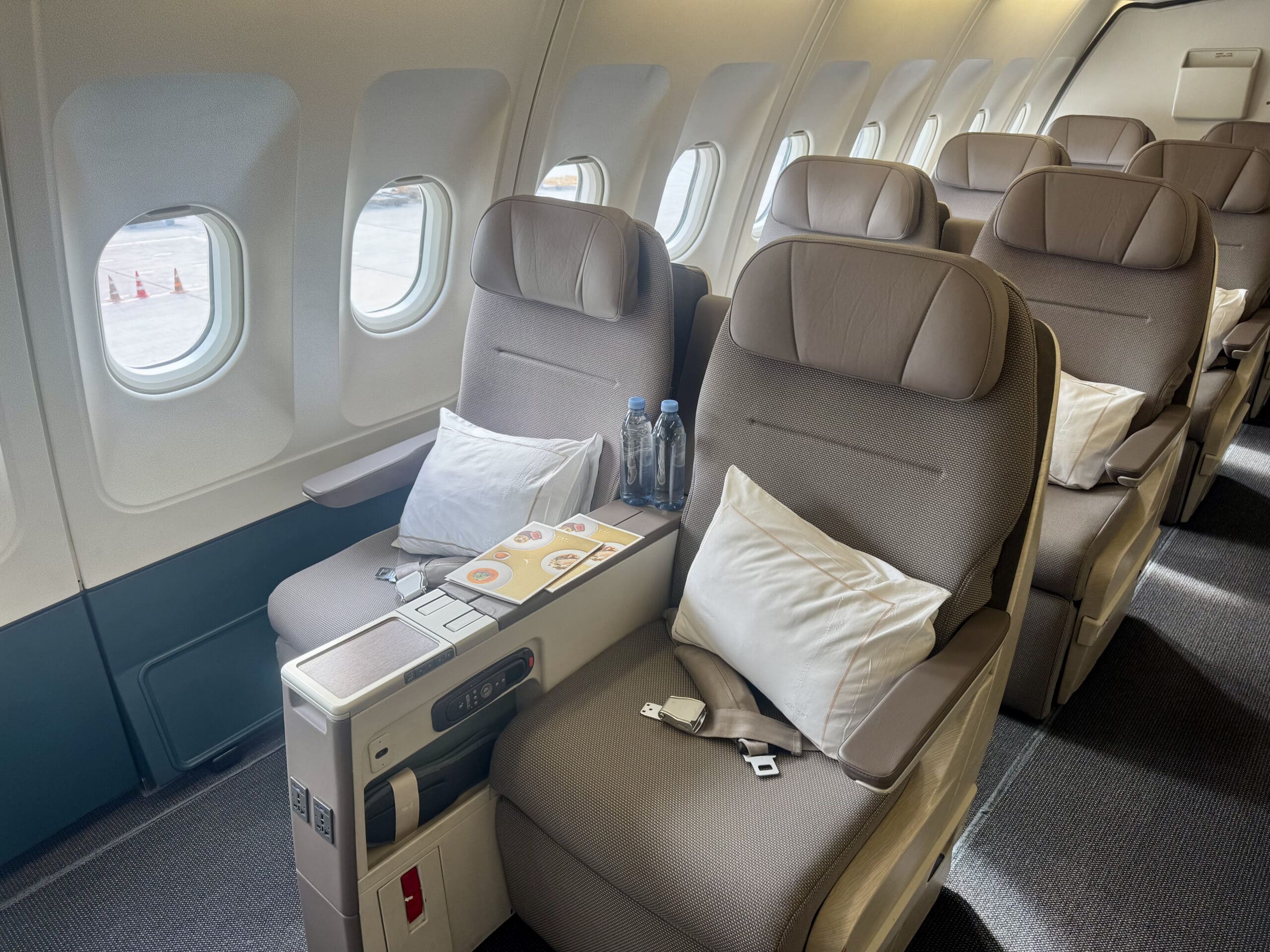
Cathay Pacific Regional A330 Business Class, source thealviator.com
The first leg (Osaka-Hong Kong) would be aboard their regional A330 aircraft, while the Hong Kong-Singapore leg would be aboard their A350.
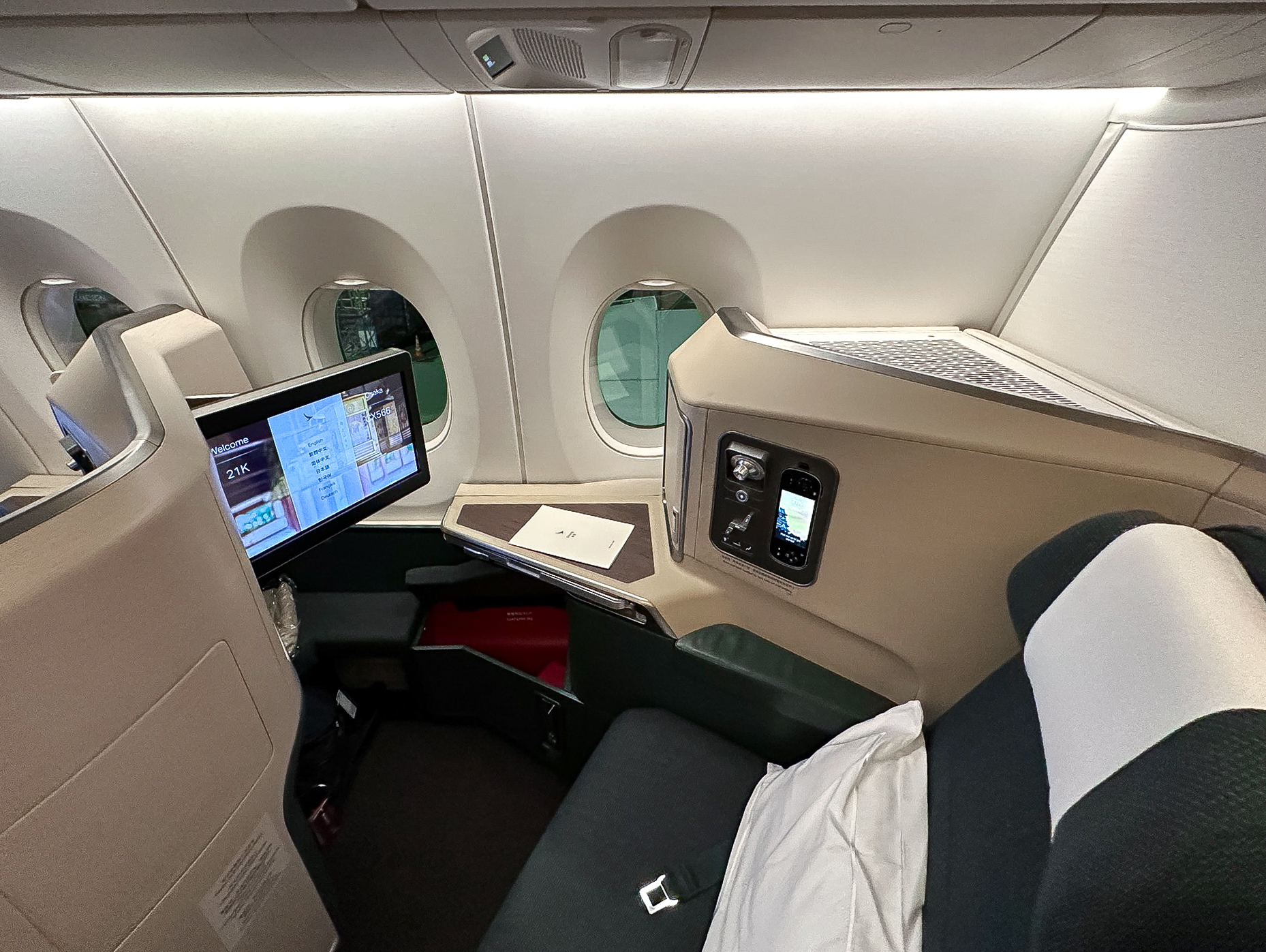
Cathay Pacific A350 Business Class
Even though I already have these Cathay Pacific flights booked, I will likely end up pivoting to Japan Airlines First Class for 40,000 American AAdvantage miles per person. The reason is simple: the First Class cabin is currently empty, and I know the precise window when award seats are usually released through American AAdvantage. This itinerary would also include a connection from Osaka-Itami to Tokyo. Still, there is a tradeoff here, as making the switch would mean absorbing an opportunity cost of about $150 per person to cancel the existing Asia Miles tickets.
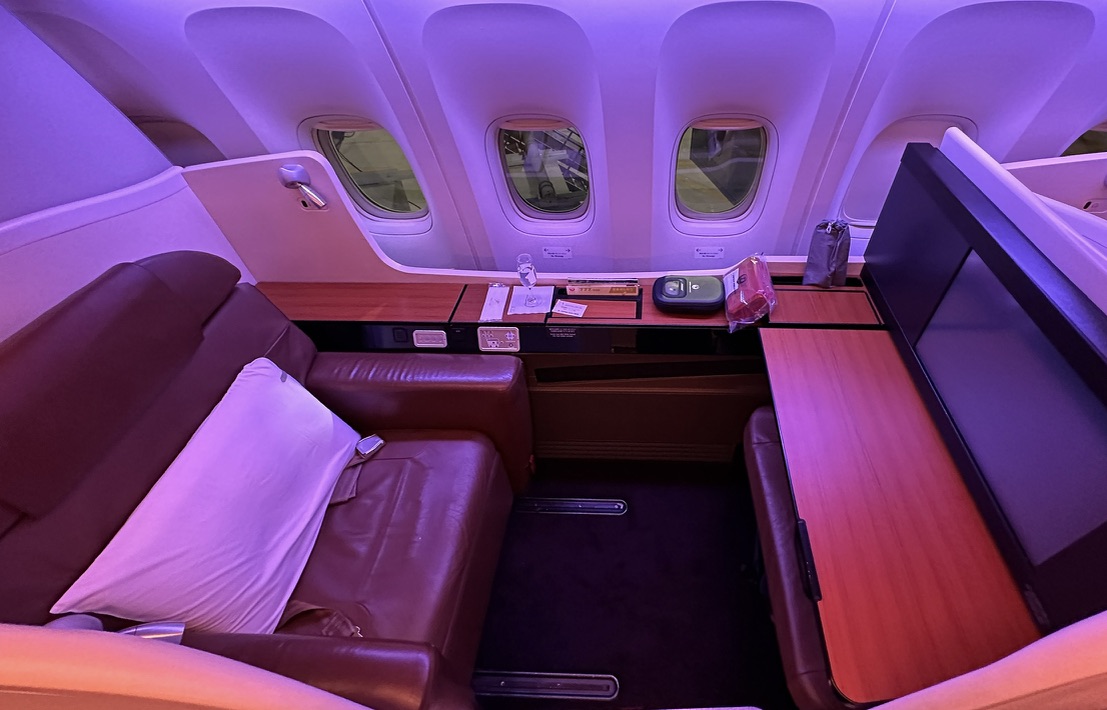
Japan Airlines 777 First Class
Cathay Pacific Asia Miles tip: One of the best uses of Asia Miles is for intra-Asia flights, where regional award space can be remarkably good, even close to departure. That is especially true compared to long-haul routes, where availability tends to be much harder to come by.
AAdvantage/JAL tip: JAL First Class is one of those aspirational awards that becomes much more predictable to book once you understand how it works behind the scenes. The release pattern is often consistent enough that you can make an educated call on how many seats may open and exactly when to be searching.
Singapore Airlines (Singapore-New York JFK)
Finding a straightforward way home from Singapore proved quite challenging, so in the end, we chose the longest flight in the world from Singapore to New York (JFK), with a block time of 18h 40min. I flew this route in the opposite direction in 2023 and thoroughly enjoyed the SQ experience, as detailed in my review, Review: 18 hours on the world’s longest flight.
What I did not enjoy this time was the cost of this ticket: 578,000 KrisFlyer miles for three passengers. This was broken down into one ticket for 165,0000 miles (Advantage fare) and two tickets at the new dynamic-priced fare bucket (Access fare) for 206,500 per person. Though the number of points used might seem absurdly high, the taxes were only $80 per person, and this was the fastest, most direct route home. 200,000 points for a long-haul flight is my new fare ceiling, as long as it meets all my criteria. I recently wrote a blog post titled “Stop Maximizing Your Award Flights,” where I go into depth on the mindset behind maximizing awards and why it should not always be the strategy. I heeded my own advice when I made this booking.
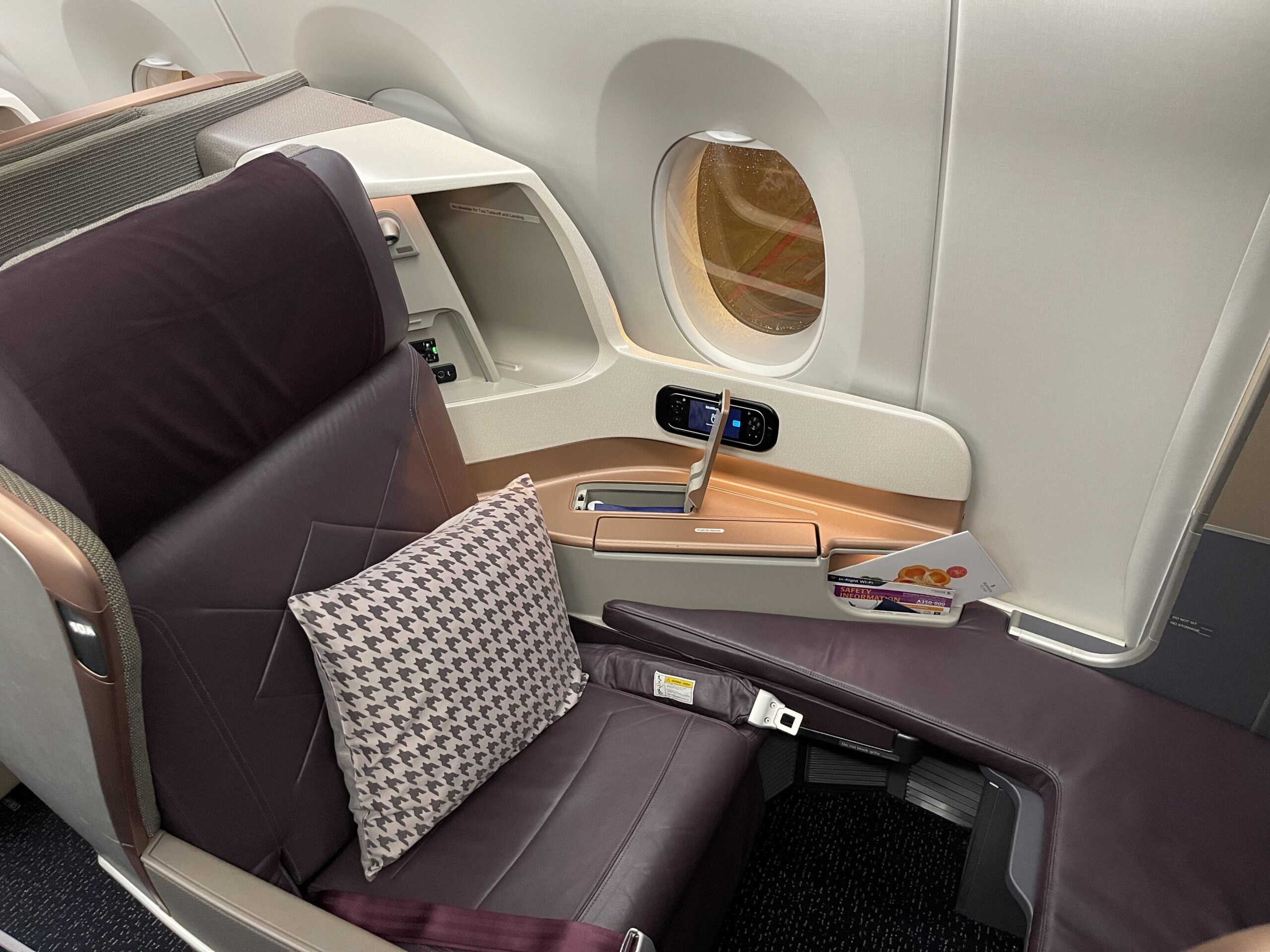
Singapore Airlines A350-900ULR Business Class
Hotels
2025 brought an interesting shift in the luxury hotel space. Between the launch of Chase’s new Edit program and updates to American Express Fine Hotels + Resorts (FHR), cardholders with access to these benefits suddenly had more reason to think beyond classic award bookings and explore high-end independent properties outside the usual Marriott, Hyatt, and Hilton chains. Given that I hold both the Chase Sapphire Reserve and Business Reserve, along with several Amex Platinum cards, I was always going to lean into this.
Four Seasons Seoul
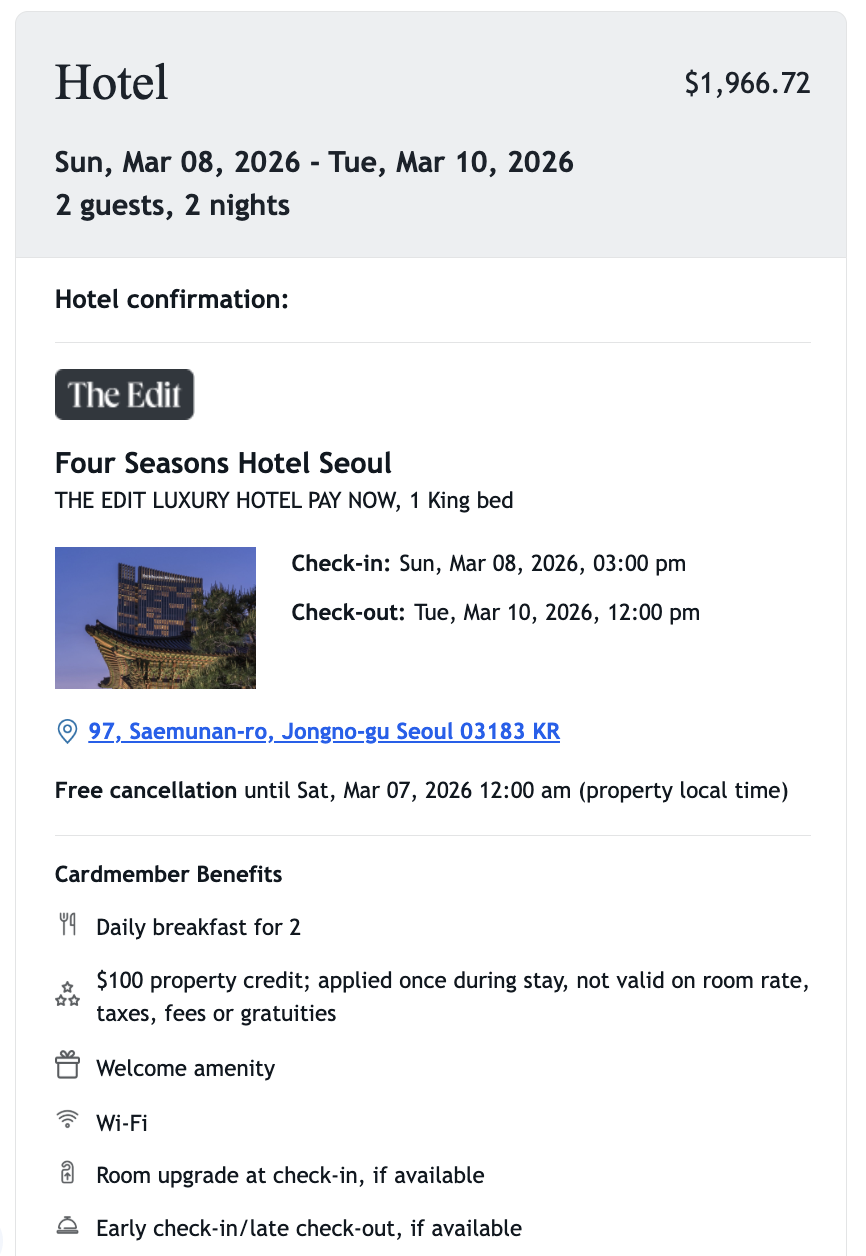
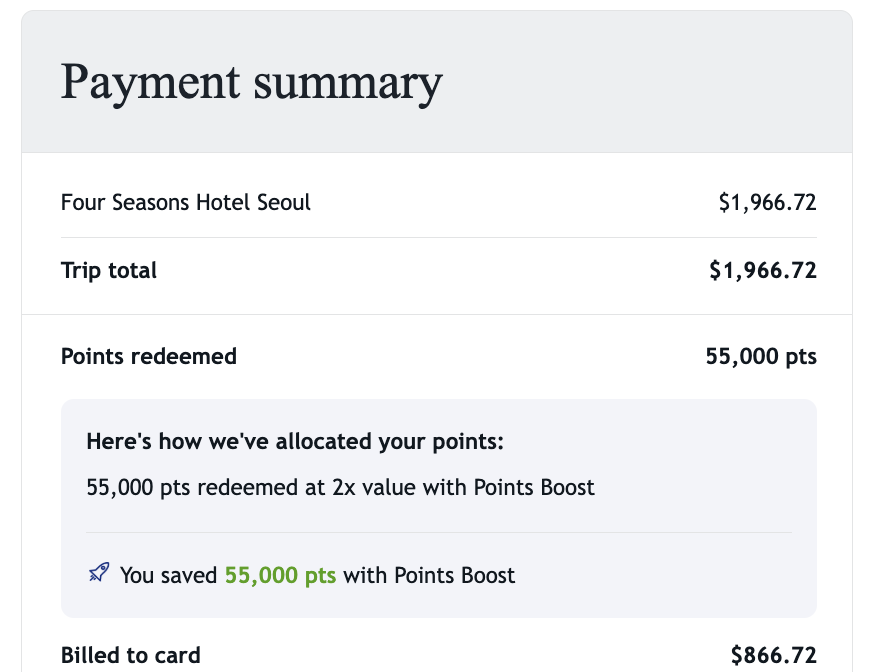
We’ll be kicking off the trip at the Four Seasons Seoul, booked through Chase Travel under The Edit program. That alone unlocked a $250 credit for paying with a Chase Sapphire Reserve card, but the real sweetener is that the property also qualified as a Points Boost redemption, letting me redeem Ultimate Rewards points at 2 cents per point. The larger suite I booked cost $983 per night, and redeeming just 55,000 Ultimate Rewards points brought the total down to $866. Factor in the $250 The Edit credit, and my final out-of-pocket cost for the two-night stay drops to just $616 or $313/night. Sure, I could have redeemed more ultimate reward points, but I chose to save rather than spend more.
Four Seasons is my favourite hotel brand, and I’ll be staying again at this hotel, which is an absolutely magnificent property. Set in the heart of Gwanghwamun, the Four Seasons Seoul is perfectly positioned to explore the city’s historic landmarks, shop, and access major business districts. Despite its central location, the hotel feels like an urban resort, with sleek, contemporary design, exceptional service, outstanding dining, and impressive wellness facilities, including a Korean-inspired spa and a year-round pool. It is the kind of hotel that feels like a destination in itself, combining elegance, comfort, and sophistication in a way that elevates the entire stay.

Four Seasons Seoul, source: fourseasons.com
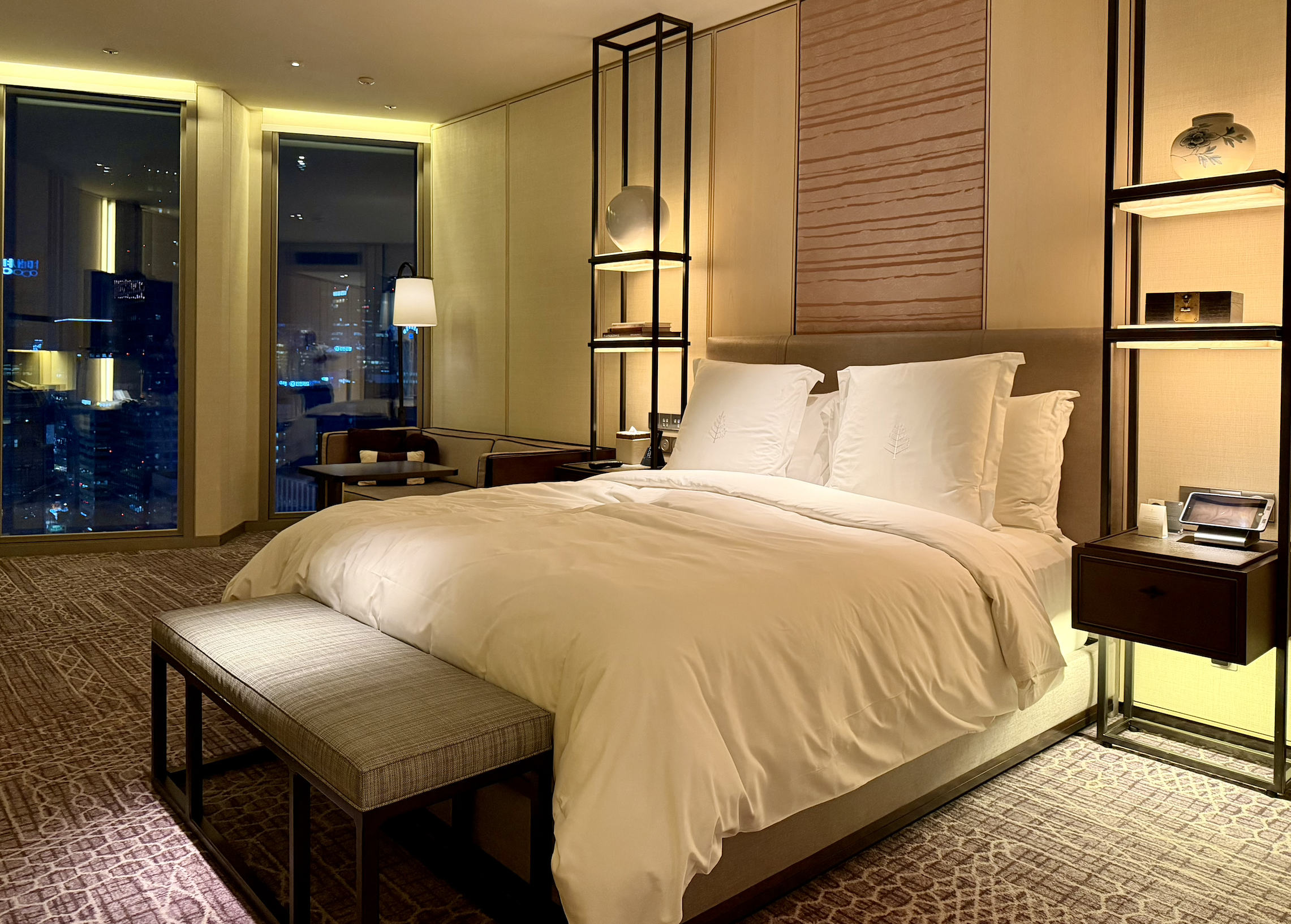
Four Seasons Seoul, Premier Room
Waldorf Astoria Osaka
After flying to Osaka, we’ll be returning to the amazing Waldorf Astoria Osaka, which I booked using Free Night awards that I accumulated from my multiple Hilton credit cards (Aspire and Surpass). Normally, the nightly cost would be 120,000 Hilton Honours points, and using the free night certificate was a great redemption to offset this.
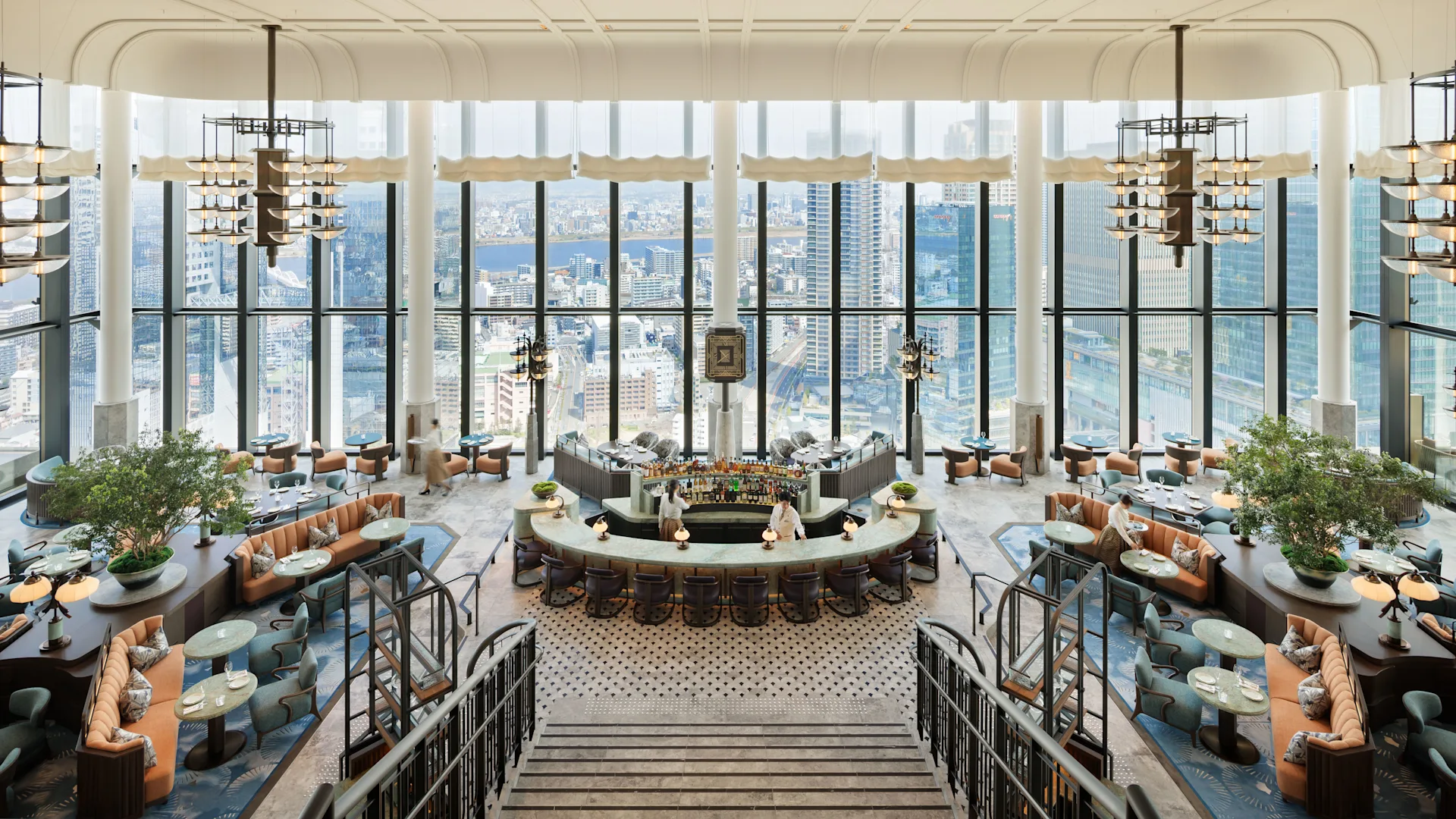
Peacock Alley @ The Waldorf Astoria Osaka, source: hilton.com
What makes the Waldorf Astoria Osaka compelling is that it checks the boxes that matter most to points and miles travellers: a prime location, strong luxury credentials, impressive hard product, and an aspirational feel that makes a redemption or elite stay feel worthwhile. This is not just a convenient place to burn points in Osaka. It is a property that looks capable of delivering a true luxury hotel experience, with beautifully designed rooms, elevated dining, polished public spaces, and an atmosphere that makes you feel like you are staying somewhere special. For travellers who care about maximizing both value and experience, this is exactly the kind of hotel that can make a trip feel more memorable.
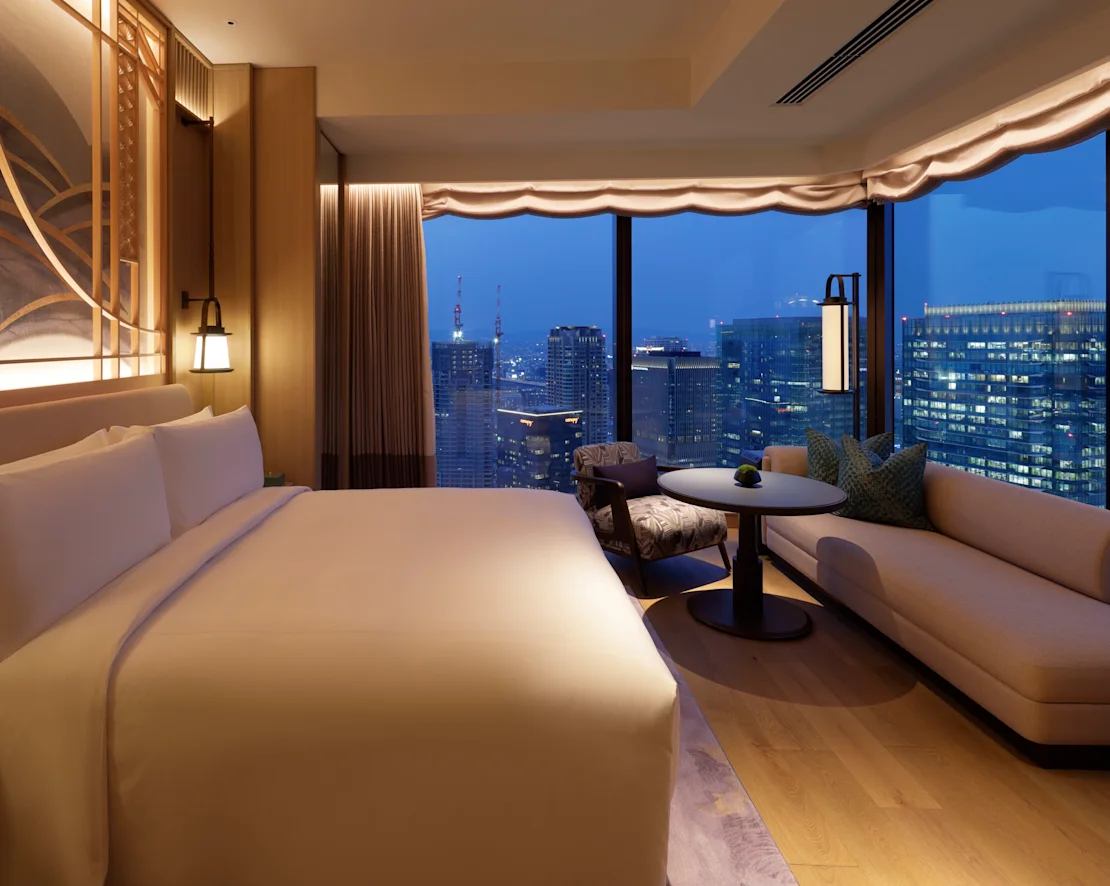
Corner Suite @ The Waldorf Astoria Osaka, source: hilton.com
Capella Singapore
For our final destination, we chose the crème de la crème of Singapore luxury: Capella Singapore.
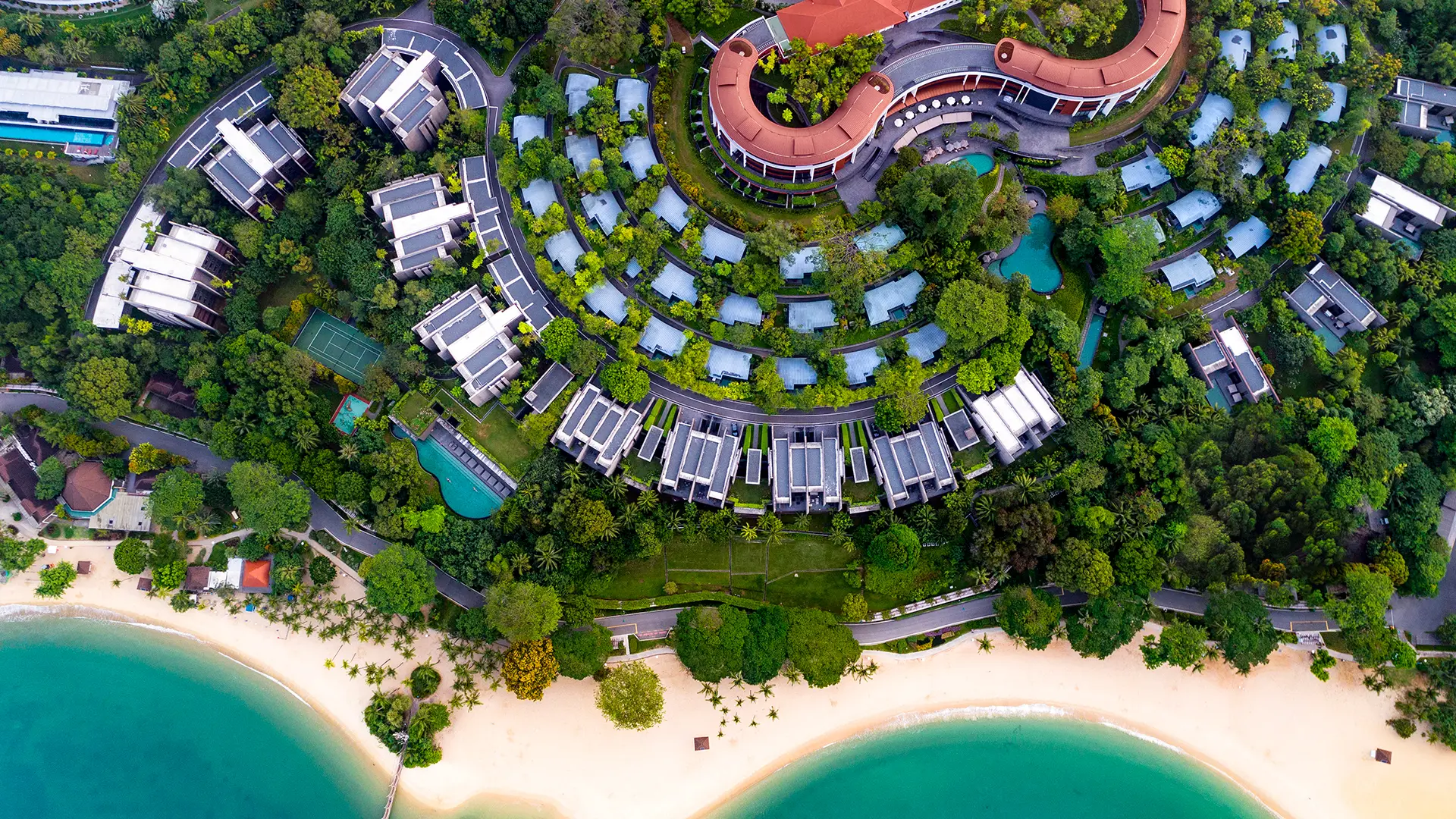
Capella Singapore, source: www.wtravelmagazine.com
Having visited Singapore numerous times in the past, we decided to base ourselves on Sentosa given the many attractions that my daughter was interested in, as well as enjoy some beach time. And, when we need to hop into the city, it’s just a quick 15-minute taxi ride away.
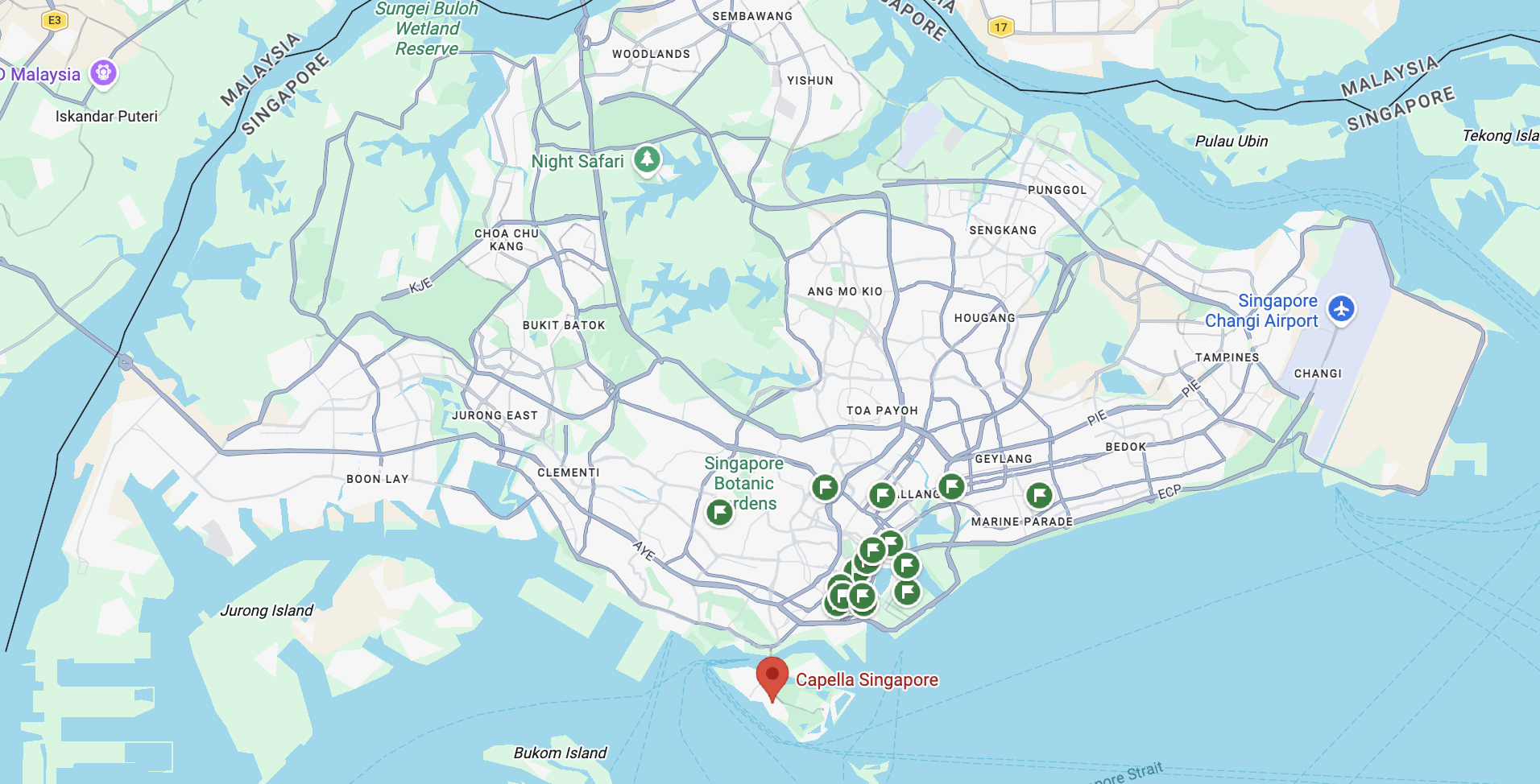
Capella Singapore Location
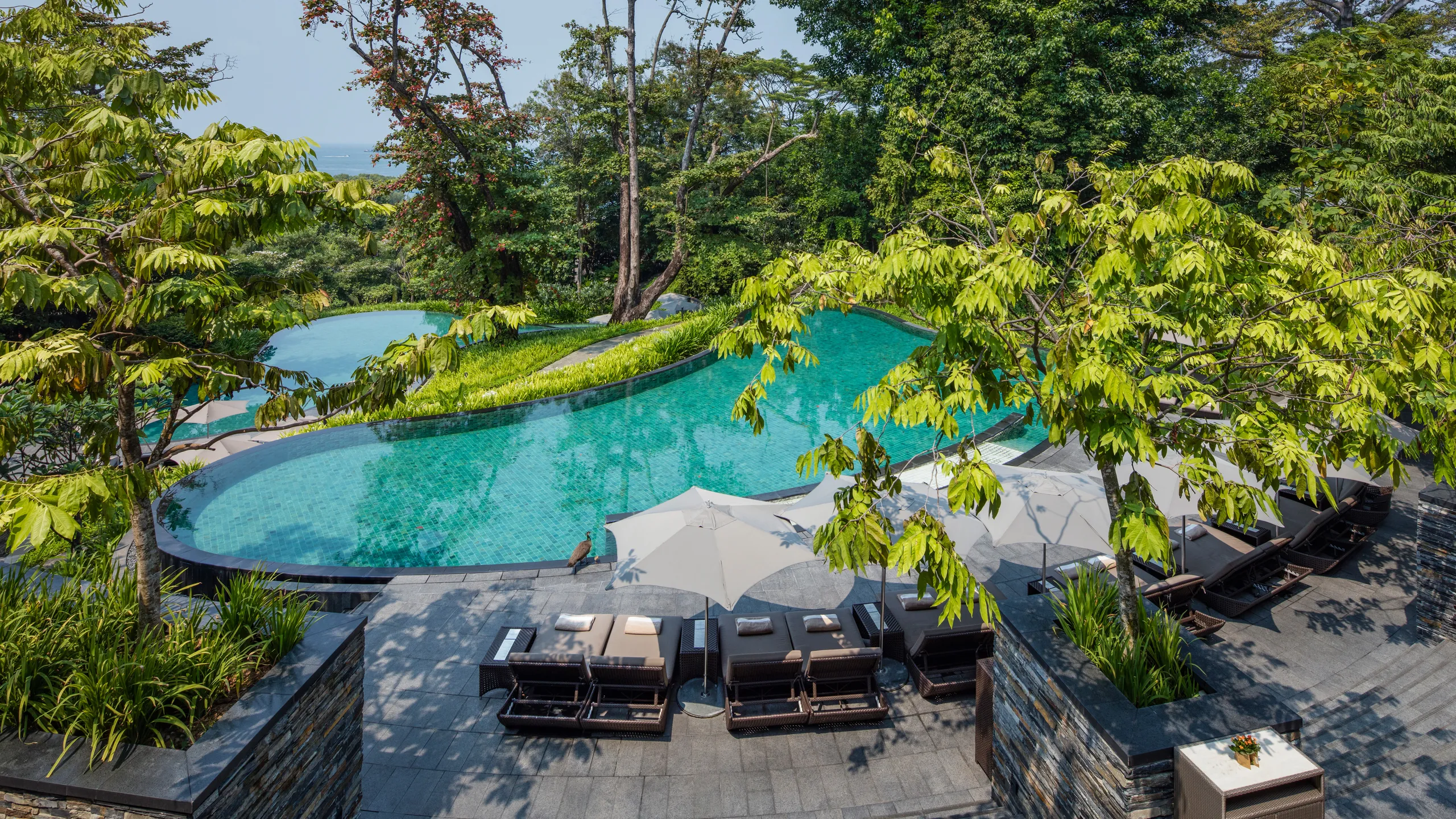
Pool @ Capella Singapore, source: conde nast
Why Capella? Aside from having picked up several notable awards and rankings, including a place on the World’s 50 Best Hotels list, the Capella Singapore is the kind of property that instantly feels more special than your average luxury hotel. Set on lush, expansive grounds on Sentosa, it offers a level of tranquillity and seclusion that is surprisingly rare in Singapore, yet it remains close enough to the city to enjoy the best of both worlds. What really sets it apart, though, is its sense of place: the hotel blends restored colonial-era heritage buildings with sleek contemporary design, creating an atmosphere that feels both timeless and distinctly modern. Add in Capella’s reputation for polished, intuitive service, some of the most spacious accommodations in the city, and a setting that feels more like a private retreat than a standard hotel stay, and it is easy to see why Capella Singapore has become one of the most celebrated properties in the country.
This is a hotel I’m really excited to stay at, and I opted to splurge on a villa while expensing it through Scotiabank Scene points, stacked FHR benefits, and credits. The cost of this villa was approximately $1400/night after the FHR discount.
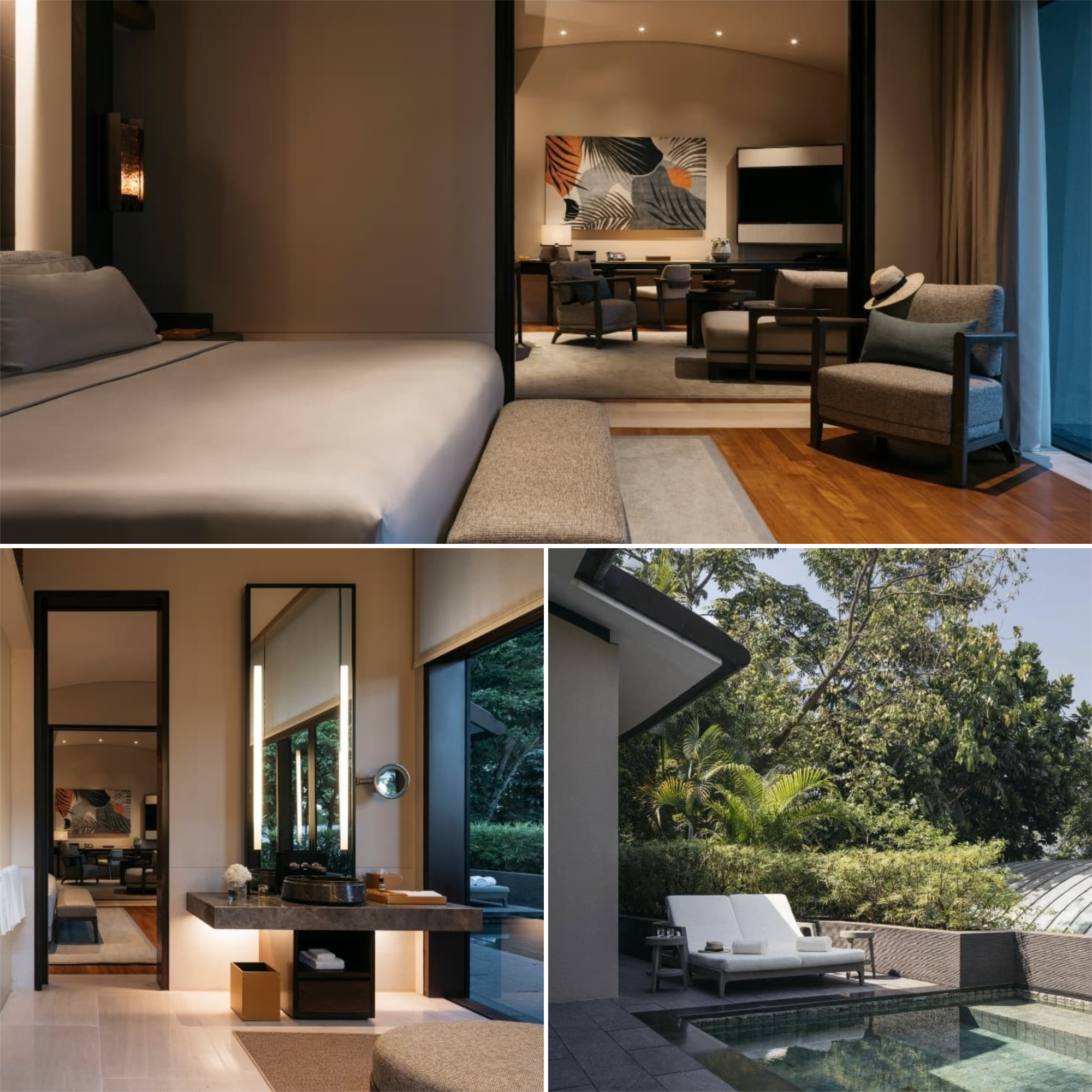
Capella Singapore 1-bedroom villa, source: capellahotels.com
Summary
This trip feels like a perfect reflection of how our travel style has evolved over the years. What started as a completely different plan for Tahiti turned into a 15-day journey through Seoul, Osaka, and Singapore, booked just weeks before departure. Pulling that off for a family of three in business class was no small task, but it is also exactly the kind of challenge that reminds me why I enjoy this hobby so much. With the right mix of strategy, flexibility, and a willingness to think beyond the obvious options, we were able to put together an itinerary that feels both exciting and comfortable.
More than anything, this trip is not about chasing the absolute highest value on every redemption. It is about using points and miles in a way that genuinely improves the way we travel. We are slowing down, staying longer, revisiting cities we love, and choosing hotels and flights that make the journey feel special from start to finish. From Air France and Singapore Airlines to the Four Seasons Seoul, Waldorf Astoria Osaka, and Capella Singapore, this trip is a reminder that points are not just a tool for “maximizing” on paper. They are a way to create experiences that would otherwise be difficult, expensive, or simply out of reach for a family trip like this.