Table of Contents
Points Miles and Bling (blog) contains referral or affiliate links. The blog receives a small commission at no additional cost to you. Thank you for your continued support. Credit Card issuers are not responsible for maintaining or monitoring the accuracy of information on this website. For full details, current product information, and Terms and Conditions, click the link included.
Anyone who travels has dealt with flight delays and cancellations (irregular operations, or IRROPS). Sometimes the weather causes it, sometimes the airline does, and sometimes it’s missile strikes somewhere en route. In times like these, it’s important to know your rights as a passenger and how to navigate the situation to have the best possible outcome.
If Possible, Prevent & Avoid
“Prevention is better than cure” applies to flights just as much as it does to everything else, so the best way to avoid a flight delay or cancellation is to pick a flight in the early morning. If your flight is the aircraft’s first departure of the day, delays are unlikely because the plane has been sitting overnight. By contrast, if your flight operates as the aircraft’s fifth departure of the day, any earlier delays will carry over.
When positioning on a separate ticket, I book the earliest flight available. I’ve taken the 6 AM United YOW–EWR flight many times to connect to an evening departure in New York. The afternoon flight is simply more delay-prone.
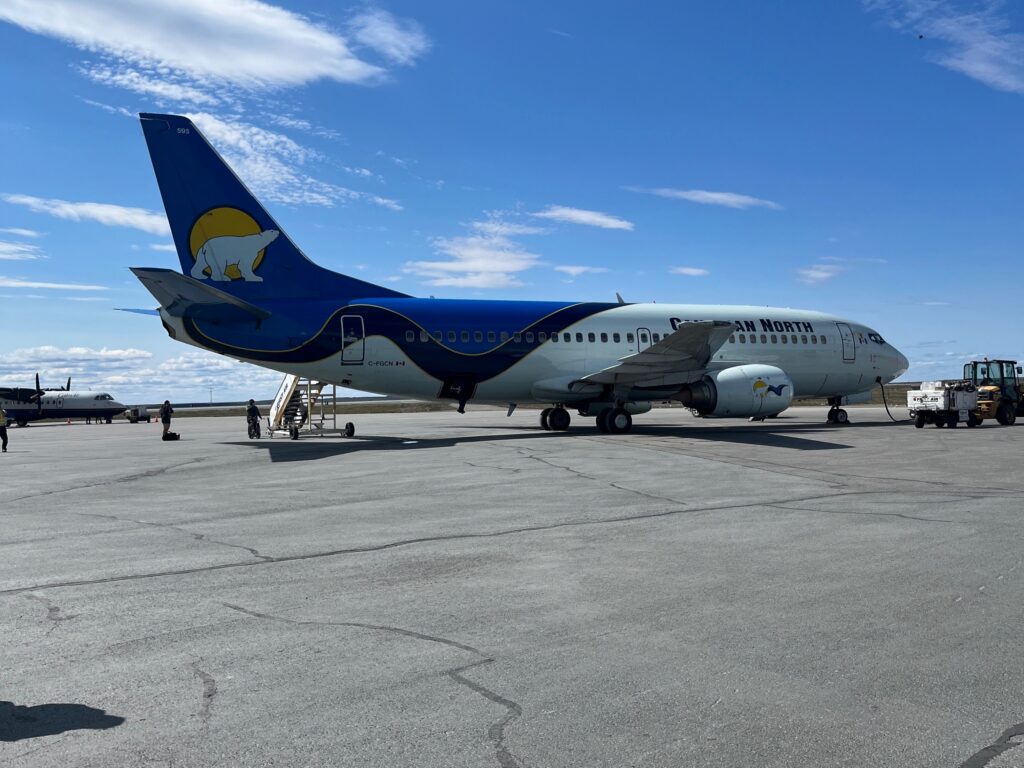
Take the early morning flight
Anticipate the Delay/Cancellation
Obviously, taking the first flight of the day is not always possible or realistic. The next-best option is to anticipate any IRROPS and search for backup options.
Before your flight takes off, you can use airline and other third-party apps to check the status of your assigned airplane. For example, the Air Canada app shows your assigned aircraft, and you can track the inbound flight. If the aircraft for your flight lands an hour late, your flight will likely depart late as well.
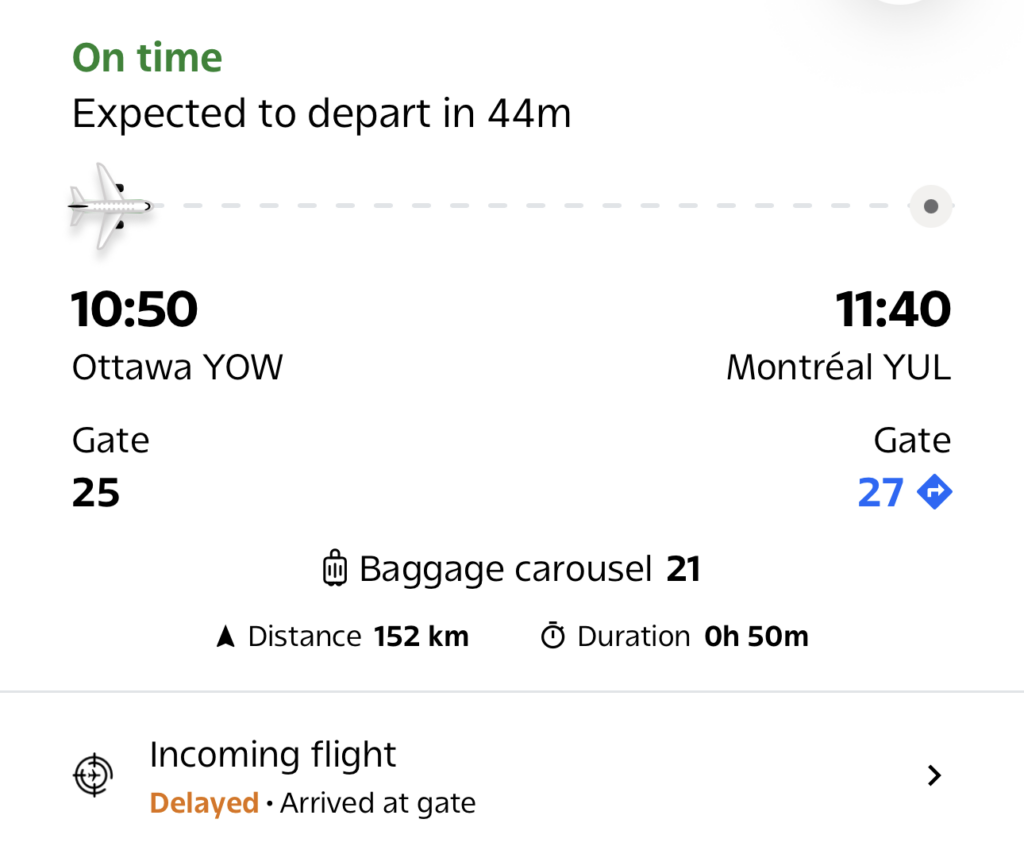
If your incoming flight is delayed, chances are your flight will be delayed as well
This isn’t an exact science, since the airline may switch your flight to a different aircraft. If it’s at the airline’s hub, like Toronto for Air Canada, this is more likely than it is at an outstation (if you’re flying Air Canada from Tokyo to Toronto, it’s unlikely Air Canada has spare aircraft sitting around in Tokyo.)
Anticipating the delay or cancellation allows you to be among the first to have an alternative ready to present to the airline should IRROPs occur.
So Your Flight is Delayed or Cancelled
In this stage and the previous stage, “Anticipate the Delay/Cancellation”, look for backup options. Everyone on your plane will be competing for the remaining seats, and you want to be first in line.
The operating airline is obligated to rebook you onto its own metal or any of its interline partners to your destination. The airline may not want to book on a partner, but you can make requests at any of the following:
- Airline ticketing or help desk in-person
- In the airline lounge
- Over the phone
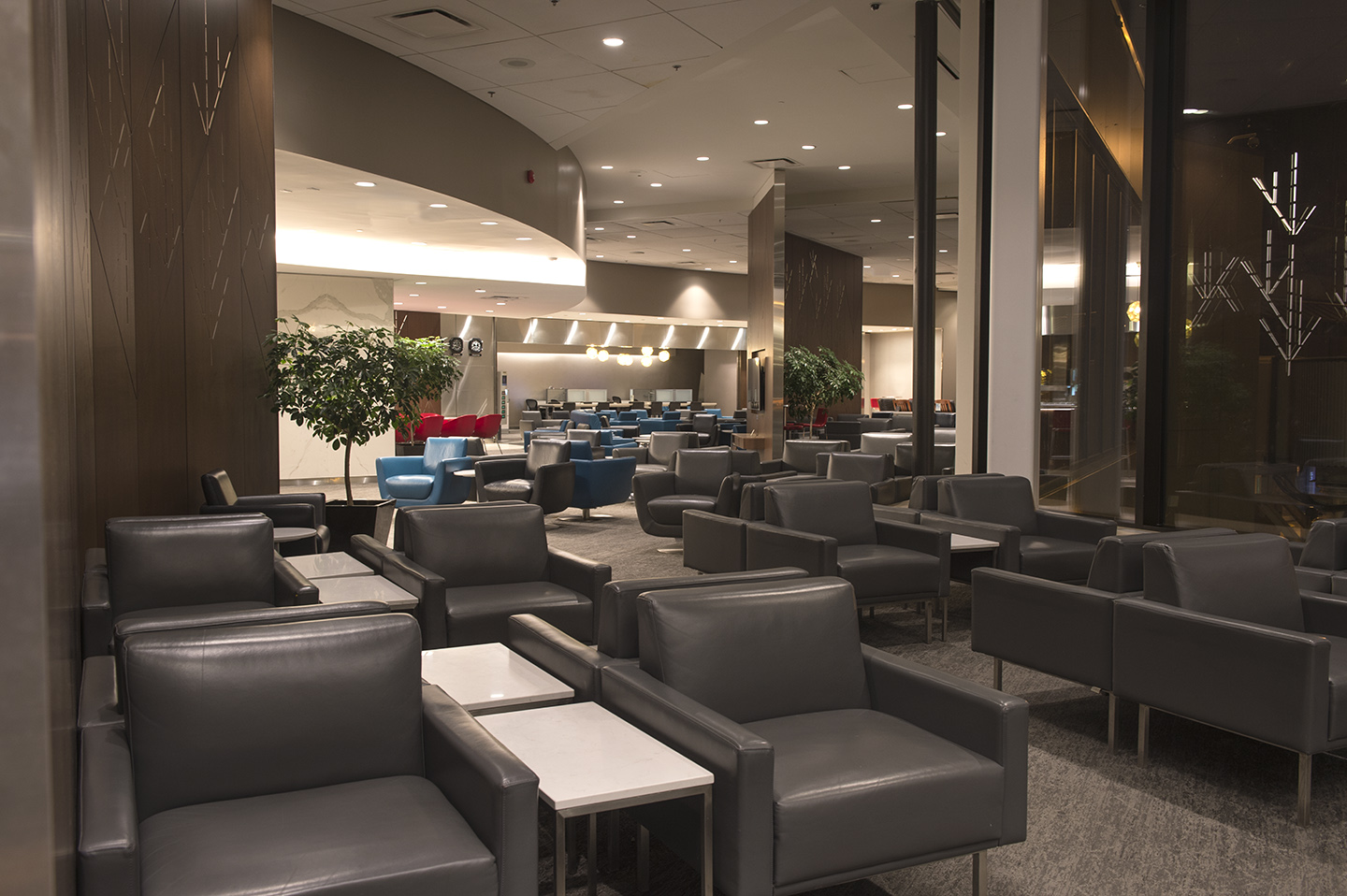
Try the airline lounge, it’s often less crowded than the ticketing desk
If one refuses, try another. Say KLM cancels your Montreal–Amsterdam flight and rebooks you onto Montreal–London on Air Canada, then London–Amsterdam on British Airways. Use ExpertFlyer or even Google Flights to see what other options are available, then reach out to KLM. I requested a Montreal-Paris-Amsterdam itinerary on Air France and KLM, and the agent swiftly reticketed it over the phone.
It’s imperative to have backup flights ready to present to the airline because your entire plane of passengers will be fighting for the remaining seats on alternative departures and you want to make sure you’re the one who gets it.
A Blessing in Disguise
If your flight is delayed or cancelled, you can use it as an opportunity to change your itinerary for something better. Even something as innocuous as a 10-minute schedule change could be enough. It depends on the airline, since Aeroplan is much more generous than, say, Virgin Atlantic.
If booking far in advance, I’ll choose the cheapest Aeroplan routing, such as Comox–Vancouver–Montreal–Ottawa, and wait for a schedule change. Then I call Aeroplan and switch to the direct Vancouver–Ottawa flight at no extra cost or change fee.
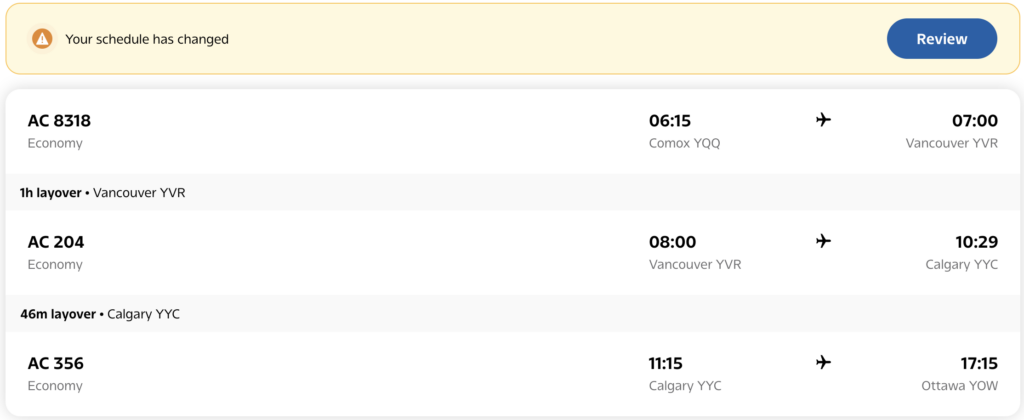
I’ll try to leverage this schedule change to a Vancouver–Ottawa direct flight
If Lufthansa cancels your First Class ticket, leverage the disruption to try switching to SWISS First Class instead. You’d be able to try with the ticketing carrier (Aeroplan) or Lufthansa directly.
Insurance & Compensation
Know your rights and insurance policy when booking a ticket.
If you fly from Europe or fly to Europe on a European airline, EU261 may entitle you to up to €600 per person, depending on the distance of your flight.
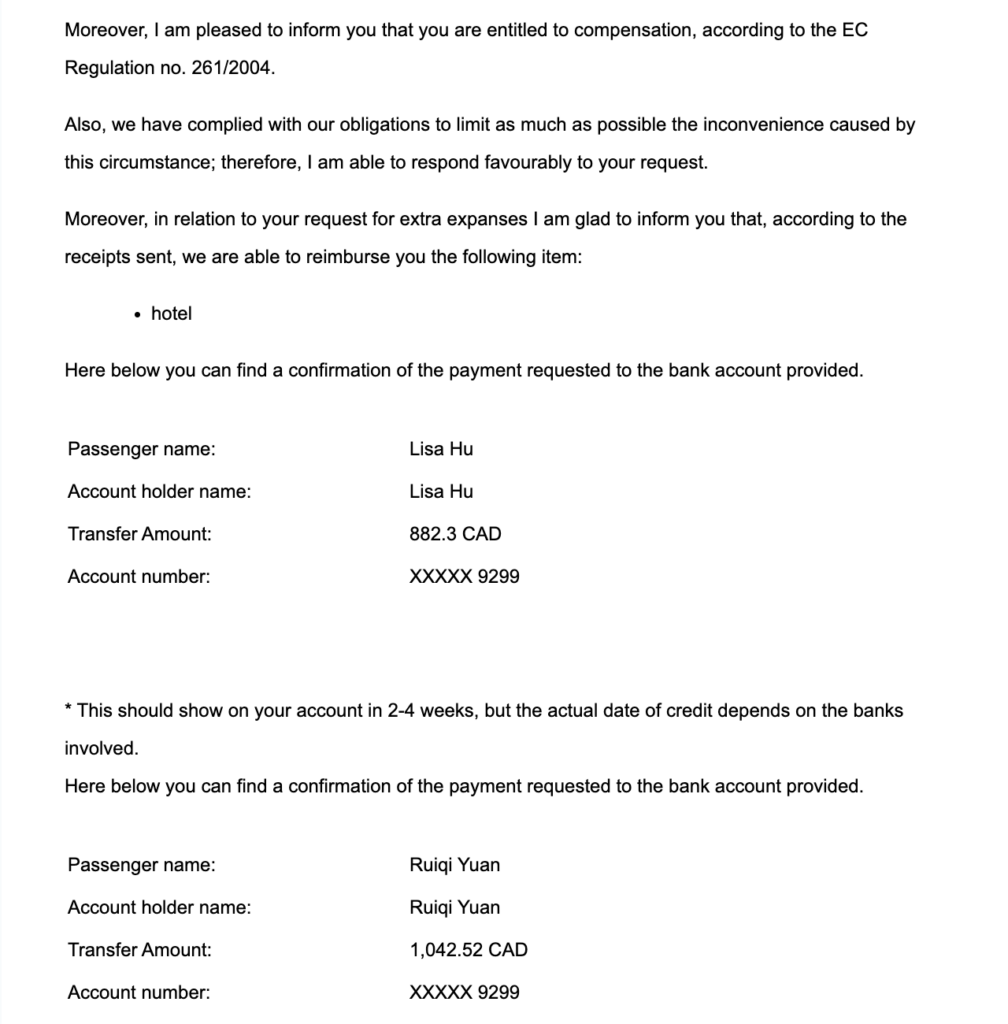
KLM paid EU261 + my overnight hotel after they cancelled Montreal–Amsterdam
If a snowstorm strands you in Toronto, check whether the credit card you used for the booking covers hotel stays and meals. Depending on your policy’s limits, your insurance may even reimburse a night at the St. Regis or the Ritz-Carlton. In this situation, make sure your insurance still applies when you partially pay the fare with a credit card while the base fare is booked with points.
Takeaway
IRROPS are inevitable, but knowing how to respond can make all the difference. Booking early flights, tracking your aircraft, and preparing alternative routing options can help you stay one step ahead when disruptions happen.
Just as importantly, understanding passenger rights and insurance coverage can turn a frustrating delay into an opportunity to recover costs or even improve your itinerary.
