Table of Contents
Points Miles and Bling (blog) contains referral or affiliate links. The blog receives a small commission at no additional cost to you. Thank you for your continued support. Credit Card issuers are not responsible for maintaining or monitoring the accuracy of information on this website. For full details, current product information, and Terms and Conditions, click the link included.
With the news of now being able to book Philippine Airlines on points and especially using it for domestic travel, I thought it’d be fun to write a trip report of my time spending 12 + 7 days in the Philippines between Cebu and Palawan on two separate trips, first for scuba diving, then for limestone cliffs and white-sand beaches.
The Flights
On my first trip there, I flew from Chile to Hong Kong on Iberia, followed by Finnair, on a Santiago (SCL)–Madrid (MAD)–Helsinki (HEL)–Hong Kong (HKG) routing, entirely booked with Avios. The long-haul flight on Iberia cost 51,500 Avios and the 13-hour flight on Finnair was 62,500 Avios, both with minimal taxes/fees. On the return, I booked a Starlux flight from Taipei to San Francisco for 75,000 Atmos Rewards points.

Starlux A350 business class
On the second trip, I flew China Airlines from Phoenix to Taipei for 72,500 Flying Blue miles. I later went to Japan and flew home on Lufthansa and Austrian, booked last minute for 87,500 Aeroplan points on a Tokyo (HND)–Munich (MUC)–Vienna (VIE)–Montreal (YUL) routing.
Both trips required positioning flights on either end of every long-haul, which were mostly booked on cash and covered with TD Rewards points.
Scuba Diving around Cebu
Moalboal
We ended up visiting three distinct spots to scuba dive and Moalboal was the first one. On the west side of Cebu Island, Moalboal is famous for its year-round sardine run.
Moalboal also attracts divers to Pescador Island, although Hurricane Odette severely damaged the island in 2021. However, it’s still a great spot for diving.
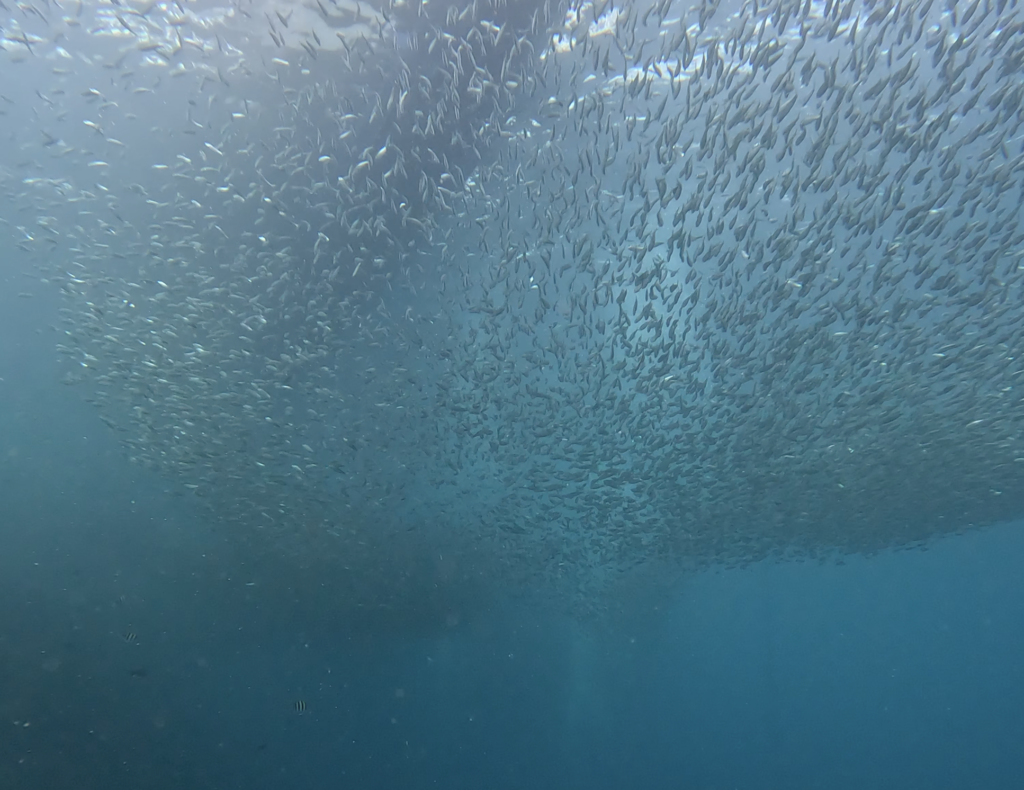
Moalboal Sardine Run
Panglao, Bohol
Diving around Alona Beach is best known for day trips to Balicasag Island, a haven for sea turtles. However, I was just as impressed by the local dive sites, a short five-minute boat ride away. It was my first time seeing a frogfish, and they instantly became one of my favourite underwater animals.
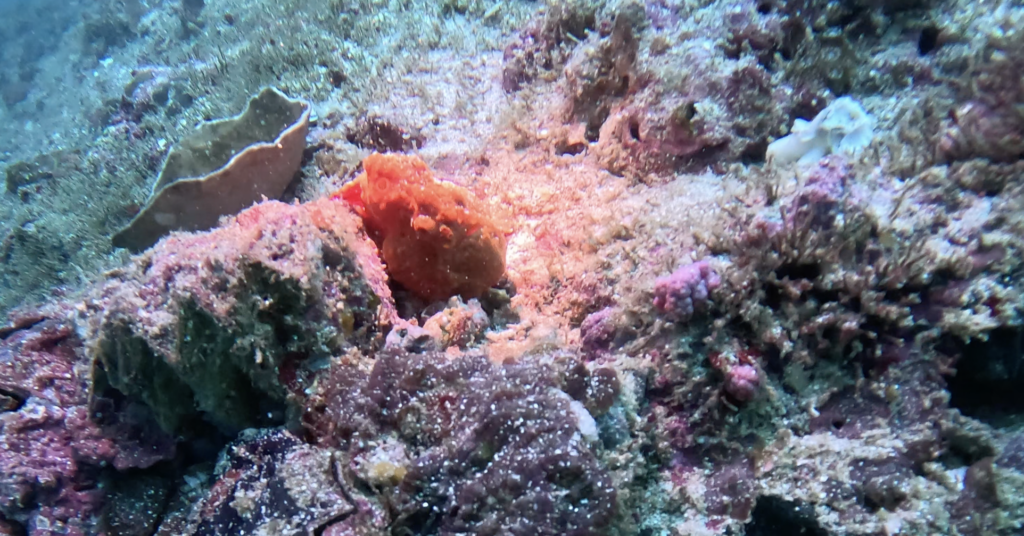
Frogfish come in many colours, including red
If you’re looking to take the must-do day trip to Balicasag, be sure to book it on your first day in town. Despite the plethora of dive operators, only a limited number of boats are allowed to go per day for conservation reasons.
It’s well worth it for Balicasag’s calm waters, excellent reefs, and guaranteed turtle sightings.
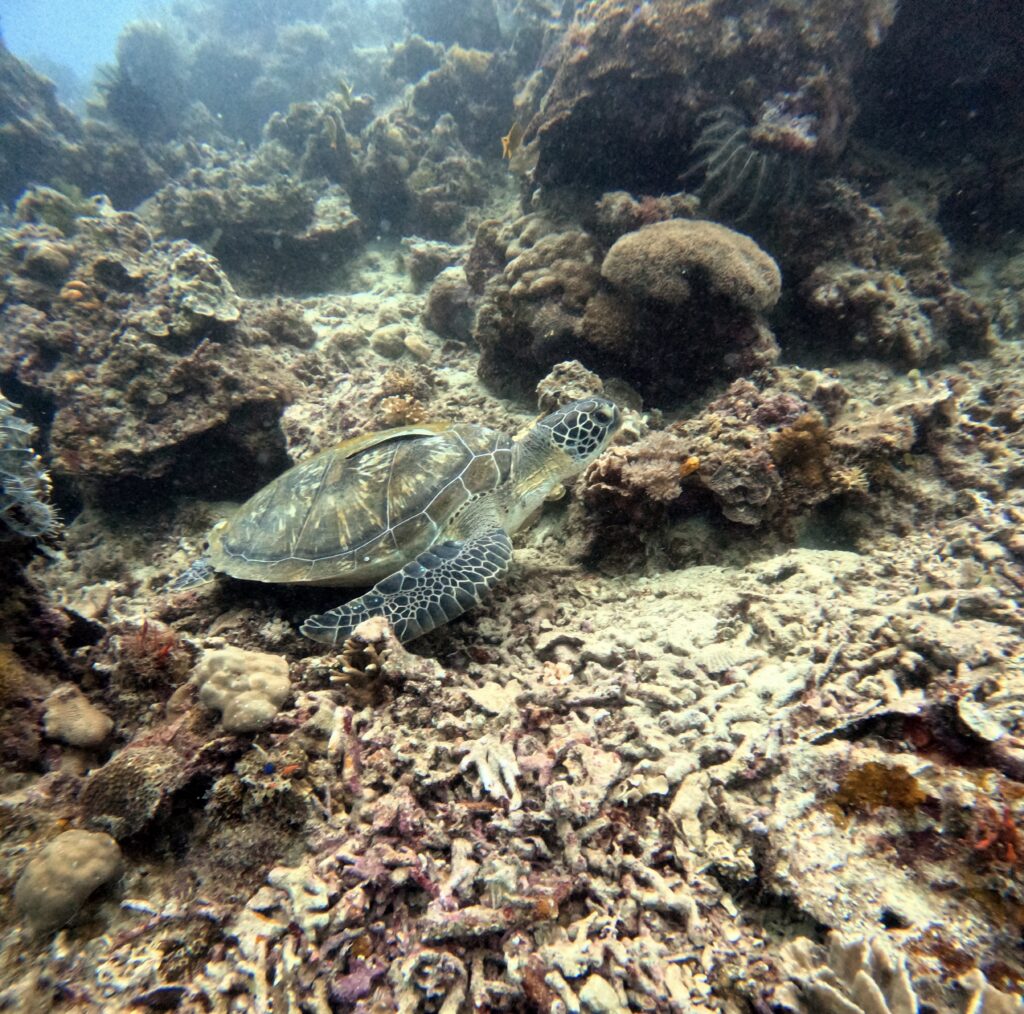
Turtles in Balicasag, Philippines
Malapascua
Undoubtedly the premier scuba diving destination around Cebu, Malapascua is famous for its year-round thresher sharks. They visit a cleaning station early each morning and come as shallow as 14 metres, making this one of the most reliable places in the world to see them.
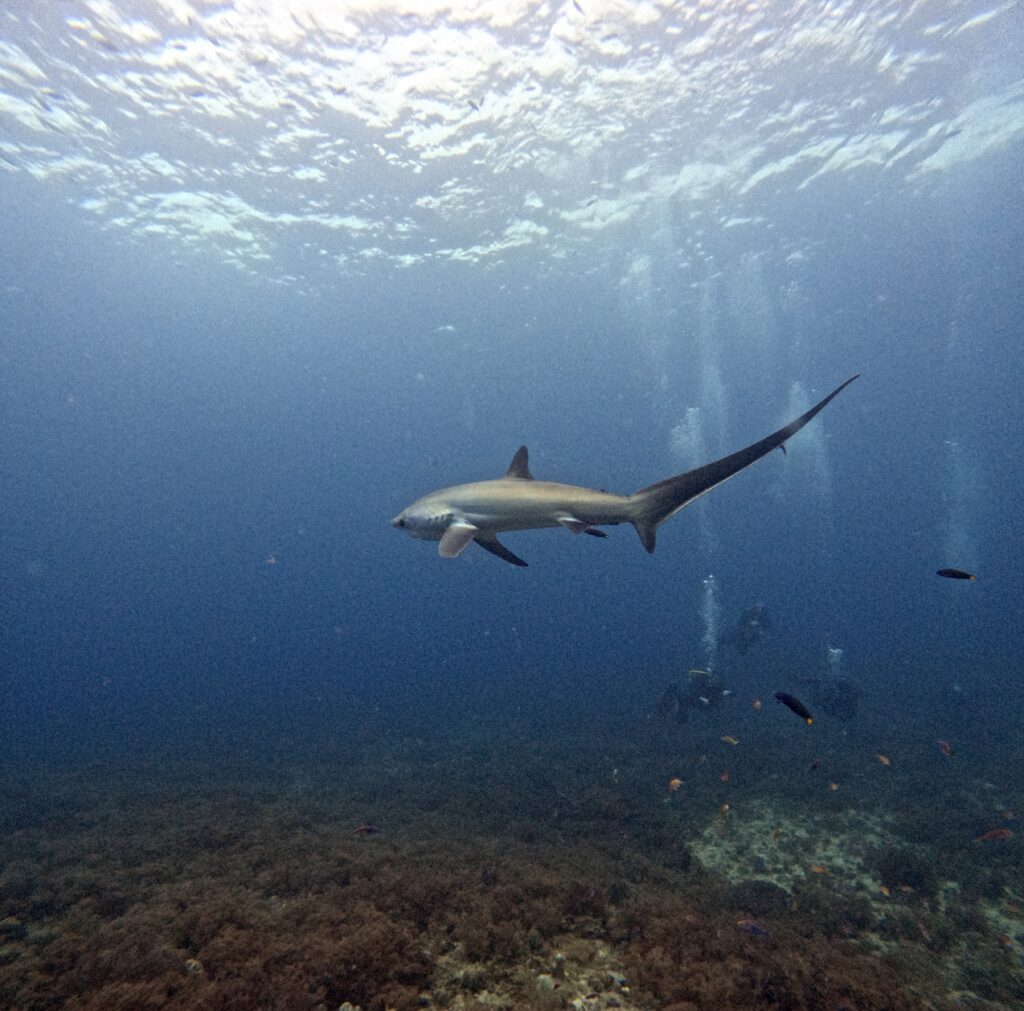
Thresher sharks in Malapascua, Philippines
A trip to Gato Island is also just as worth it as seeing the thresher sharks, in my opinion. We saw juvenile sharks and shark eggs, along with sleeping white-tip reef sharks.
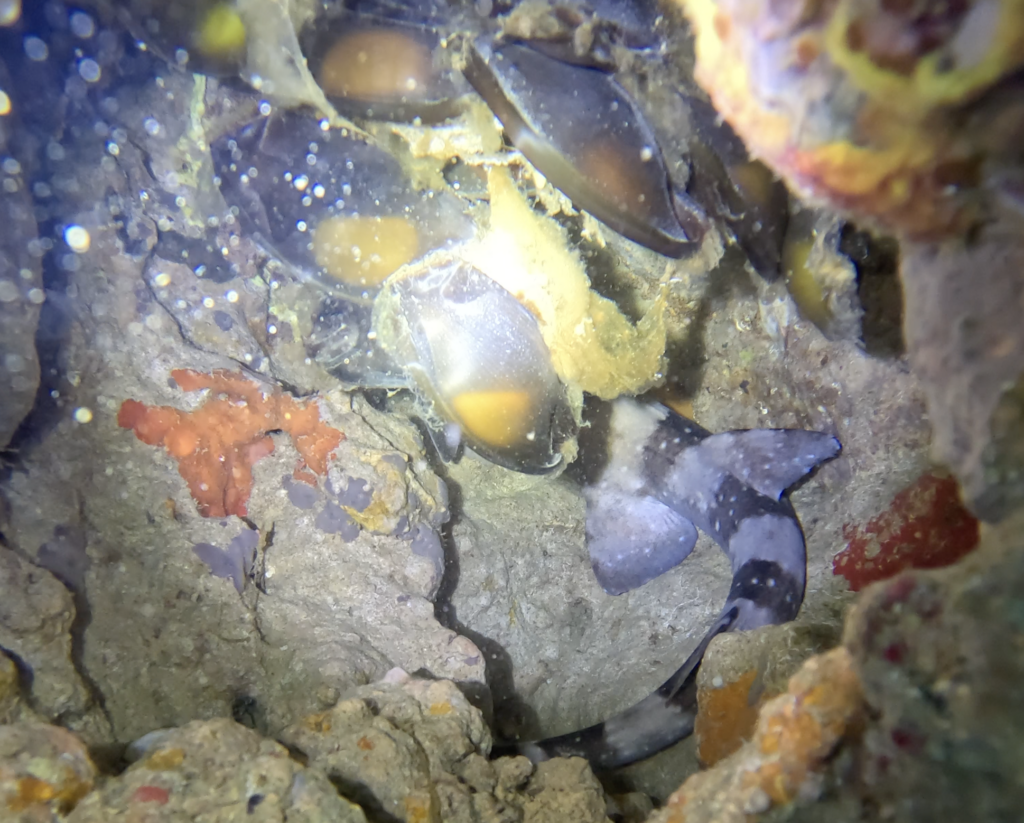
Shark and shark eggs
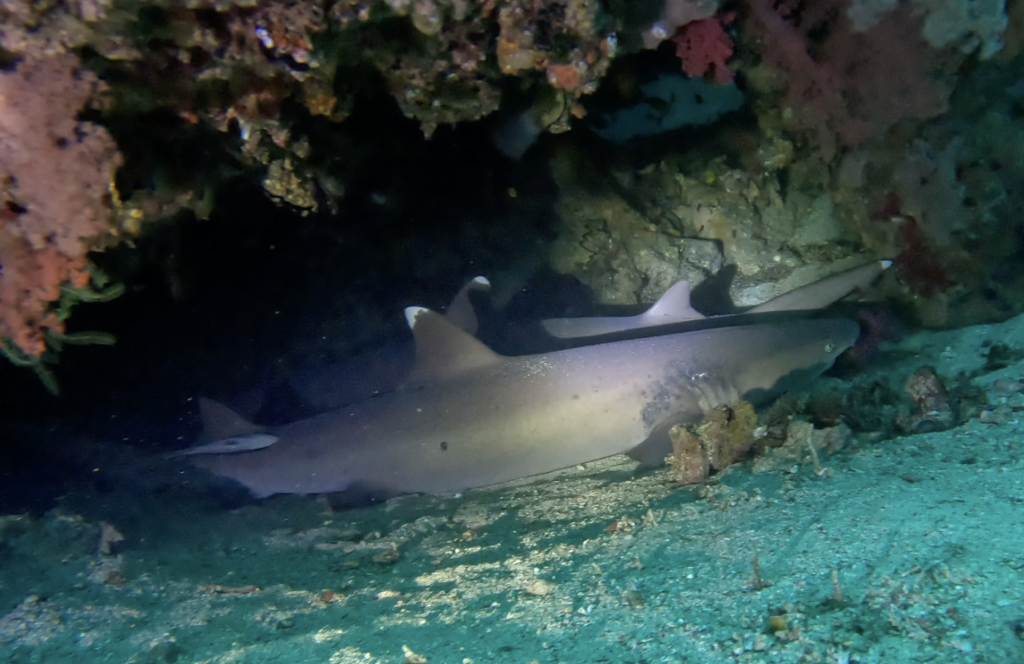
White-tip reef sharks resting
There were more frogfish, and I found the electric clam’s pulsating light displays as dazzling as the thresher sharks.
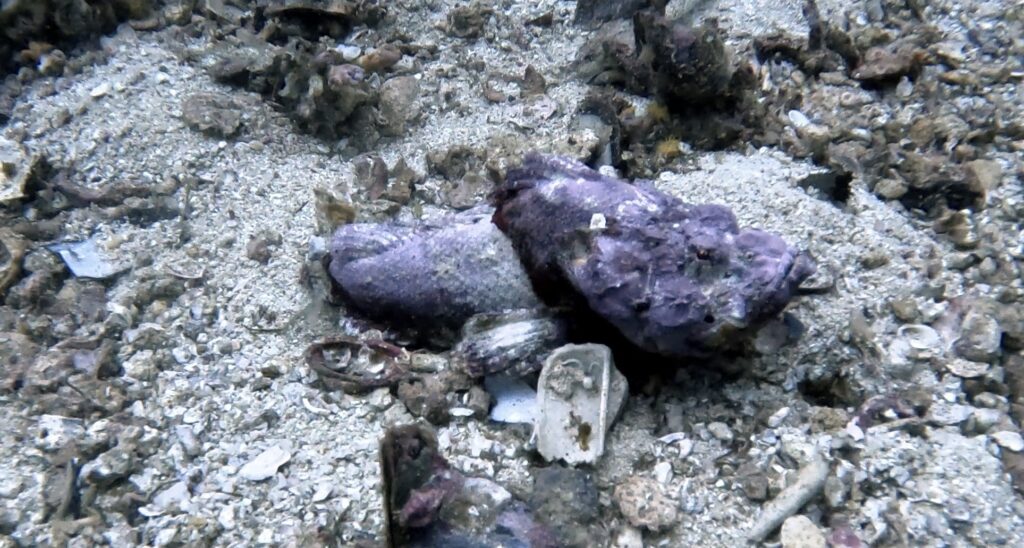
A purple frogfish
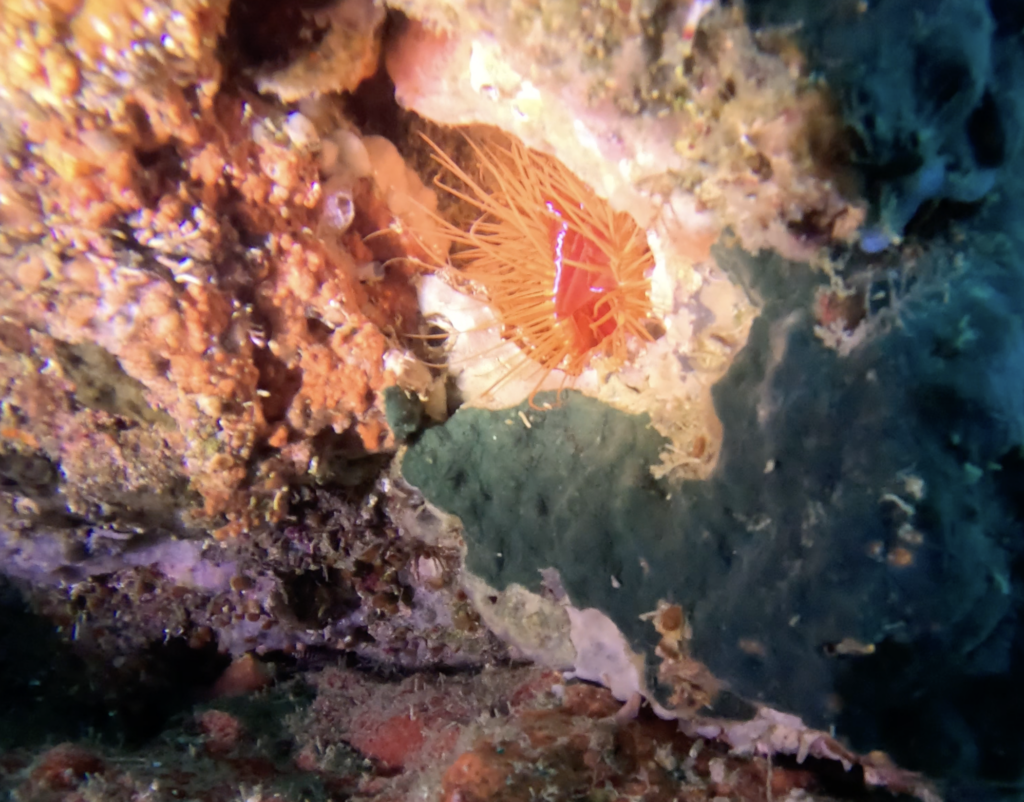
Electric clams pulsate light underwater
The Logistics of Getting Around Cebu
I do want to quickly mention that getting around the island of Cebu to these various dive spots is not super easy. You can take coach buses (pay extra for air conditioning) and then tuk-tuks in the small towns, along with public ferries. The easiest is to hire a driver, which is extremely affordable, and I would recommend it — feel free to reach out to me for my driver’s contact info.
The ferries are where you want to be careful. Given the option, always take the big ferry ship, even if it requires some backtracking. To avoid doubling back to Cebu, I caught a ferry from Oslob to Panglao, and it was more like a large traditional boat sailing across open seas. It took nearly twice as long as advertised, and most people on the boat threw up.
On the ferry ride to Malapascua, you walk onto the boat up a plank where local staff hold a bamboo railing. Make sure to pay them to carry your luggage or risk falling off with it.
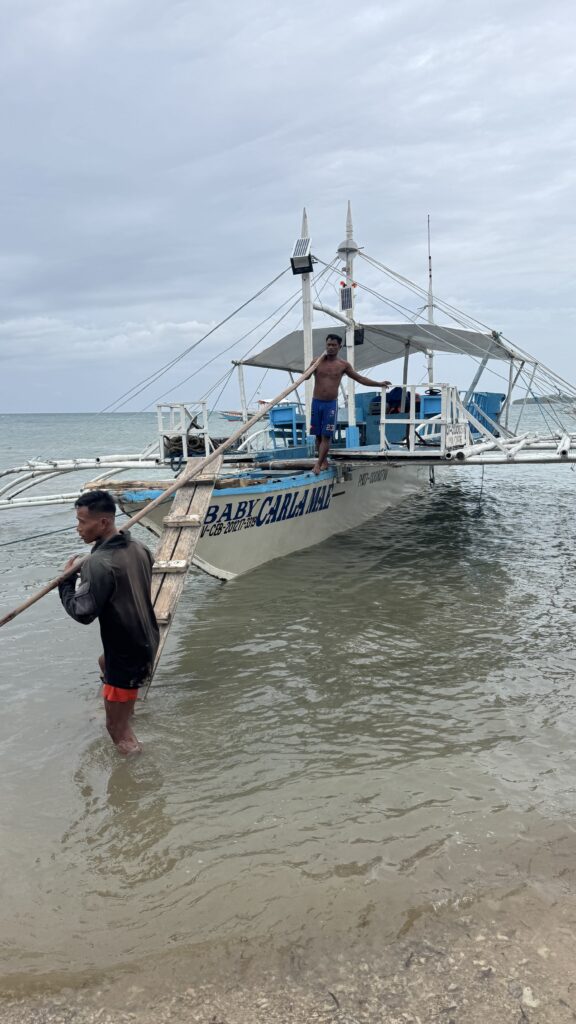
The “ferry” to Malapascua and back
There’s always the risk of rough weather, so we bobbed up and down for about 40 minutes before finally departing. The half-hour journey turned into a soaking wet, bone-rattling ride through heavy chop, leaving everyone on board drenched by the waves. Seeing the thresher sharks was entirely worth it, but just a fair warning.
A 4-Day, 3-Night Journey Across Palawan
My second trip involved flying into Coron and taking a Tao Philippines boat (not sponsored, but I had a great experience) on a 4-day, 3-night journey through the islands of Palawan before arriving in El Nido.
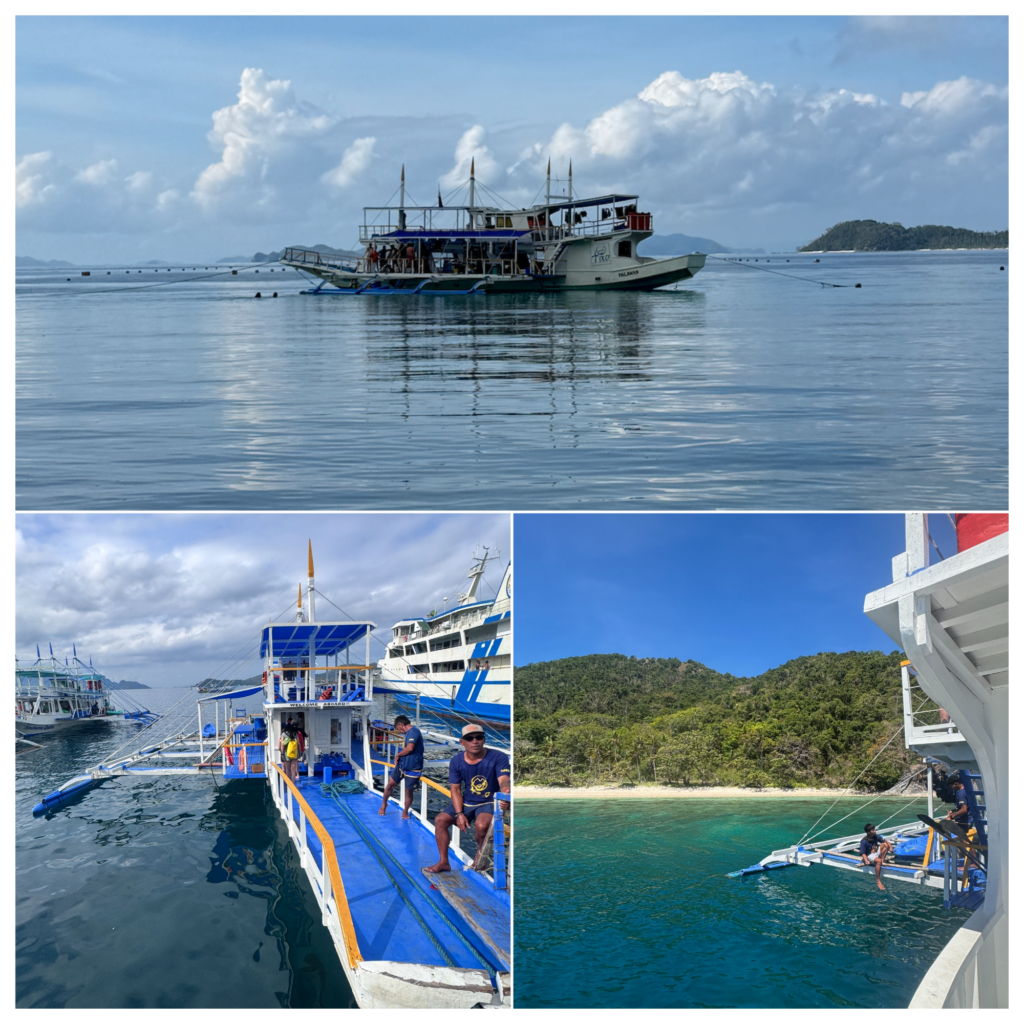
Home for the next 4 days, 3 nights
I’d call it glamping more than camping, as we spent each night on a new island having a cocktail watching the sunset. The untouched beaches truly felt otherworldly, and we spent the days alternating between chilling on the top deck or snorkelling in glass-clear water.

It was surreal to have every beach to ourselves
Tao served up the most amazing food each day, and some of it was freshly caught!
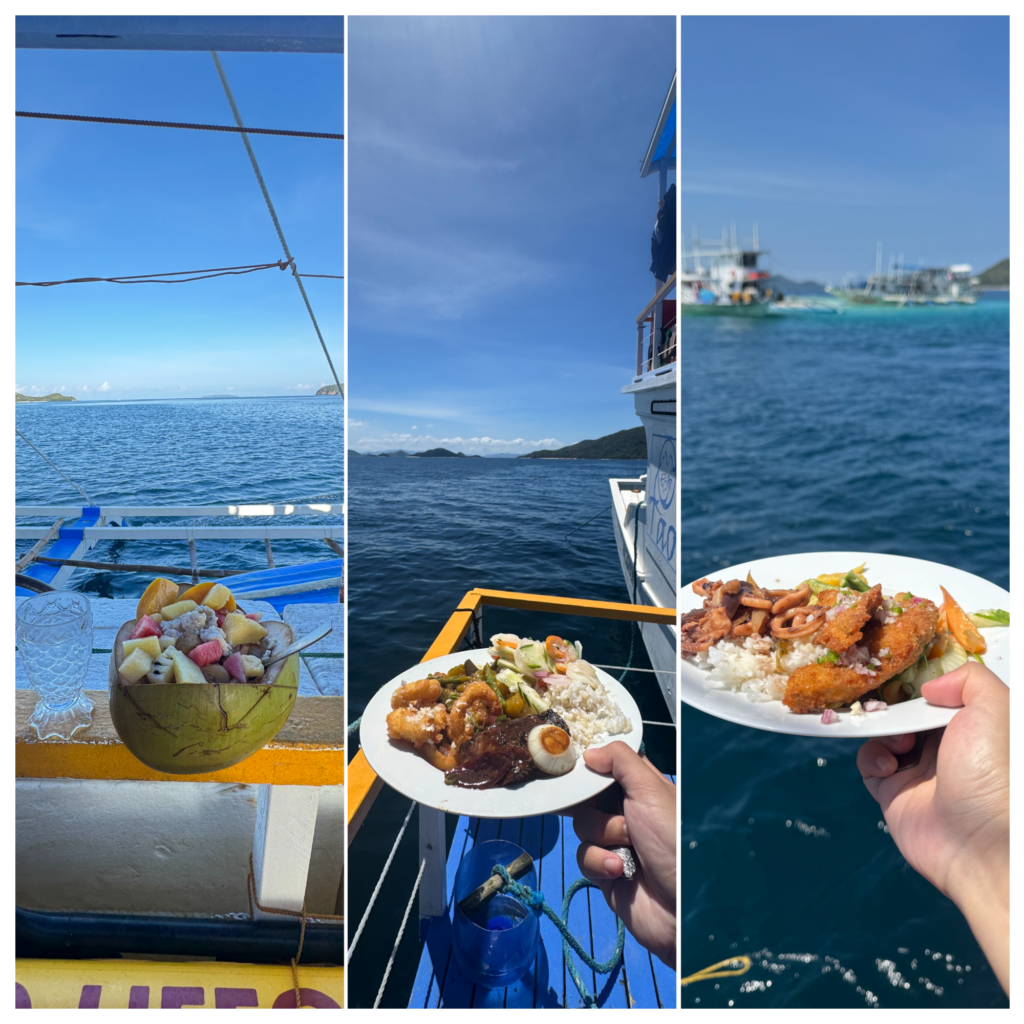
My favourite meals in the Philippines were all served by Tao — featuring calamari with squid caught that morning
I’ll never forget watching my tour leader freediving for sea urchins and then cutting them open 20 minutes later on the boat — it doesn’t get fresher than that.
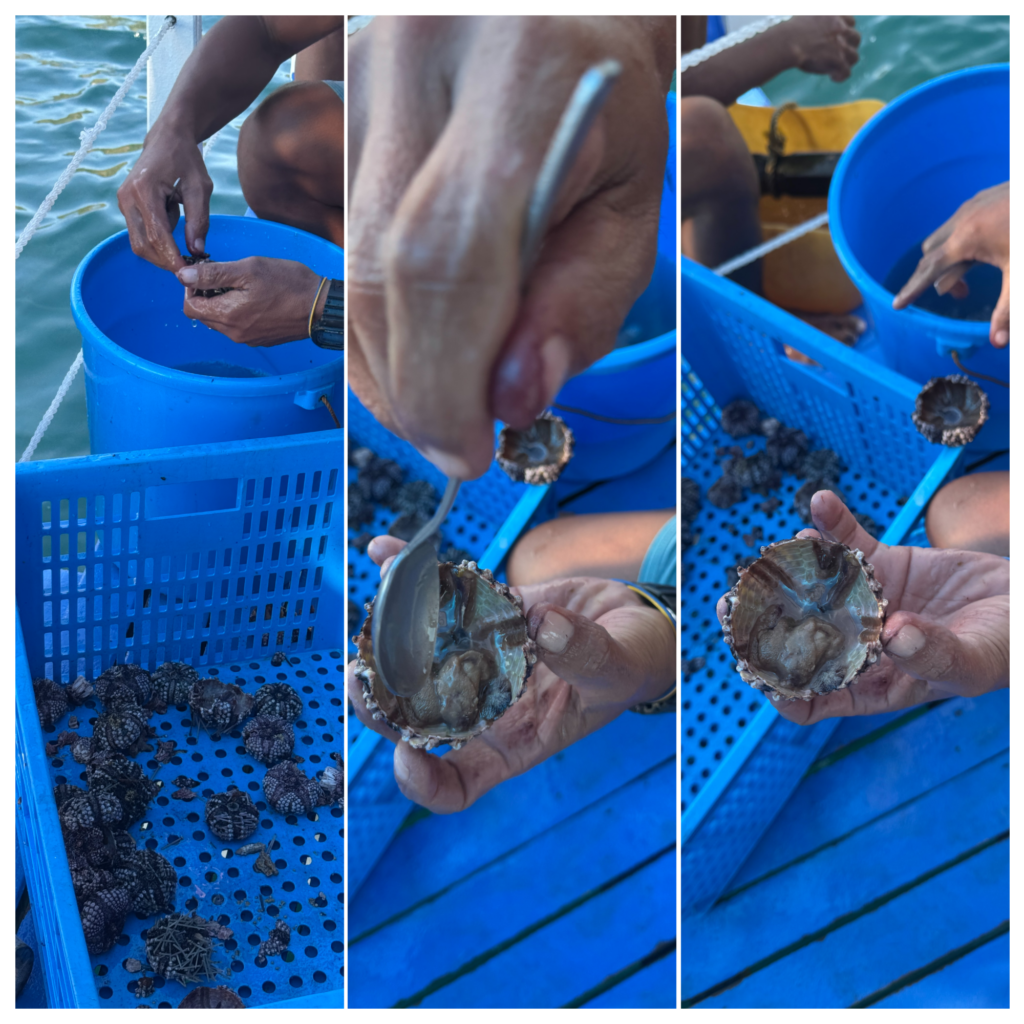
Serving up just-caught sea urchin
Palawan absolutely blew me away, and I highly recommend a visit. Just don’t expect it to be a budget destination. The booming tourism industry brought prices significantly higher than almost anywhere else in the country, especially at the private island resorts around El Nido. My only regret was not spending a few extra days in El Nido to kayak in the lagoons and see the limestone karsts up close.
Takeaway
The Philippines ended up being one of the most distinctive destinations I’ve been to, standing out among other Southeast Asian countries. Between the world-class scuba diving around Cebu and the stunning landscapes of Palawan, it’s one of the few places I urge everyone to visit sooner rather than later, while much of its natural beauty remains intact.
The best part is that getting there and around the country is becoming easier with points. Philippine Airlines’ new partnership with Qatar Airways opens up another points option for crossing the Pacific, while domestic redemptions can help cut the cost of reaching destinations like Cebu, Coron, and Boracay. If you’ve been looking for somewhere that combines incredible diving, beautiful beaches, and plenty of adventure, the Philippines deserves a spot on your shortlist.
