Points Miles and Bling (blog) contains referral or affiliate links. The blog receives a small commission at no additional cost to you. Thank you for your continued support. Credit Card issuers are not responsible for maintaining or monitoring the accuracy of information on this website. For full details, current product information, and Terms and Conditions, click the link included.
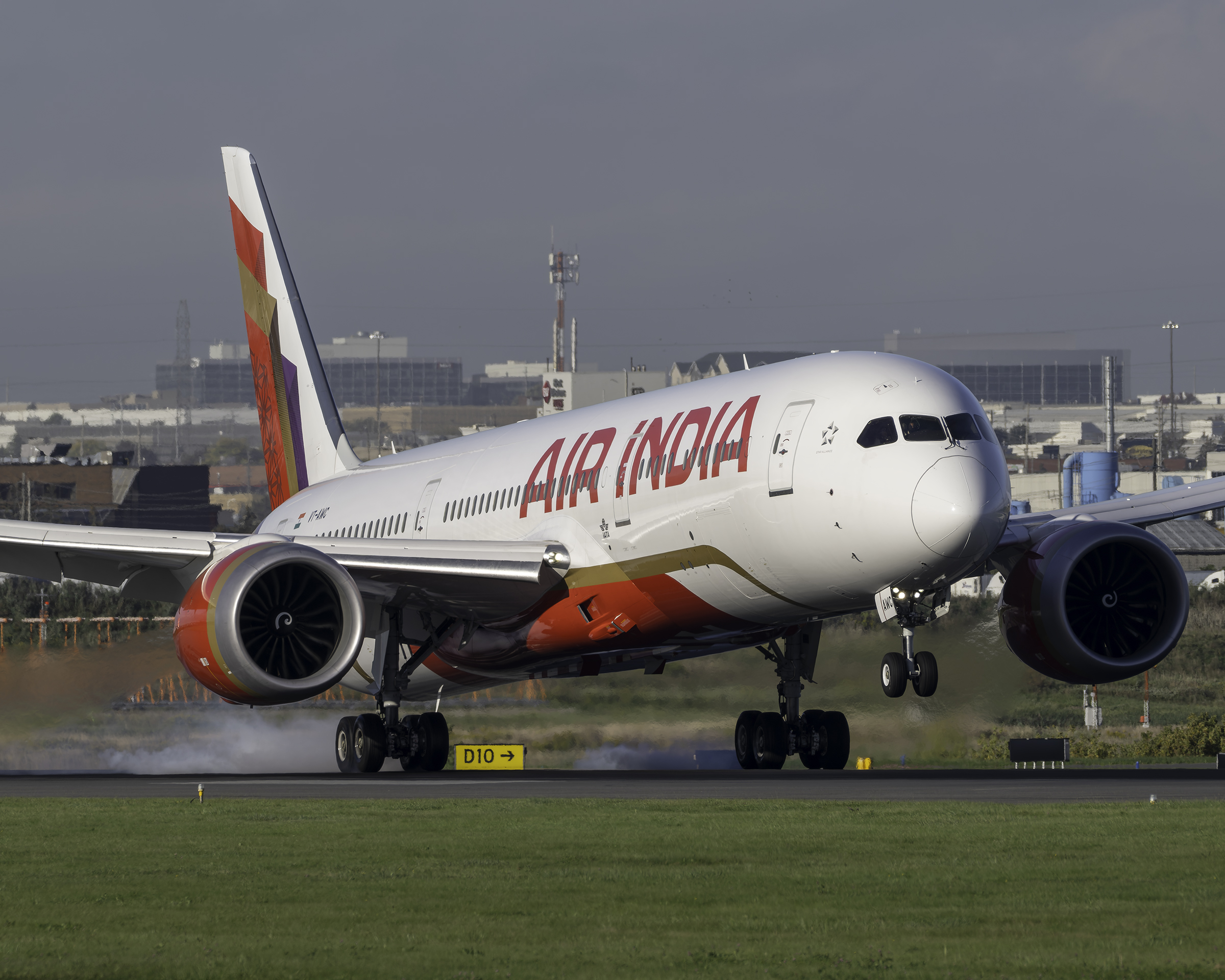
Yesterday, I had the opportunity to hop on board Air India’s brand-new Boeing 787-9 at Toronto Pearson (YYZ), this time without actually going anywhere. Air India was showcasing the aircraft now operating seven of its ten weekly flights between Toronto and New Delhi (DEL).
I have already flown Air India’s new 787-9 in Business Class from Mumbai (BOM) to Frankfurt (FRA) and came away genuinely impressed with both the new hard product and, perhaps more importantly, the onboard service. So during the media event in Toronto, I wasn’t particularly interested in spending all my time in Business Class again – I wanted to explore the rest of the aircraft.
The 787-9 introduces an entirely new three-cabin Air India experience to the Toronto market, including Premium Economy for the first time. And having now experienced the aircraft both as a passenger and on the ground, I think Air India has done the easier part exceptionally well. The much harder task is making the entire Air India experience consistently this good.
The 787-9 feels like a very different Air India
The tour naturally started in Business Class, which remains the superstar of this aircraft, and I love this cabin. It is distinctly Air India, as the airline has managed to carve its Indian identity through a modern aircraft. The colours, fabrics, lighting, and little design elements inspired by Indian architecture give the cabin a lot of personality.
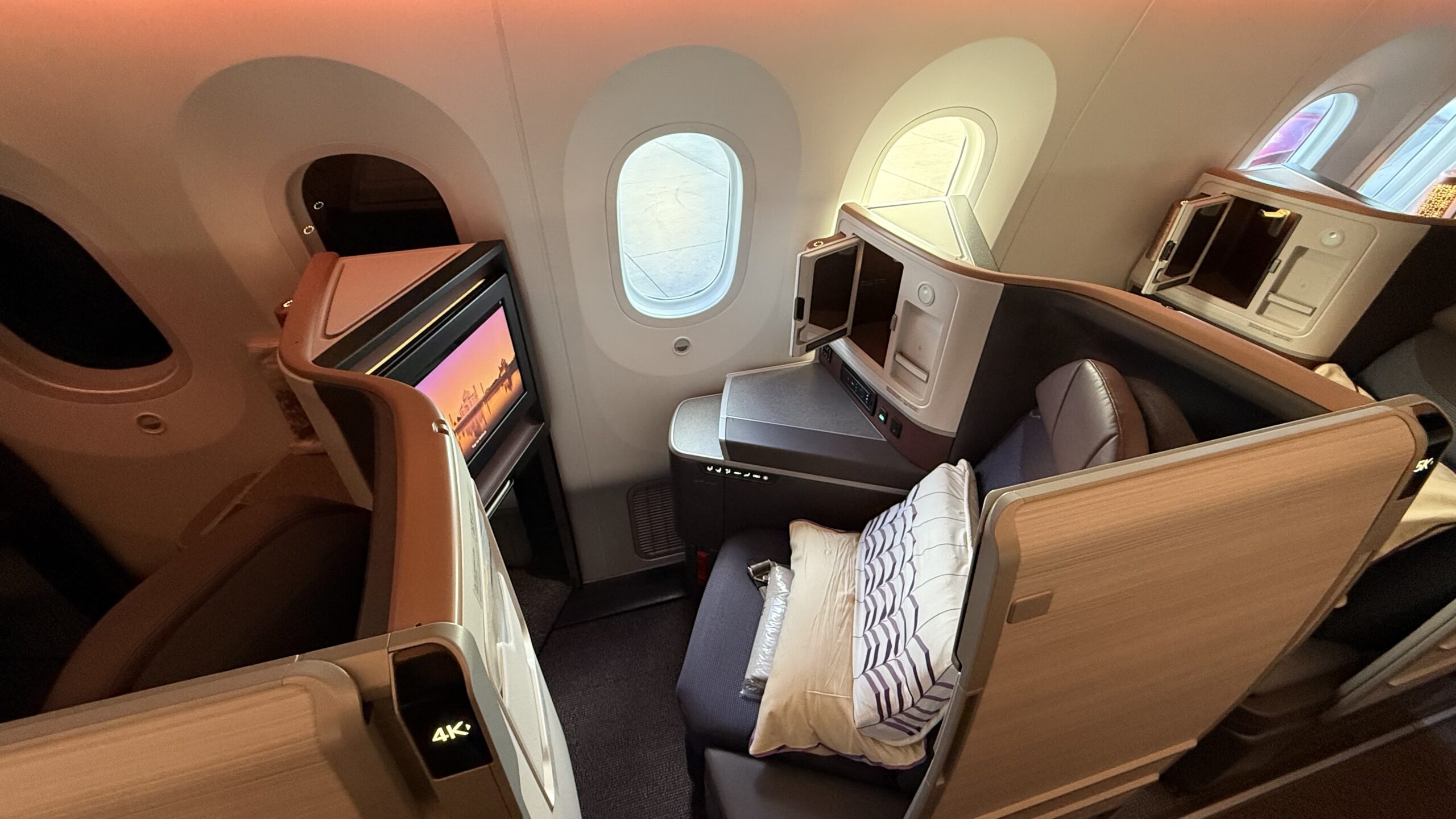
Air India 787-9 Business Class Suite
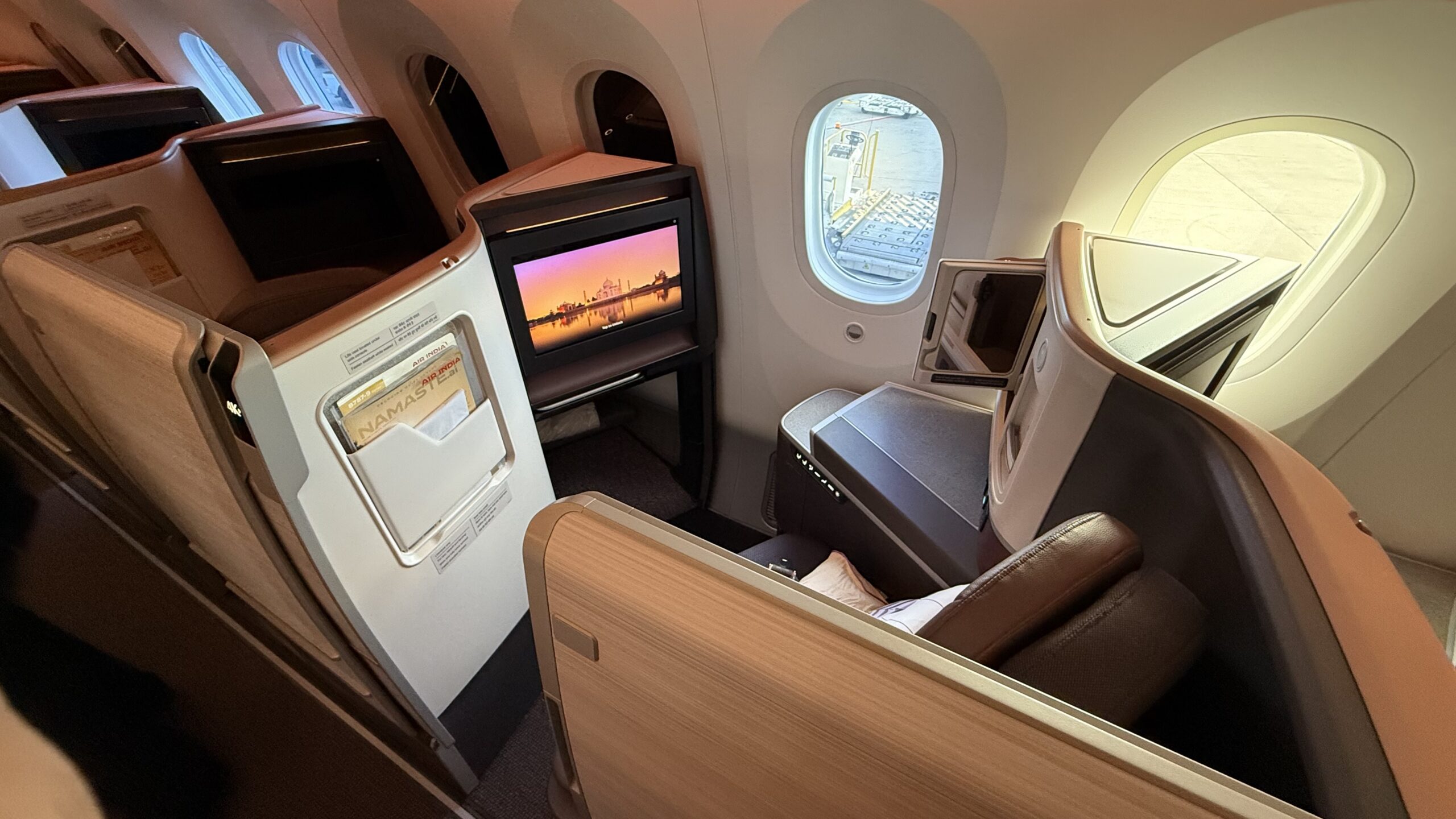
Suite 4k – Air India 787-9 Business Class
Having actually slept in this seat for several hours on my Mumbai–Frankfurt flight, though, the things I appreciate most aren’t necessarily the things that photograph best. The fabric seat is incredibly comfortable. Air India provides a mattress topper in Business Class that made all the difference for sleeping, and the footwell has enough depth and height that I was comfortable even as a side sleeper.
And then there’s my favourite little feature on the seat – the wireless charging compartment. Instead of putting your phone on a flat wireless charging pad where turbulence or an accidental elbow can send it sliding across the console, Air India has incorporated a dedicated holder that keeps the phone in place while charging.
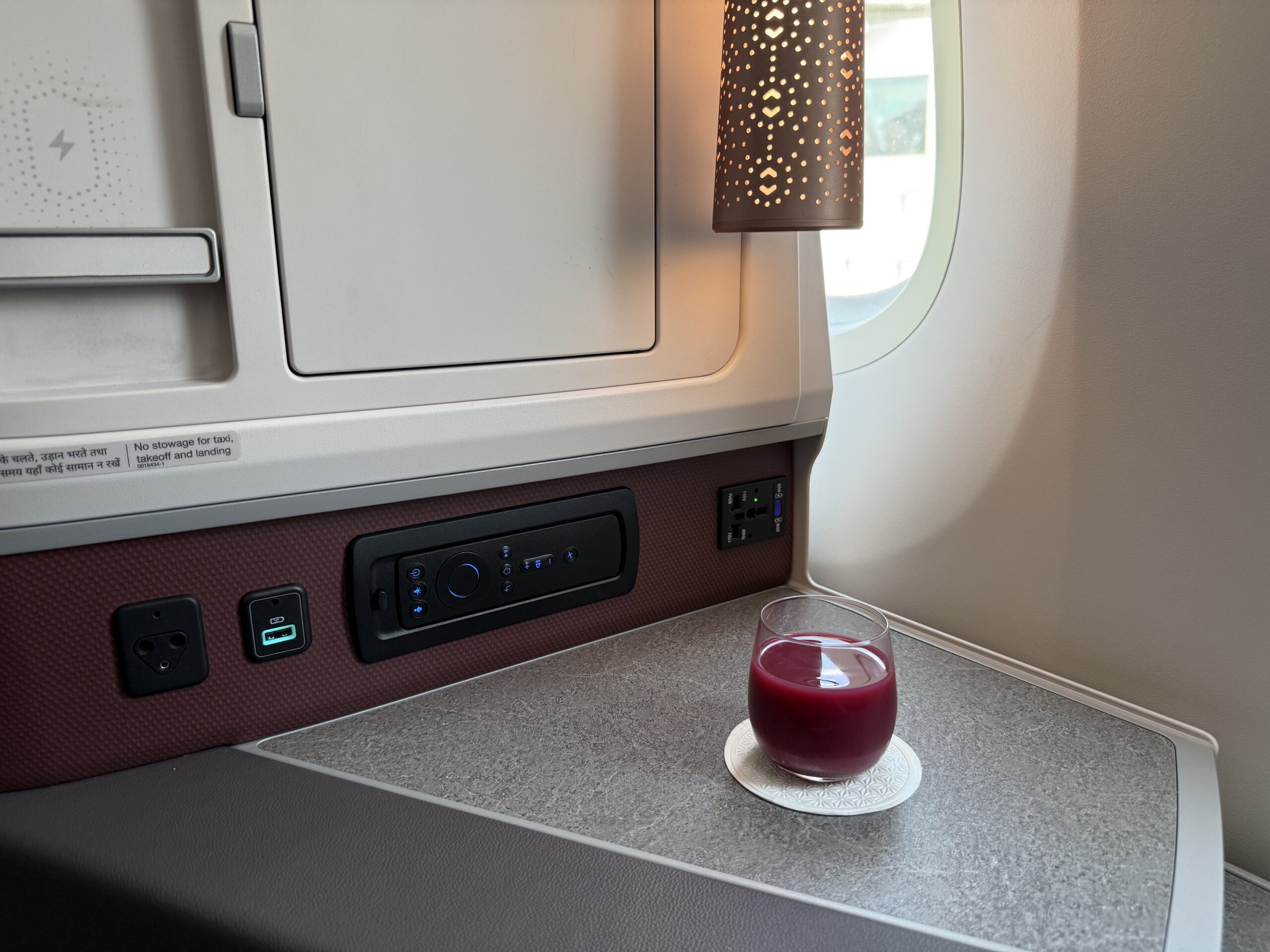
Wireless Charging Case (top left)
It has a beautiful 17-inch 4K screen, Bluetooth connectivity to pair your own headphones, USB-A and USB-C charging, and direct aisle access from every seat. The 30 Business Class suites are arranged 1-2-1 and convert into beds.
Every Business Class suite has a sliding privacy door, which isn’t available yet. The doors remain locked because Air India is still awaiting the necessary regulatory approval.
Once operational, the door will complete an already excellent Business Class seat. Privacy has increasingly become a differentiator in premium cabins, particularly for solo travellers. That said, I don’t think the missing door fundamentally diminishes the seat. Having flown it overnight, I was already very comfortable without it.
Air India Premium Economy might be the sleeper hit
This was actually the cabin I was most interested in exploring in Toronto. The 787-9 has a relatively intimate Premium Economy cabin with just 28 seats in a 2-3-2 configuration. And my first impression was very positive. The maroon fabric seats look great in person and feel much more premium. Seat pitch is 38 inches, recline is seven inches, and every seat has an individually adjustable calf and leg rest and a wonderfully plush six-way adjustable headrest. In front is a crisp 13.3-inch 4K screen, with USB-A and USB-C fast charging available at every seat.
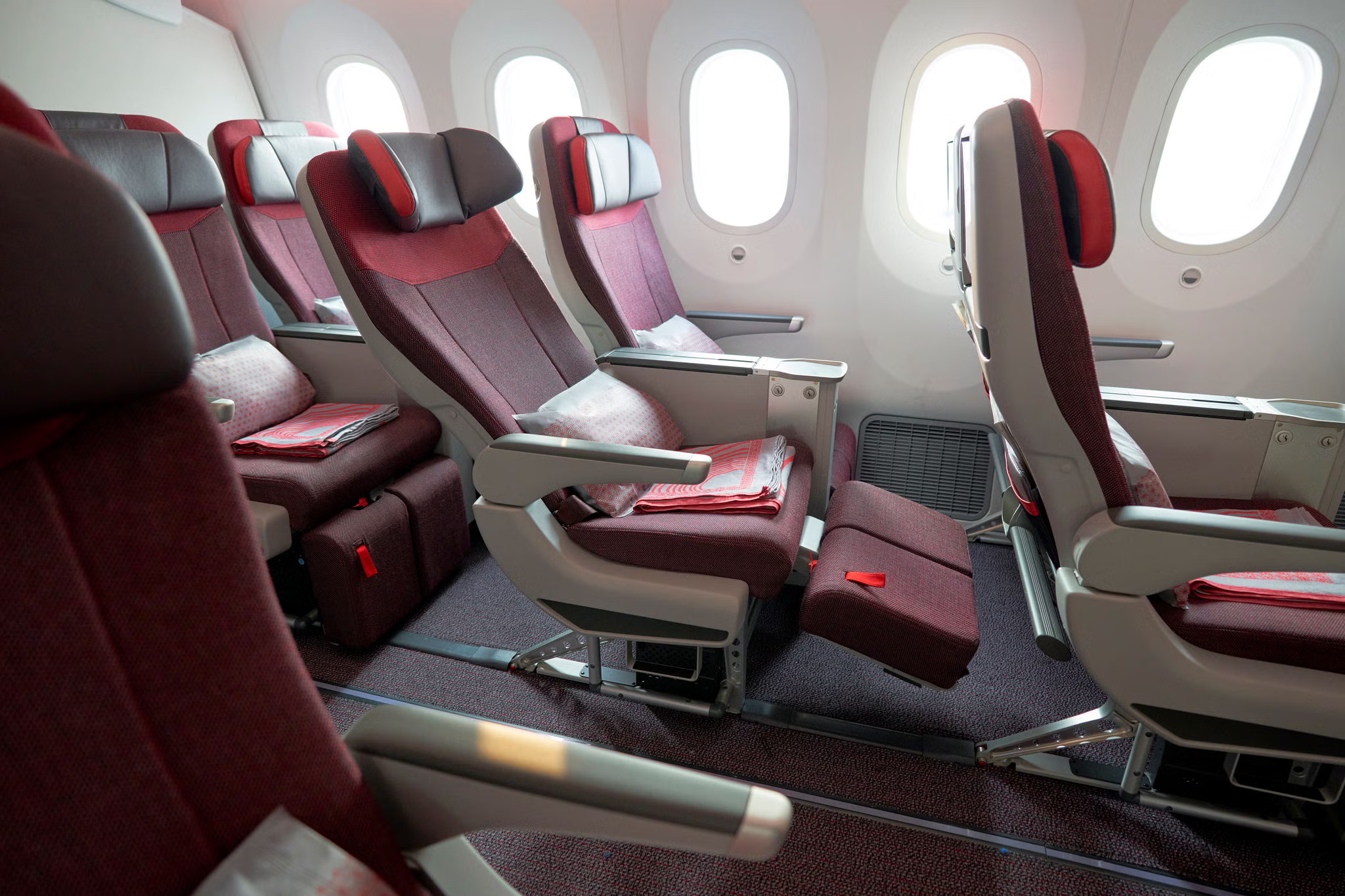
Air India Premium Economy Seat on 787-9 aircraft
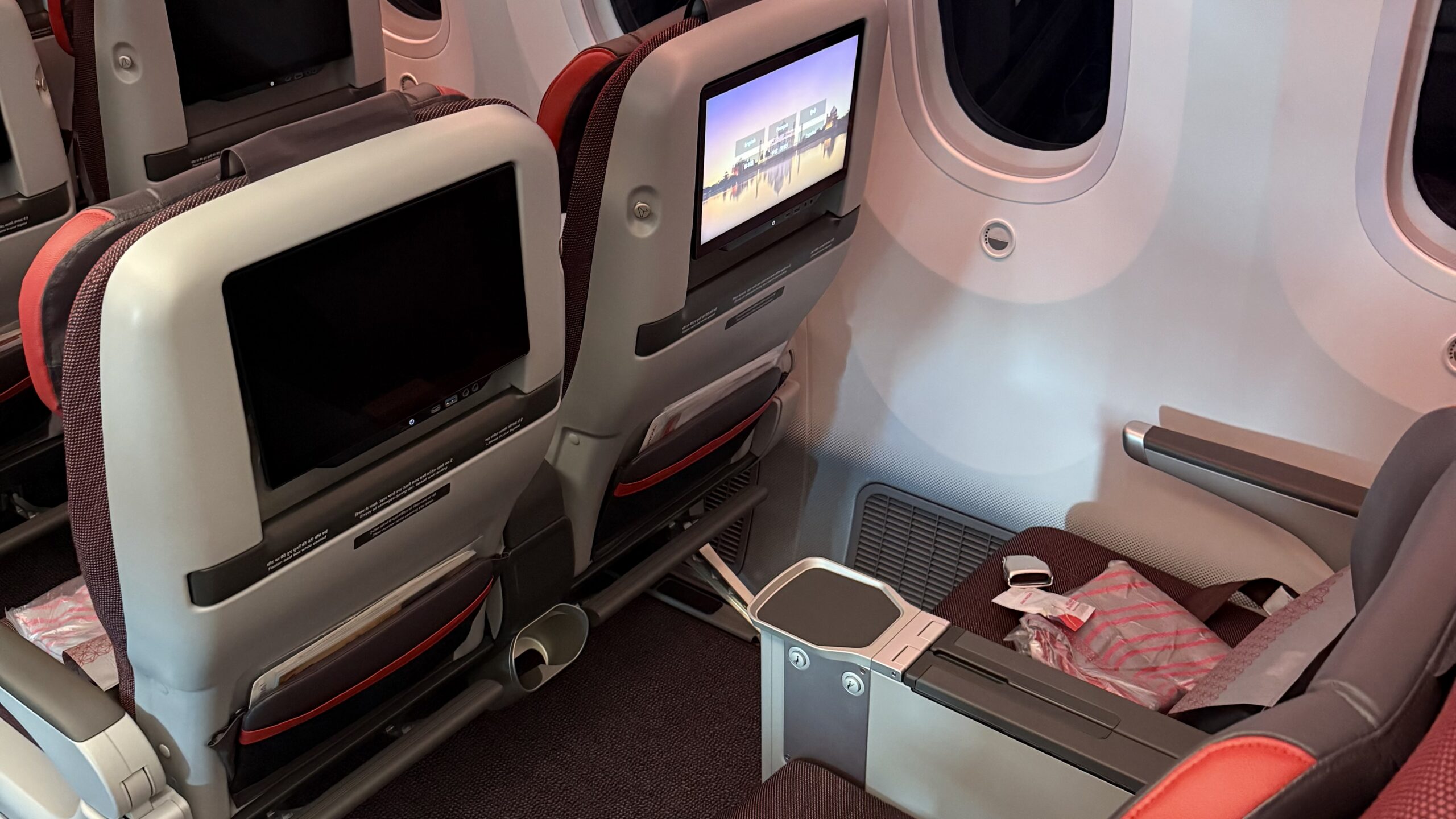
IFE Screen in Premium Economy – Air India
Interestingly, each Premium Economy row essentially gets access to two full Dreamliner windows, which makes the cabin feel particularly bright and spacious. I haven’t flown this cabin yet, so I won’t pretend to review it based on sitting in the seat for a few minutes at a media event. Catering, crew service, bedding and how comfortable that seat remains after ten or twelve hours are all things I still want to experience in flight. But purely from a hard-product perspective, this is a very compelling Premium Economy cabin.
And then there is Economy
Walk farther back, and you’ll find 238 Economy seats arranged in the familiar Dreamliner 3-3-3 configuration. The seats have 31-32 inches of pitch and five inches of recline, along with an 11.6-inch 4K screen and USB-A and USB-C charging. Again, it’s the technology that immediately makes the cabin feel new.
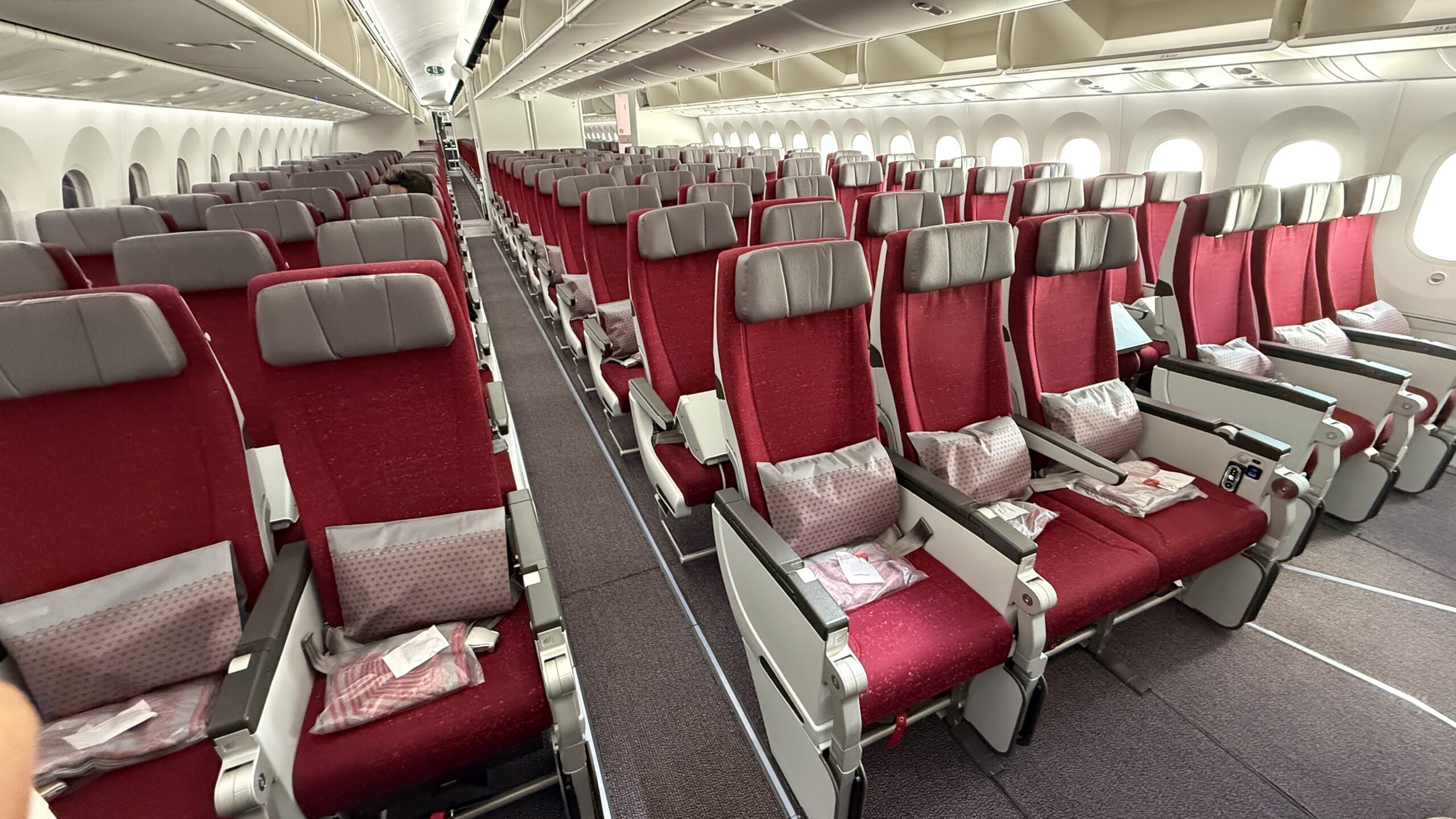
Air India Economy on 787-9 aircraft
The bulkheads in the first row caught my attention because the open space in front looked excellent and, visually at least, seemed comparable to, and possibly greater than, the legroom in Premium Economy.
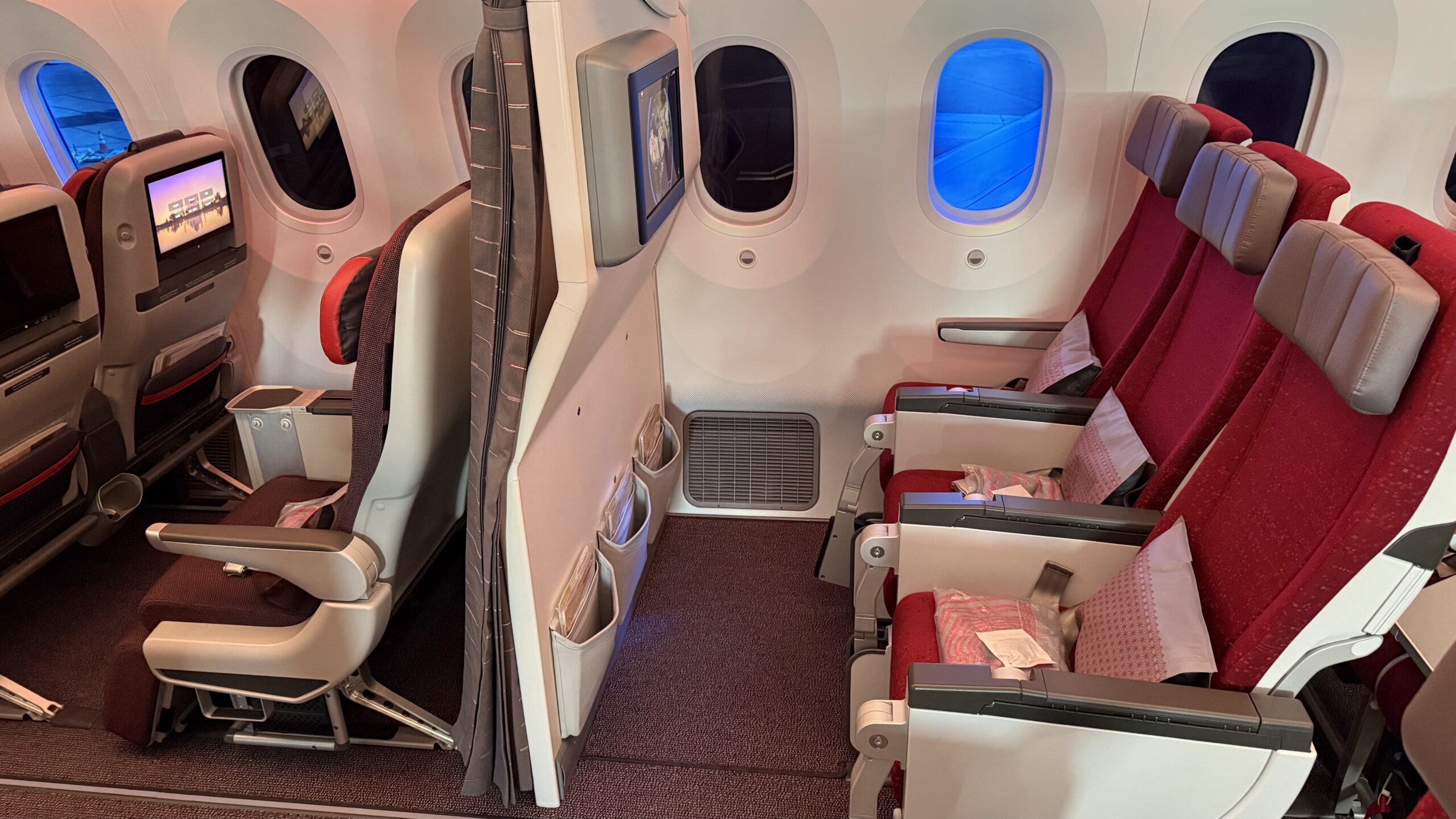
Air India Economy Bulkhead Seat compared to Premium Economy
Toronto YYZ is Air India’s Canadian showcase
Air India has served Canada for more than four decades, and currently operates 17 weekly flights between Canada and India: ten between Toronto and Delhi and seven between Vancouver and Delhi. But the product you receive depends heavily on where in Canada you depart.
Right now, seven of the ten weekly Delhi–Toronto flights are operated by the brand-new 787-9. The remaining three frequencies continue to use the Boeing 777-300ER. That changes from January 2027. As additional 787-9s enter the fleet, Air India plans to move those remaining three frequencies onto the Dreamliner as well, giving Toronto the new 787-9 across all ten weekly Delhi flights.
For the first time, someone booking Toronto–Delhi won’t have to scrutinize the schedule quite as closely and wonder which version of Air India they’re going to get. If I convince someone to try the “new Air India” after showing them pictures of this beautiful 787-9, and their flight turns out to have an older cabin that looks and feels like an entirely different airline, the transformation story becomes much harder to sell.
Toronto–Mumbai adds another interesting option
Then, on October 25, Air India launches its new seasonal nonstop Toronto–Mumbai route, operating three times weekly until March 26, 2027.
This one won’t be a 787-9. Instead, Air India is bringing an upgraded Boeing 777-300ER, a former Etihad aircraft, with eight First Class suites, 40 lie-flat Business Class seats, and 280 Economy seats, plus onboard Wi-Fi.
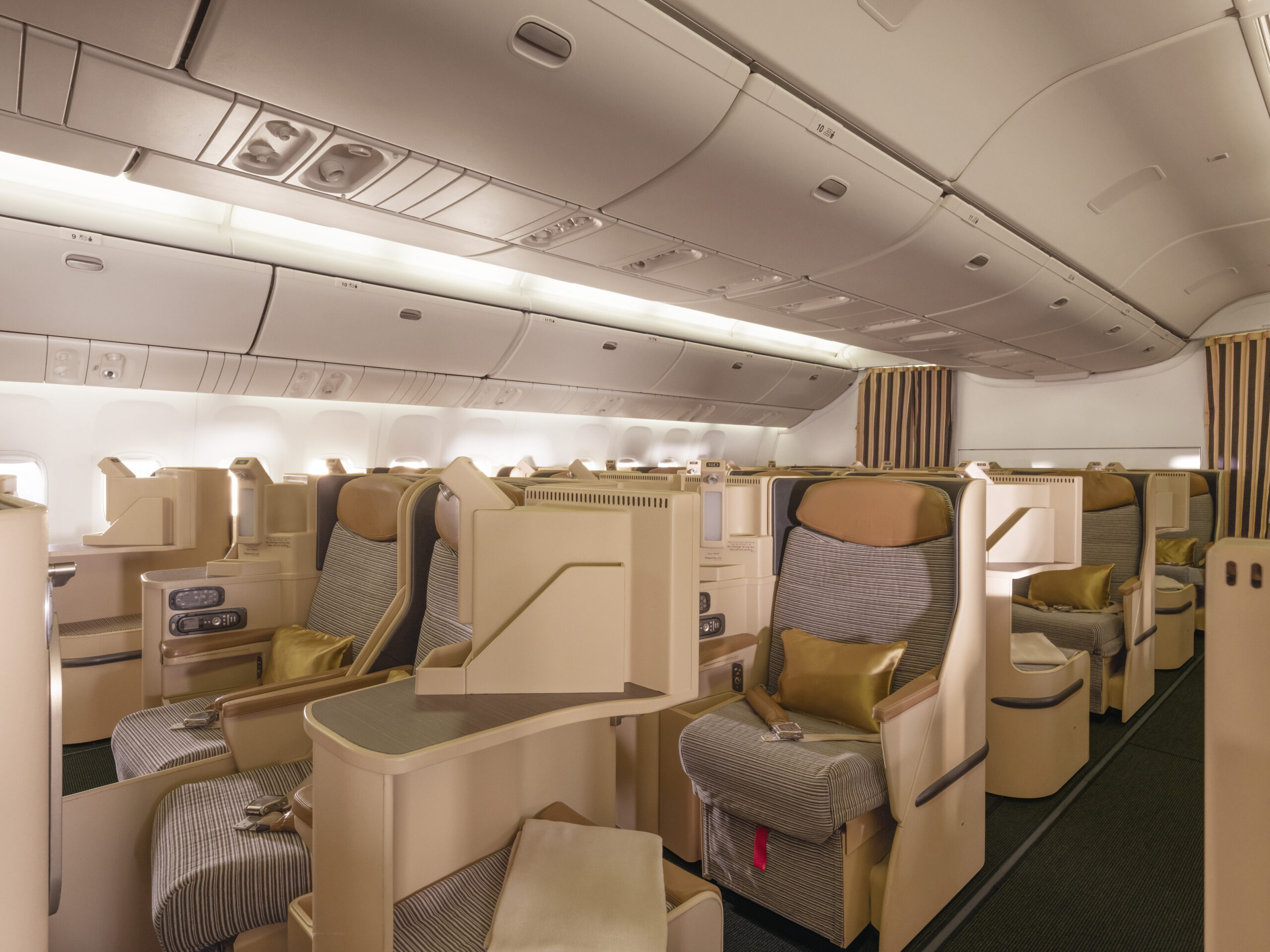
Air India Business Class on ex-Etihad 777’s
Vancouver–Delhi continues to operate with Air India’s older 777 product. A traveller flying from Toronto could experience the brand-new 787-9. Someone starting in Vancouver can book the same airline, travelling to the same Delhi hub, and encounter a considerably older product. Those two passengers may come away with completely different impressions of what “Air India” means.
As per a fact sheet shared at the media event, Air India has undertaken a US$400-million retrofit programme covering its legacy widebody fleet. The 26 older 787-8s are being upgraded first, followed by 13 777-300ERs. Five retrofitted 787-8s had already returned to service, with the remaining 21 scheduled for retrofit through 2027. By the end of 2027, Air India expects about 75% of its widebody fleet to feature new or upgraded interiors.
Air India’s transformation will become much more convincing when choosing the airline no longer requires choosing the aircraft.
The U.S. shows us what Air India could become
Air India has deployed its flagship A350-900 and upgraded 777-300ER products into the New York market. The airline is also expecting its first A350-1000s toward the end of 2026, with those aircraft earmarked for ultra-long-haul markets including North America. I recently wrote about Air India’s plans to move into the new Terminal 6 at JFK beginning in 2028, where it also intends to open a flagship Maharaja Lounge.
In San Francisco, Air India has already opened its impressive flagship Maharaja Lounge. That’s where this whole transformation starts to make sense to me. Imagine arriving at the airport, checking in through a polished premium facility, relaxing in a proper Air India flagship lounge and then walking onboard an A350 or new 787-9 with the cabins we’re now seeing.
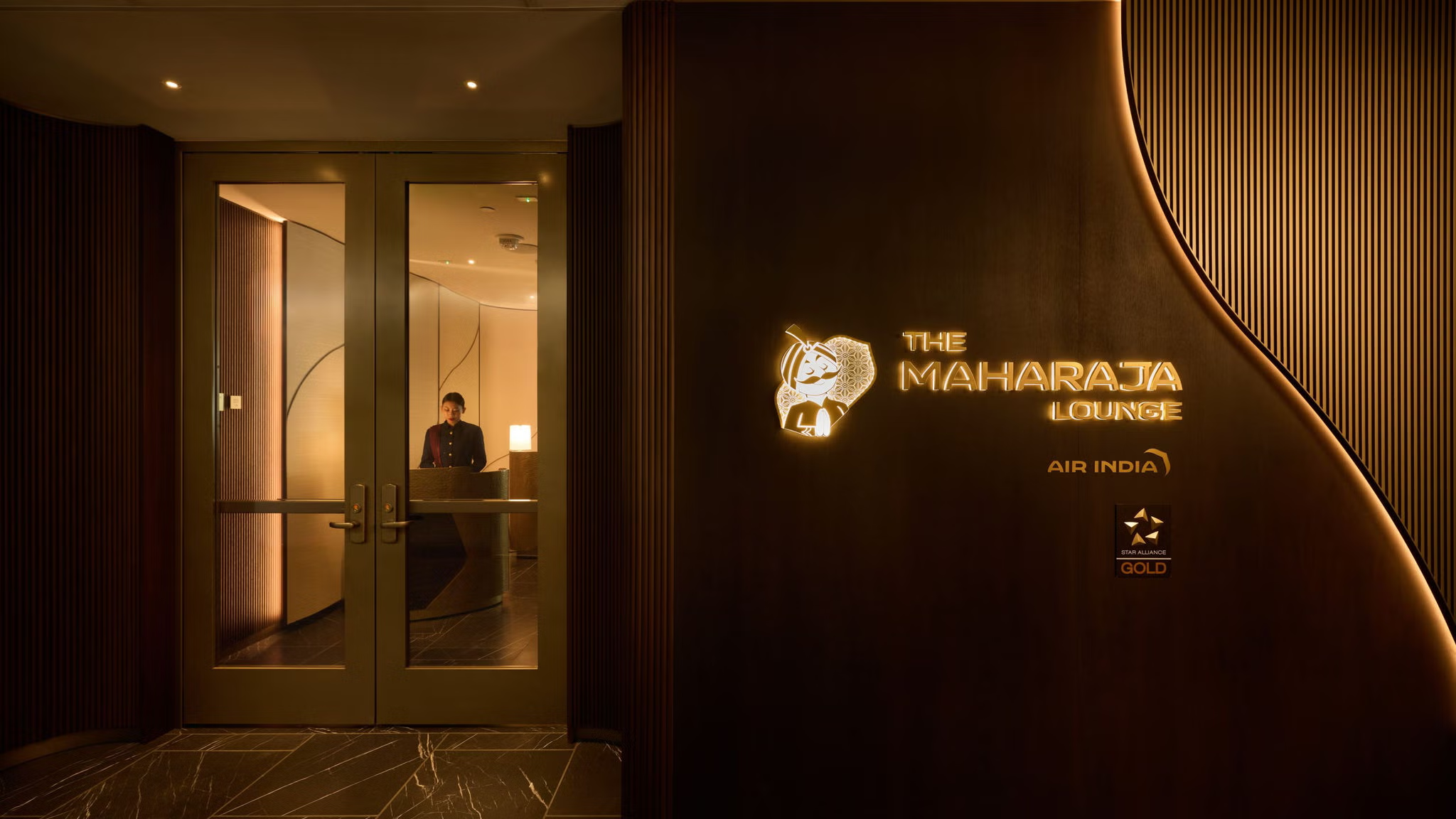
The Maharaja Lounge SFO
But right now, those pieces don’t always exist in the same place. And that brings me to what I think is Air India’s biggest challenge.
A great seat does not make a great airline
I walked off the 787-9 in Toronto impressed. But I’ve also flown enough Air India over the years to know that the aircraft is only one part of the journey. When I flew Air India First Class from Delhi to Washington on the older 777-300ER last year, some of my biggest frustrations weren’t necessarily about the seat. There was a 30-minute secondary security line without a premium lane, an unclear premium waiting area and a messy boarding process.
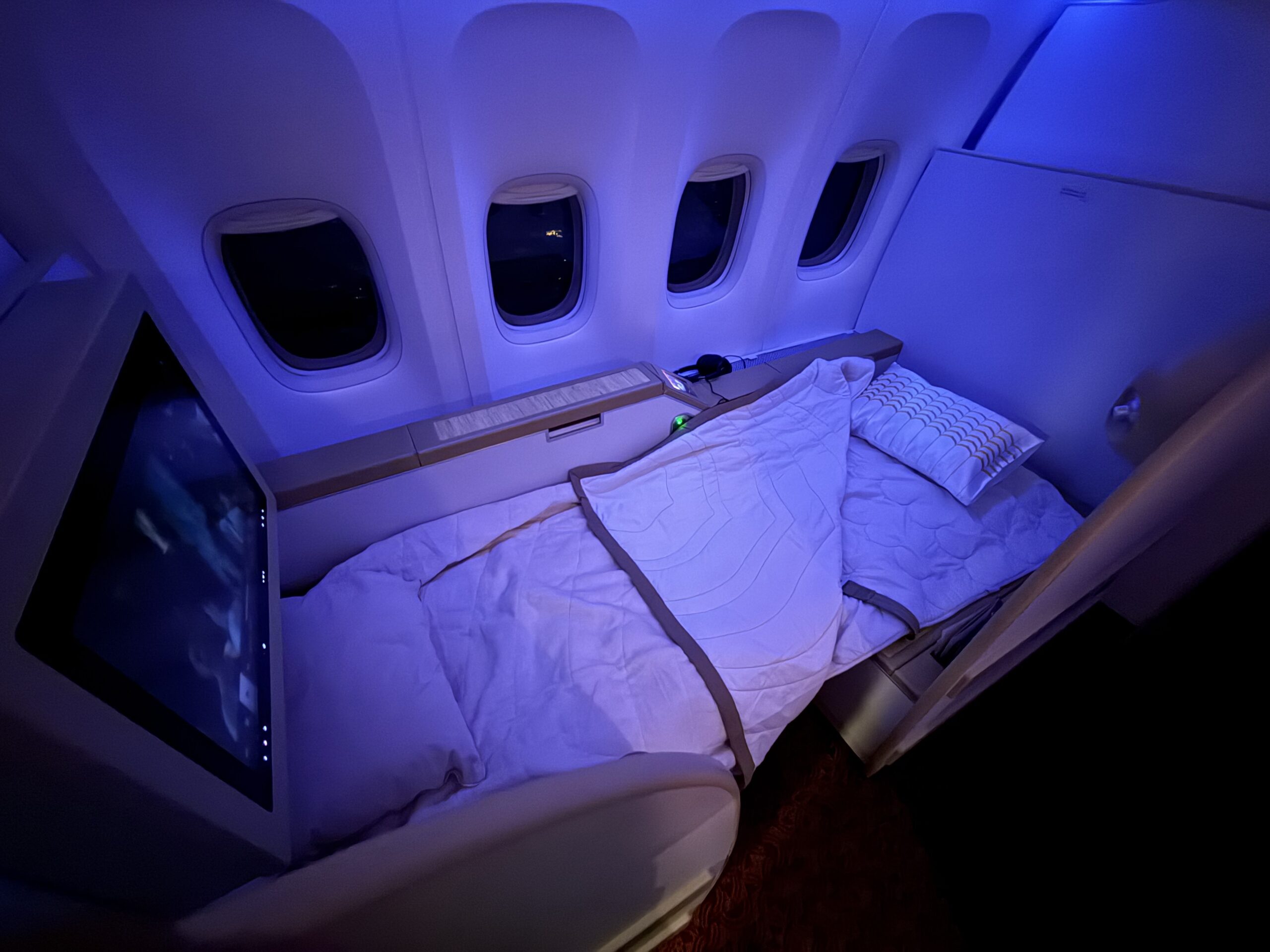
Air India First Class on older B777
Compare that with my recent 787-9 Business Class flight from Mumbai to Frankfurt. The aircraft was beautiful, yes, but I also encountered a warm crew that seemed genuinely proud of the product they were delivering. The Indian meal was excellent. The bedding was comfortable enough that I managed four or five hours of proper sleep. The weakest element was actually the unreliable Wi-Fi.
That’s why I keep coming back to the end-to-end experience. For a long-haul premium passenger, the experience doesn’t begin when the aircraft door closes; it begins at check-in. It’s the ground staff. Security experience. Lounge. Boarding process. Seat. Catering. Wi-Fi. Crew. Baggage delivery. And how the airline handles things when something goes wrong.
The 787-9 solves one very large piece of that equation. Air India now has a hard product that I would happily fly against many of its competitors. The next phase has to be making everything around that seat equally dependable.
I have been following Air India’s transformation for a while now, but there’s a difference between reading about new aircraft orders and physically sitting in the product. After flying the 787-9 from Mumbai to Frankfurt and now walking all three cabins in Toronto, I don’t think the hard-product transformation is theoretical anymore.
It’s here. Business Class is excellent. Premium Economy looks genuinely competitive. Economy feels modern and thoughtfully equipped. The aircraft has personality. Now comes the harder part.
Air India has to make the service standards as consistent as the seats. A beautiful 787-9 followed by a poor ground experience isn’t enough. Neither is a fantastic crew on one flight followed by an indifferent experience on the next. Premium passengers paying cash or redeeming a meaningful number of points aren’t simply buying a lie-flat seat for 14 hours. They’re buying an experience.
That means Air India has to benchmark itself not only against the Air India of five years ago, but against the airlines North American passengers can choose instead. And that’s a much higher bar. The encouraging part is that the airline finally has an aircraft capable of meeting it.
Now I want to see the lounge, ground experience, catering, technology, and, most importantly, consistent service standards catch up. Because when those pieces finally come together, the conversation will no longer be “Have you tried the new Air India?” it will simply be “Have you tried Air India?”. And that, more than any new seat, will be the real transformation.
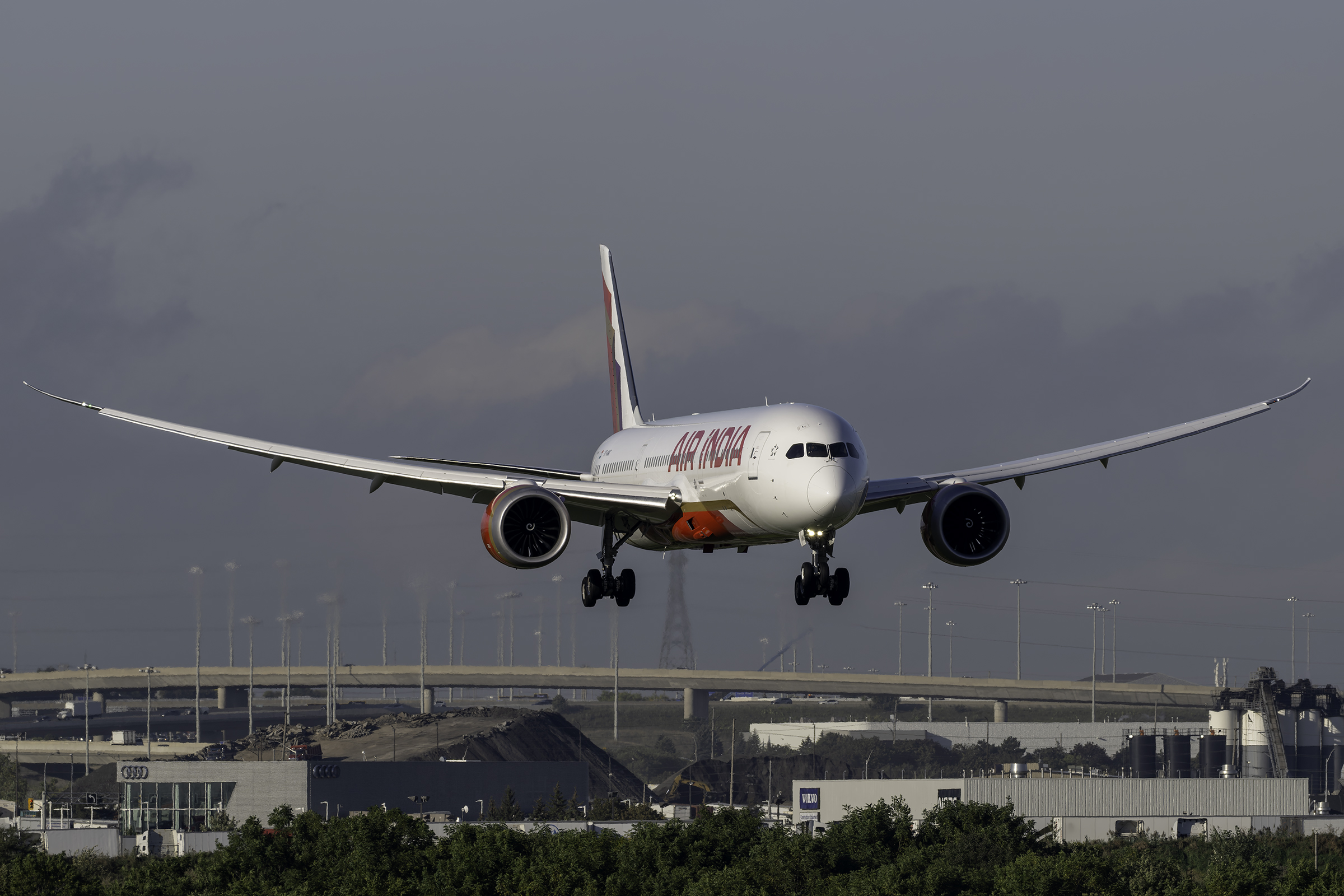
Air India 787-9 (Photo Credit: Kevin Prentice)
Featured Image Credit: Kevin Prentice
