Table of Contents
Points Miles and Bling (blog) contains referral or affiliate links. The blog receives a small commission at no additional cost to you. Thank you for your continued support. Credit Card issuers are not responsible for maintaining or monitoring the accuracy of information on this website. For full details, current product information, and Terms and Conditions, click the link included.
Experiencing Eurovision in Vienna
If you’ve read my previous PMB posts, you’ll know I love using my points and miles to travel to music festivals worldwide. I’ve previously shared my experiences at Coachella and Lollapalooza, and my latest adventure took me to Vienna, Austria, for the Eurovision Song Contest.
For those unfamiliar with Eurovision (EV), it is an annual international song competition held every May in a different European city. The host country is determined by the country represented by the previous year’s winner. The competition’s motto is “United by Music,” which fits, since fans from around the world travel to Eurovision each year to celebrate different cultures and the arts through music.
One interesting thing I learned about Eurovision is how they choose the winner. I originally thought it was based on the singer’s home country, but that isn’t necessarily the case. For example, a young Céline Dion won Eurovision in 1988, long before becoming the global superstar we know today. Although Canadian, she represented Switzerland because the songwriter of her entry was Swiss. Another fun fact: ABBA’s iconic song Waterloo won Eurovision in 1974, which meant the 1975 competition was held in Sweden.
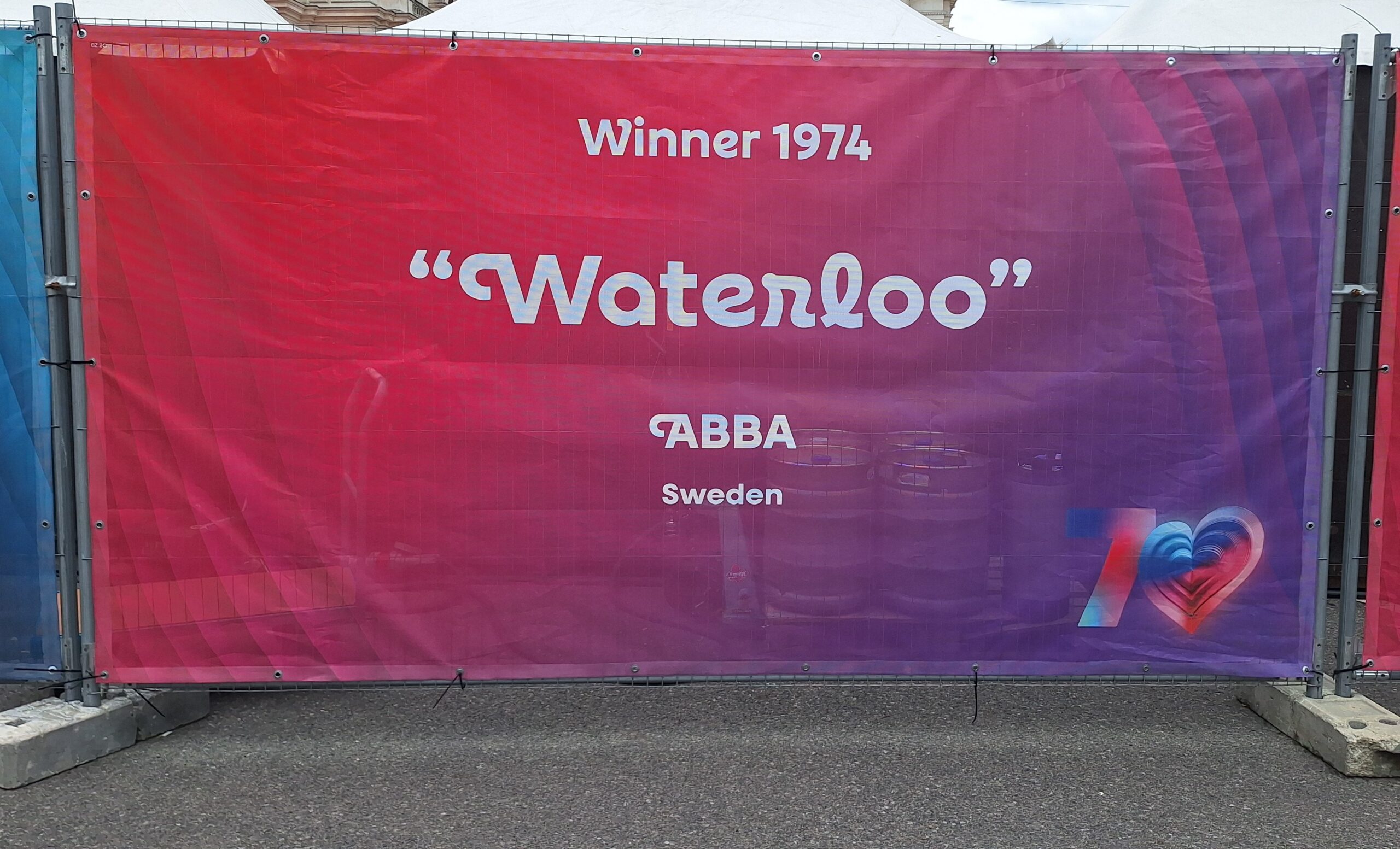 This year’s Eurovision was hosted in Vienna, Austria, after JJ represented Austria and won the previous year’s competition. It was also a special occasion, marking Eurovision’s 70th milestone anniversary. I had an incredible time attending the live performances, experiencing the city’s Eurovision celebrations, and meeting fans from around the world. And, of course, I managed to put my points and miles to good use along the way!
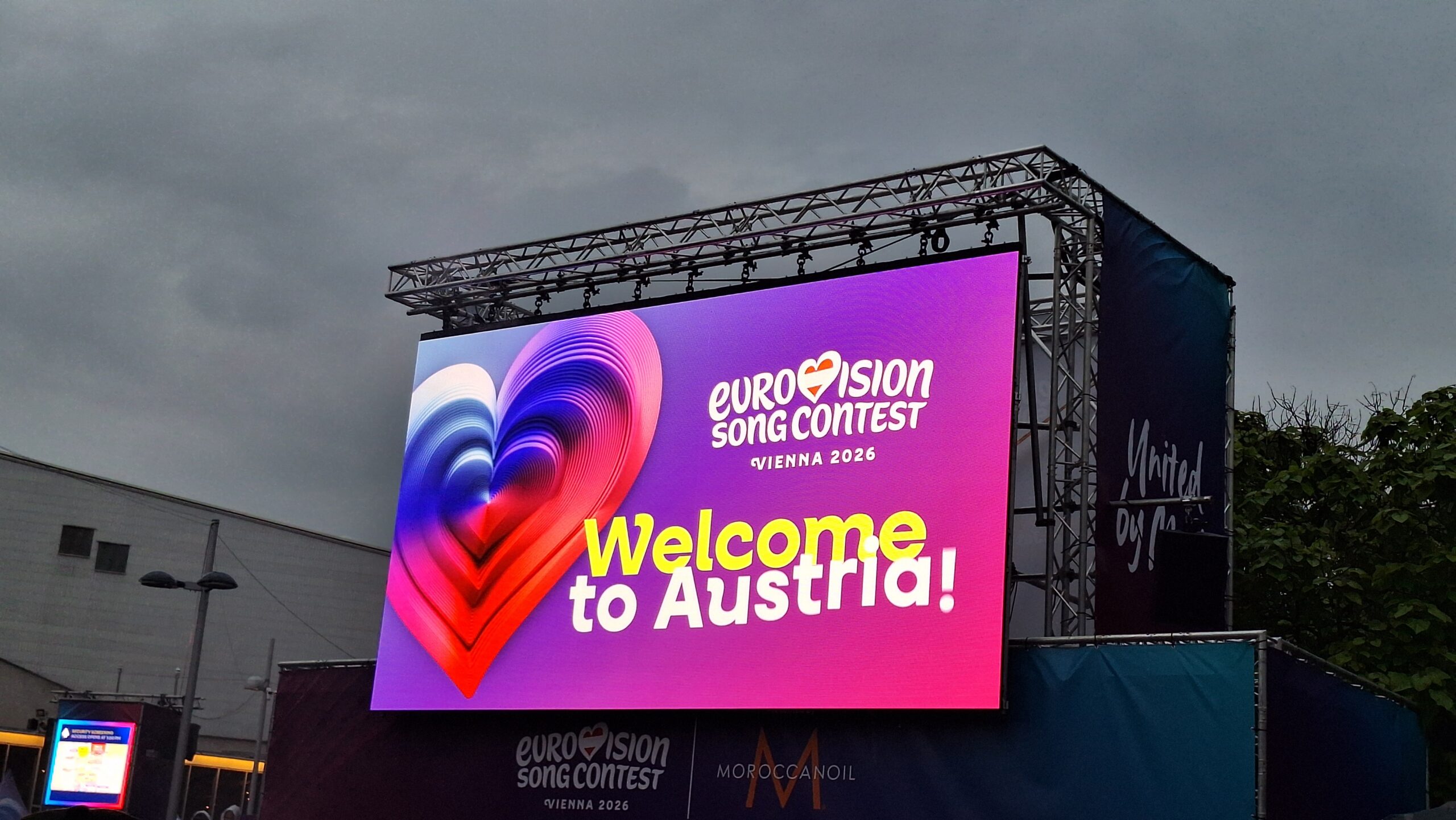
Eurovision – Welcome
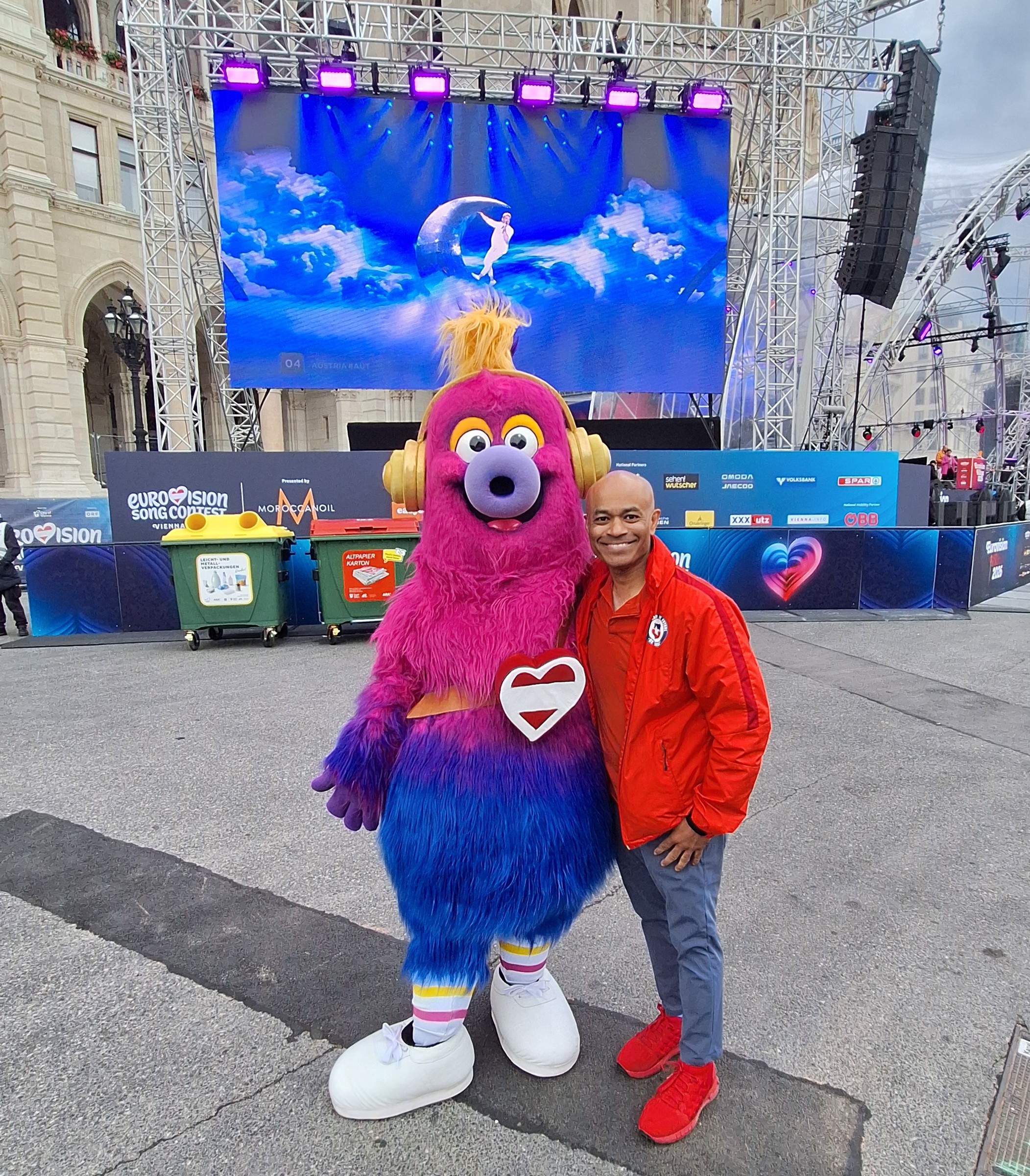
EV Mascot
How I Booked My Flights to Eurovision Using Aeroplan Points
Canadian travellers have several options worth considering. Aeroplan is an obvious choice, especially with the multiple Aeroplan credit cards available in Canada. British Airways Avios and American Airlines AAdvantage are other programs to consider, alongside RBC Avion points. Flying Blue, Air France-KLM’s loyalty program, is another useful option.
Flying Blue has a dedicated Canadian credit card and is also a 1:1 transfer partner of Amex MR Rewards, which are relatively easy to accumulate through Canadian credit cards. For this trip, I booked my flights using Aeroplan points, something I’ve written about in an earlier post. My outbound flight was with Air Canada in Premium Economy (my review), while my return journey was in Business Class on Austrian Airlines, routing through Boston. I earned the Aeroplan points I used in Canada through multiple avenues, including credit cards and Aeroplan’s everyday earning partners.
One key lesson for anyone planning a Eurovision trip: secure your flights as soon as the host city is announced. I recommend booking a refundable flight before Eurovision tickets go on sale. The competition draws fans from around the world, and waiting until you’ve secured show tickets can mean facing significantly higher airfare. A refundable booking gives you flexibility while letting you lock in an itinerary before demand really picks up.
While I was fortunate enough to stay with friends who live in Austria, accommodation is another major expense worth planning around when attending Eurovision. My recommendation for anyone using hotel points is to take advantage of the fifth-night-free benefit offered by Marriott Bonvoy or Hilton Honors, where applicable. The Eurovision semi-finals begin on Tuesday, with the Grand Final taking place on Saturday. That makes a Tuesday-through-Sunday booking an ideal five-night stay, letting you attend all the live competitions and enjoy the events throughout the week.
How to Buy Eurovision Tickets: My Experience with the 2026 Ticket Sales
With flights, accommodation and transportation covered, let’s get to what can easily become the biggest expense of attending Eurovision: the show tickets.
If you’re planning to attend, I recommend signing up for the official Eurovision newsletter and following Eurovision’s Instagram and Facebook pages. These channels provide updates about when tickets will be available and how to purchase them. You can also check the official Eurovision ticket website. The ticket-buying process changes each year because the host country determines the ticketing provider.
For Eurovision 2026 in Vienna, the official ticket vendor was OE Ticket, so I had to create an account with them before buying my tickets. As for payment, a credit card with no foreign exchange fees is a sensible choice.
For the Vienna competition, tickets went on sale in March. Like buying tickets for a popular concert, you’ll need to join the virtual queue. I recommend being online about 5–10 minutes before ticket sales begin so you’re ready when the queue opens. More shows are available than just the three live televised competitions. Each live show has two preview performances. I was told these preview shows are almost identical to the live television broadcast, except for a few minor differences. This gives fans additional opportunities to attend Eurovision, even if they cannot secure tickets for the actual live broadcast.
For Eurovision 2026, ticket prices ranged from about €60 to €360, with the highest prices for the best seats at the live Grand Final broadcast. Depending on the tickets selected, attending all three live competitions could cost between €160 and €820, plus fees.
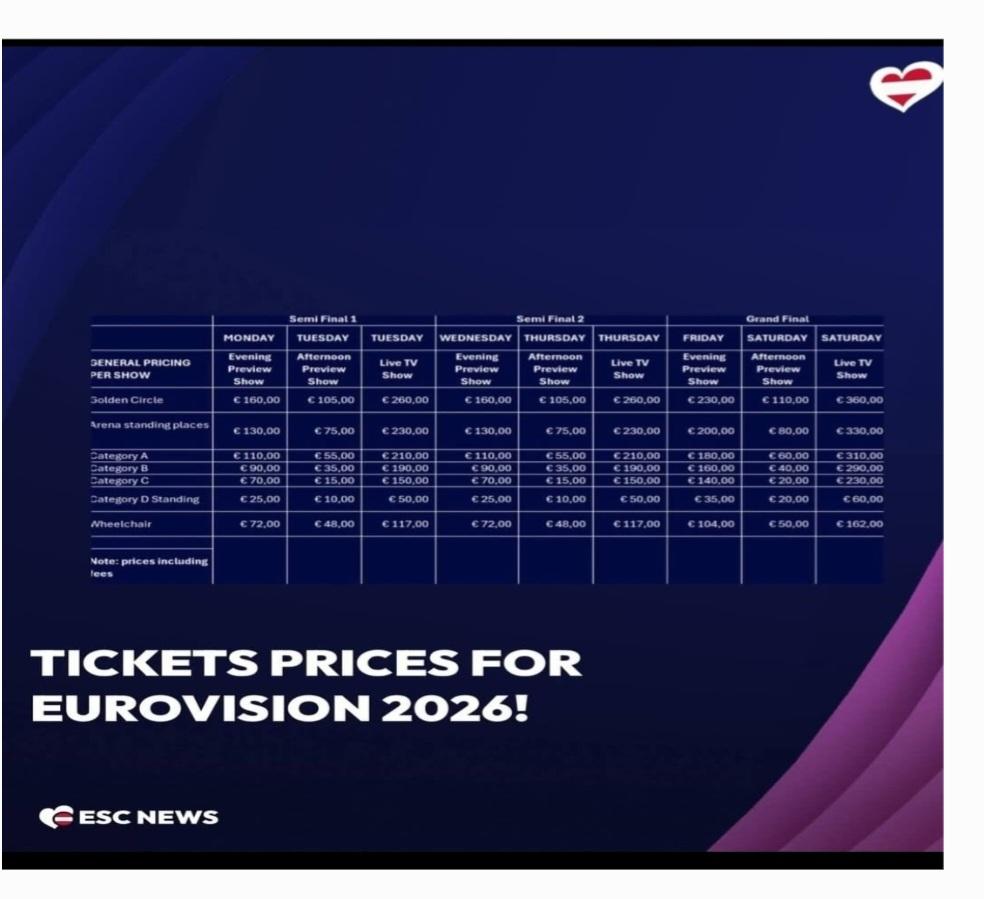
My goal was to attend the live tapings of both semi-finals and the Grand Final. During the first round of ticket sales, I was lucky enough to secure tickets to both semi-finals. Unfortunately, I couldn’t get a ticket for the live Grand Final, arguably the hardest ticket to secure. However, I kept following Eurovision’s social media updates and learned that another batch of tickets would be released in April. That second opportunity worked out, and I managed to buy my Grand Final ticket! For all three shows, I chose standing tickets rather than assigned seats.
My reasoning was simple: if I was travelling all the way to Vienna for Eurovision, I might as well get as close to the stage and the performers as possible.
Another thing I appreciated about Eurovision was its official ticket resale system. Rather than fans paying double the original ticket price on resale websites, Eurovision provides an official platform where tickets can be resold at their original price. For Vienna, that platform was Fansale Austria.
I was also told that additional Grand Final tickets sometimes become available during Eurovision week. As countries are eliminated during the semi-finals, some fans decide not to attend the Grand Final and put their tickets up for resale. That means you’re not out of luck if you miss the initial ticket sales. In fact, I checked the resale website the night before the Grand Final and saw it was true. Tickets were becoming available even that late in the competition.
Attending the Eurovision Live Shows
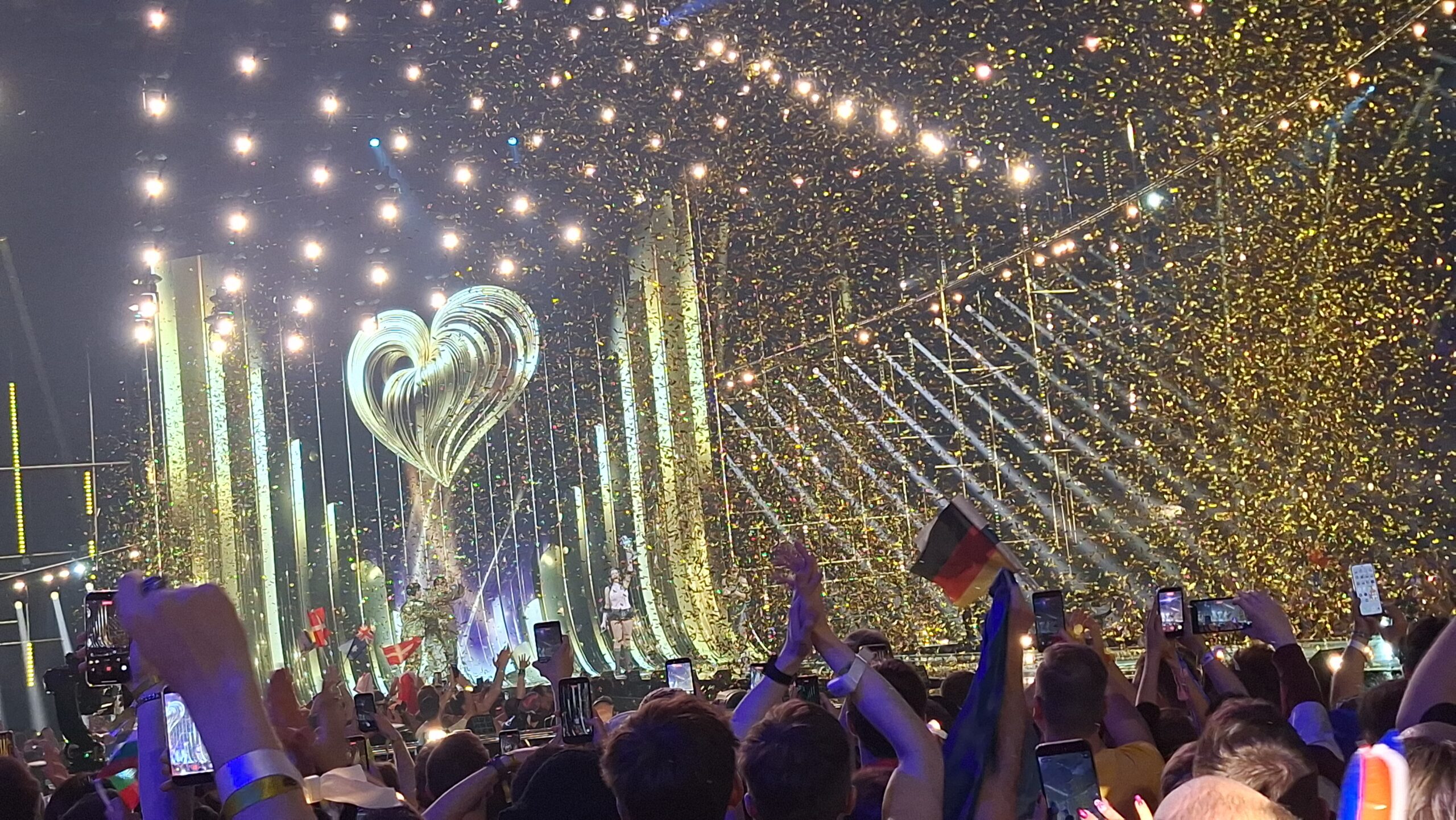
The heart of the Eurovision experience is, of course, attending the live performances. I had tickets to both semi-finals and the Grand Final, and each night brought an incredible atmosphere.
If your ticket is for the standing area in front of the stage, I would strongly recommend arriving approximately three hours before the show. For a 9 p.m. performance, that means arriving around 6 p.m. This gives you time to get through security and secure a good viewing spot.
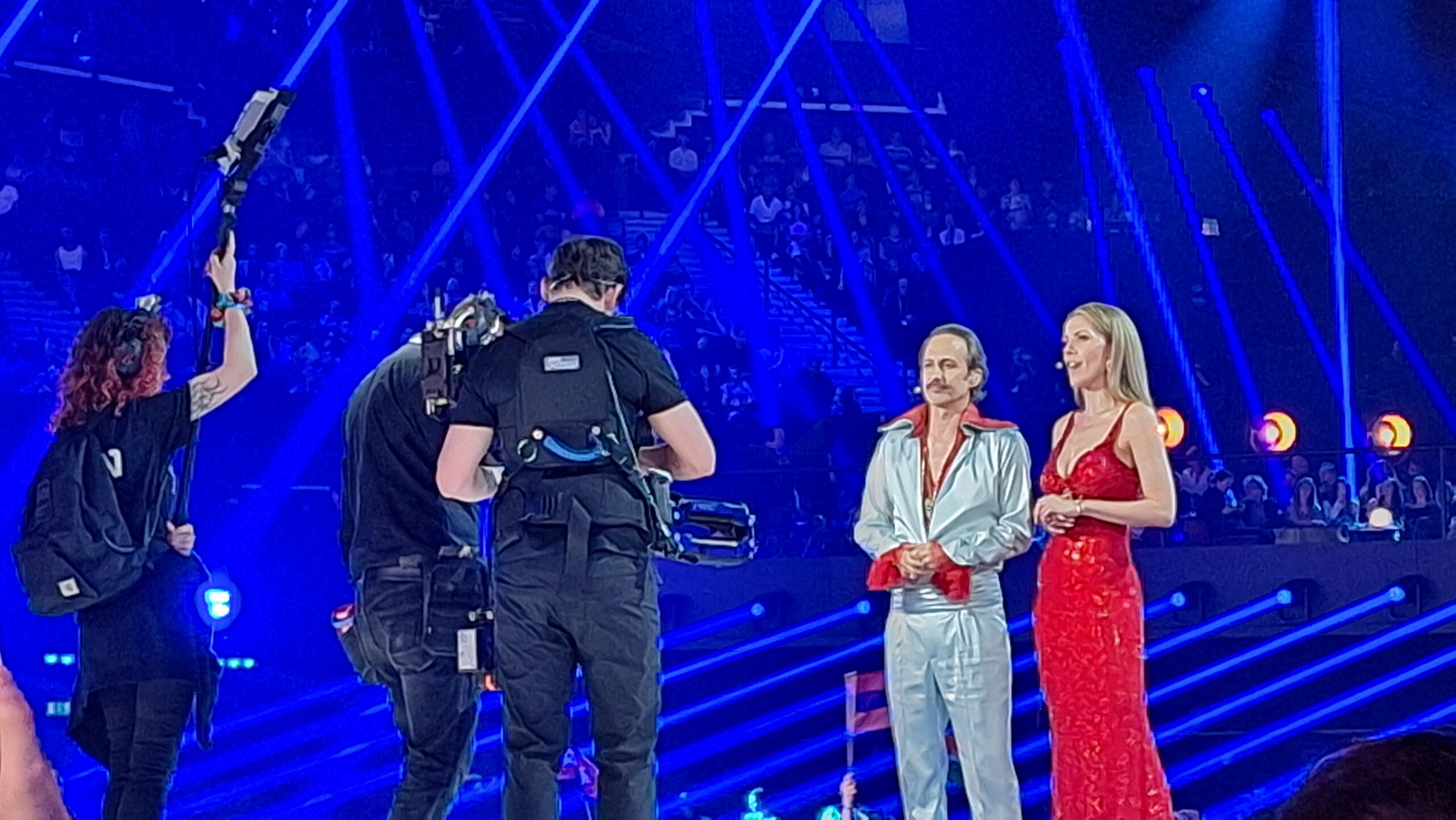
Eurovision – TV Hosts
Security was extremely tight, comparable to what you’d expect at a major concert, sporting event or even an airport. Bags were not permitted, so it was important to arrive prepared. I also found that arriving early was especially valuable for standing ticket holders because your viewing position could make a big difference to the experience.
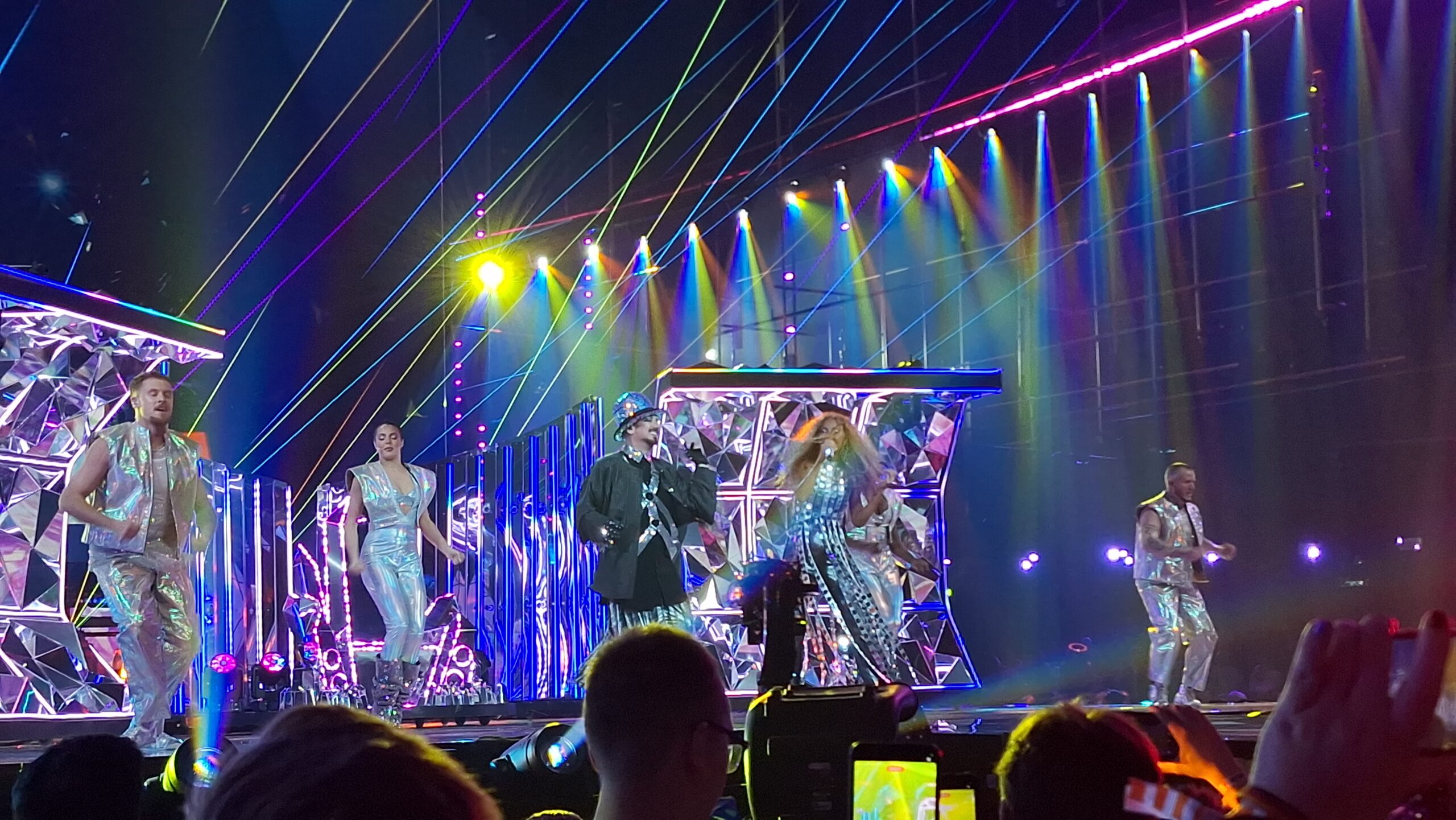
Eurovision – Boy George
For one show, I had a ticket in the Golden Circle; for the other live shows, I was in the general standing area. Having experienced both, I can say my Golden Circle photos turned out noticeably better than those taken from general standing. That wasn’t particularly surprising, given how much closer I was to the stage.
One other piece of advice: wear comfortable shoes! You’ll be standing for at least four hours during the semi-finals and at least six hours during the Grand Final. The Grand Final alone features 25 performances before the judging begins. It’s an incredibly entertaining evening, but it’s certainly long when you’re on your feet.
Eurovision After-Parties and Party Themes
If you think Eurovision is only about the three nights of competition, think again! While the competition includes two semi-finals and a Grand Final, it also has five nights of after-parties. Three take place on the evenings of the live shows, while the remaining two happen on the days between the semi-finals and the Grand Final. One thing I liked was that these parties weren’t limited to people with show tickets. The after-parties opened when the live shows began, letting fans who weren’t attending the performances join the celebrations. They were open to everyone and LGBTQIA2S+ friendly.
Each evening had its own theme. During Eurovision in Vienna, the five themed nights were:
- Pink Party
- White Party
- Carnival Party
- Justice Party
- Glitter Night
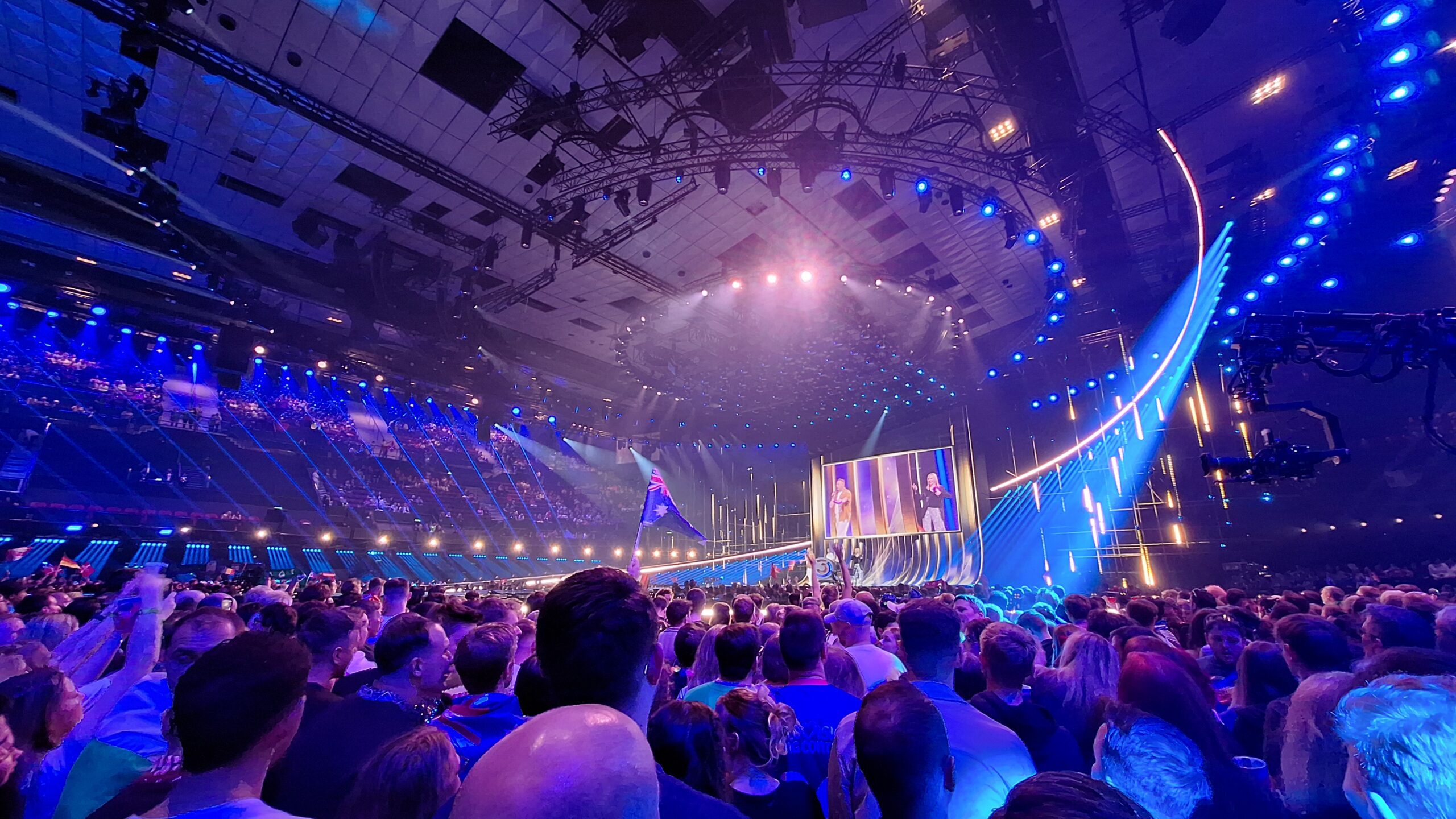
Eurovision – Inside Stadium
The Justice Party was particularly interesting because it took place the night before the Grand Final and honoured the songs and performers that had not qualified for the final. Glitter Night took place after the Grand Final, bringing the week’s celebrations to a close. Tickets to the after-parties ranged from approximately €25 to €35, plus fees, when purchased early. Drinks weren’t included in the ticket price and were expensive, but I expected that! For me, these parties were an important part of the overall Eurovision experience.
Heading straight from a live performance to an after-party and dancing the night away to Eurovision music was the perfect way to end some fantastic evenings.
Eurovision Village: Live Music, Merchandise and Fan Activities
Every Eurovision host city has an official Eurovision Village. This is another central gathering place for fans, with live performances, food and drink options, and an official Eurovision merchandise shop. You don’t need tickets to the main live shows to enjoy the atmosphere and activities around the city. However, security at Eurovision Village was also quite strict. Items such as water bottles, selfie sticks, and other items typically prohibited inside a stadium weren’t allowed. I visited Eurovision Village several times throughout the week.
During those visits, I caught a few performances, explored the activities, and even picked up some free Eurovision swag. 😊
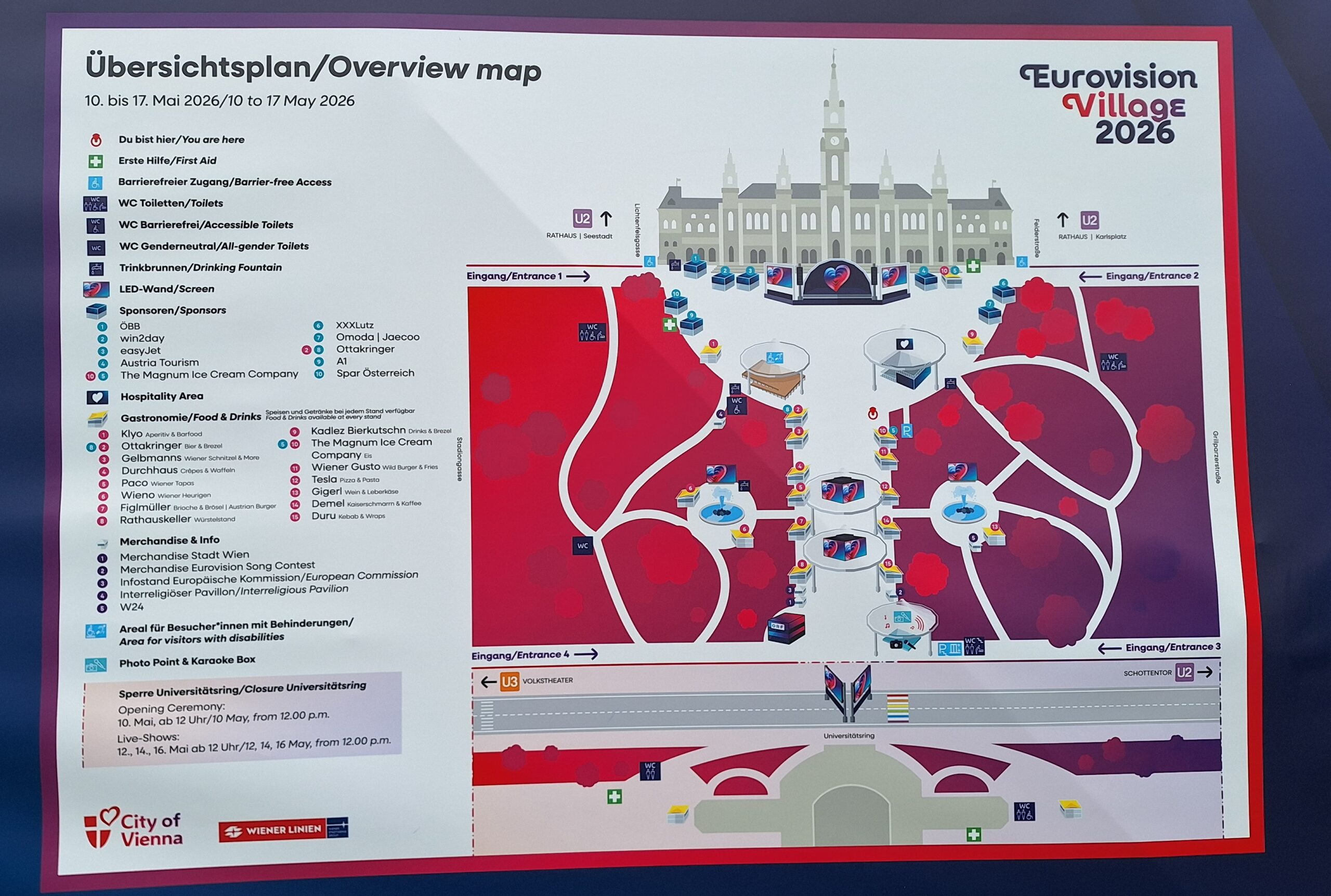
Eurovision Village Map
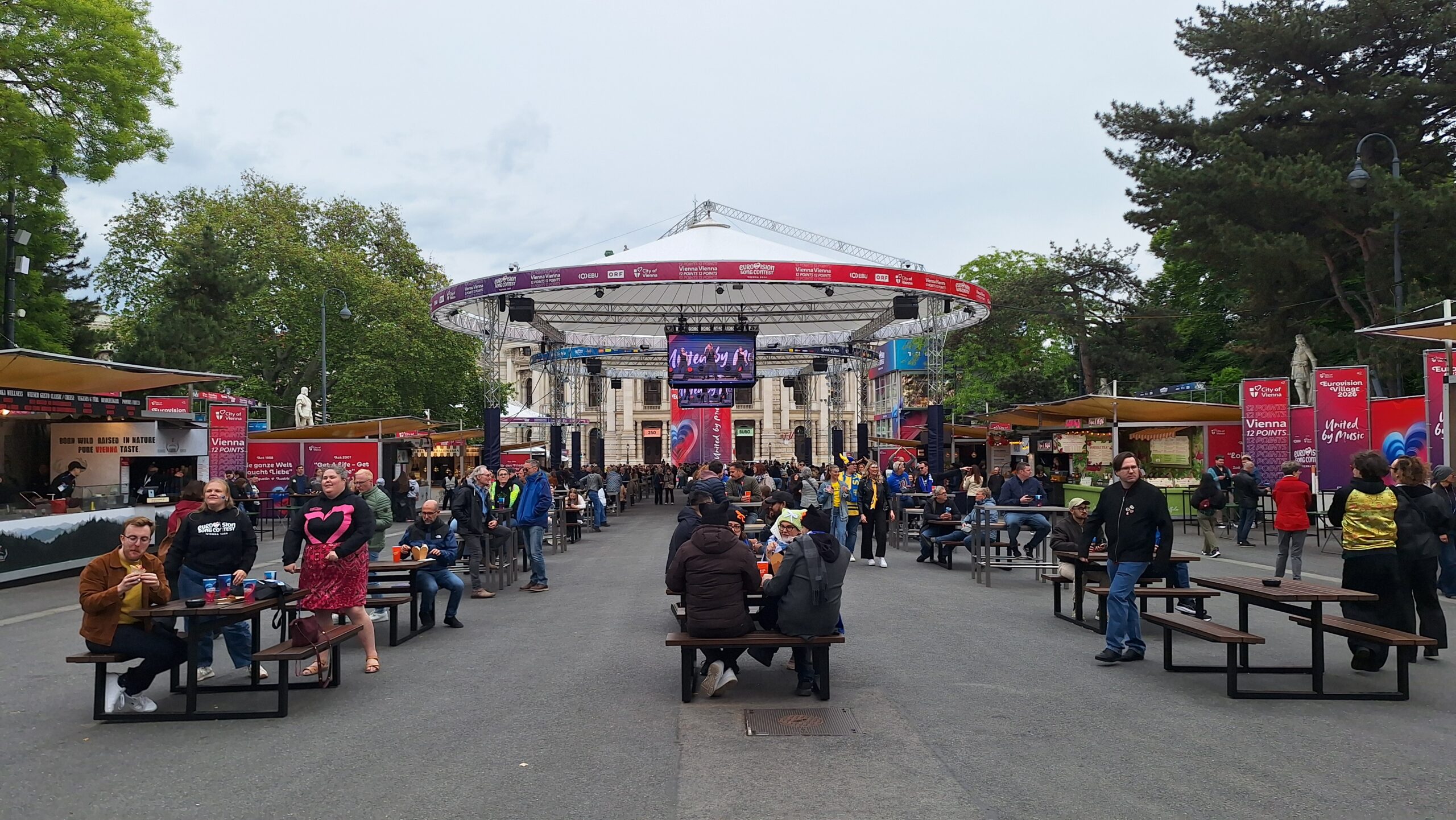
Village Seating
Another key location was Eurovision House, which served as a central headquarters for Eurovision activities. This is where I picked up my Vienna City Pass, which I was fortunate enough to win. Eurovision House also hosted panel discussions on various topics, featuring performers and other Eurovision personnel. It gave fans another opportunity to engage with the competition beyond the live television performances. Between the live shows, after-parties, Eurovision Village and Eurovision House, there was already plenty to keep fans busy. But Vienna also organized additional events around the city to showcase its attractions and tourism offerings.
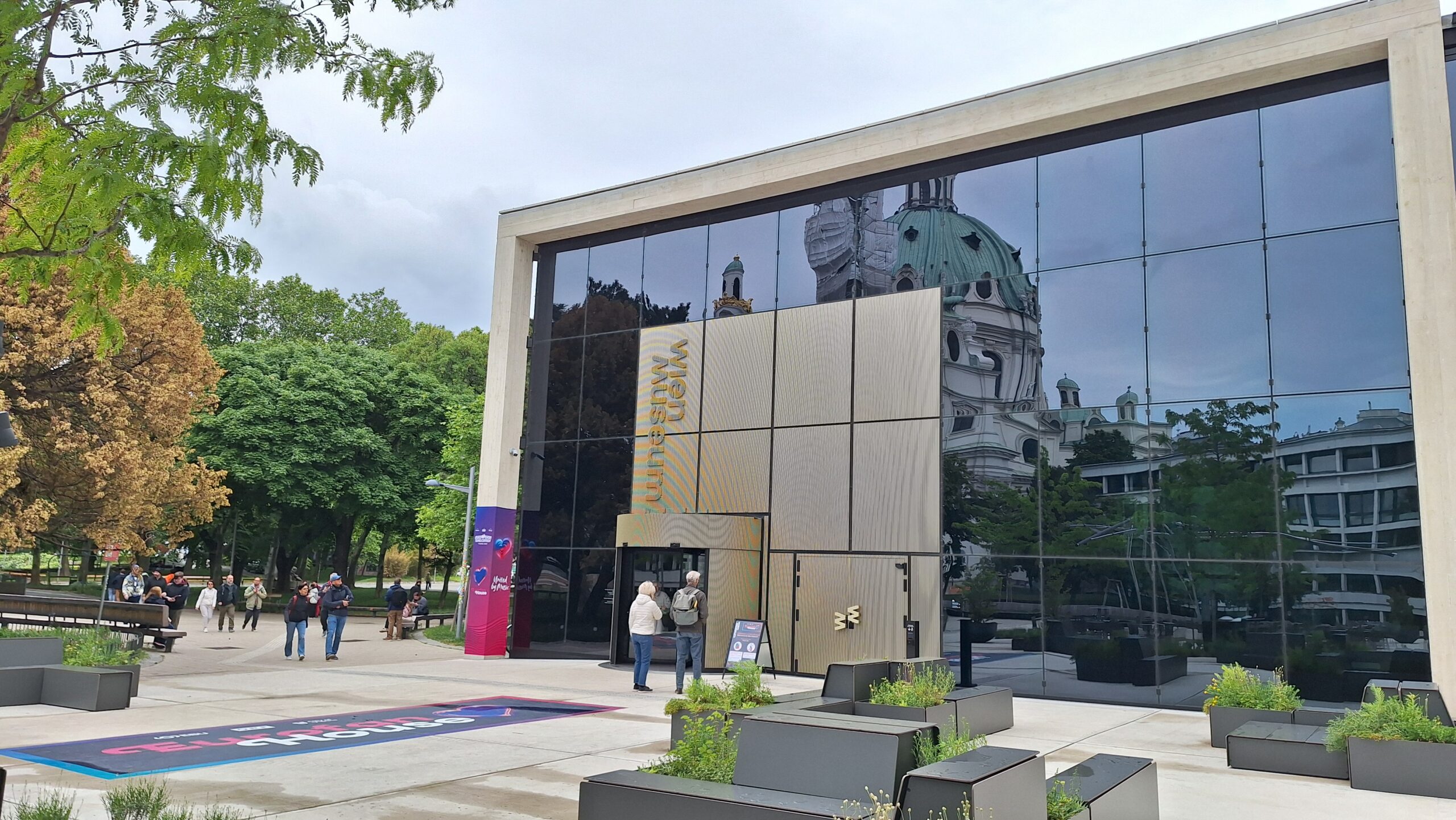
European House – Outside
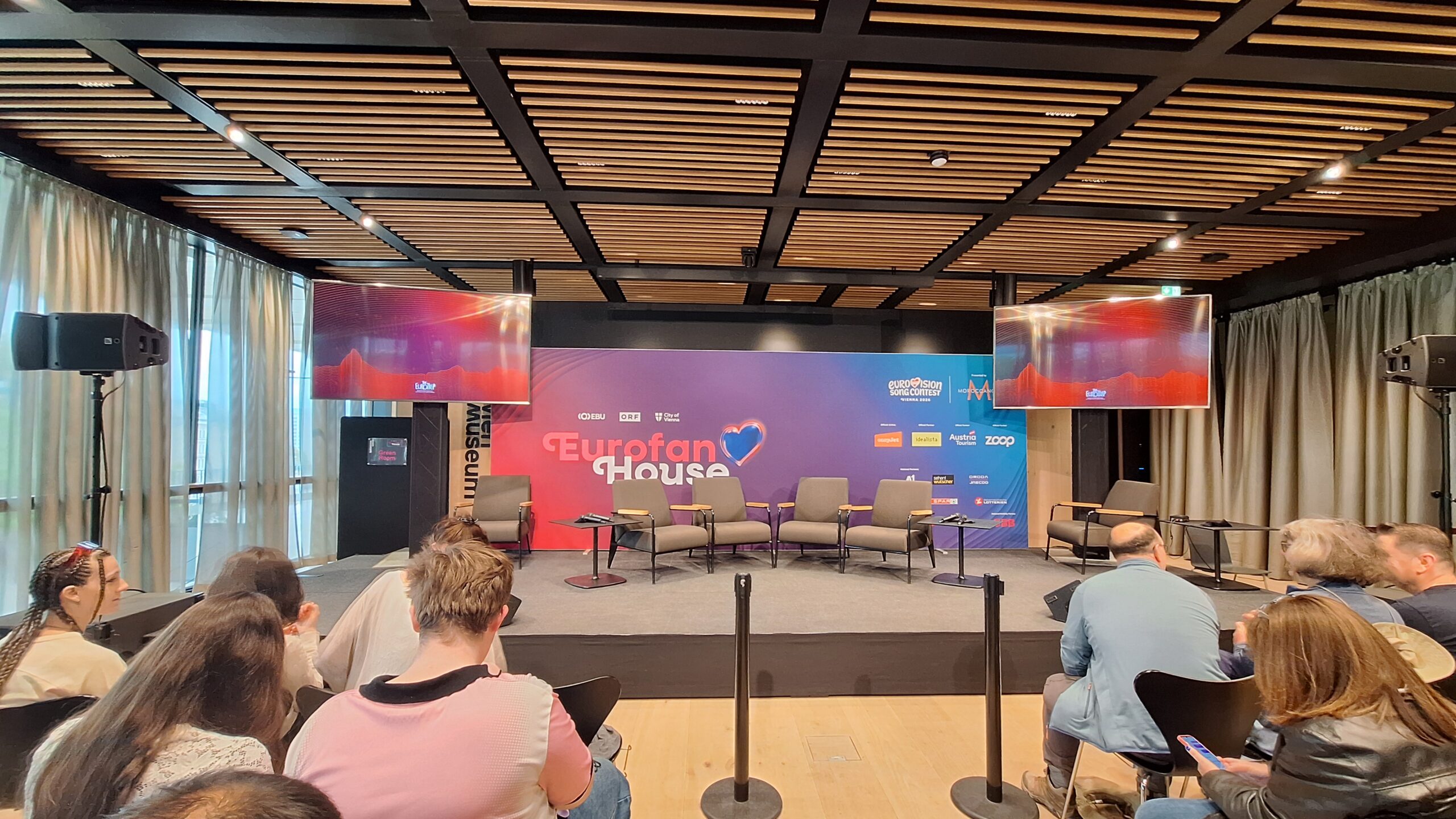
Eurofan House – Inside
The Grand Final: Bulgaria’s unforgettable victory
Looking back on my time in Vienna, I felt the city rolled out the red carpet for Eurovision fans. I was also fortunate to have a dear friend who is a true die-hard Eurovision fan and attends the competition year after year. Having someone with that experience helped tremendously with planning my trip, from securing show tickets and arranging after-party tickets to finding the various events taking place across the city. It made navigating such a busy week much easier.
While I had plenty of memorable experiences in Vienna, attending the live Eurovision performances was truly a once-in-a-lifetime experience for me.
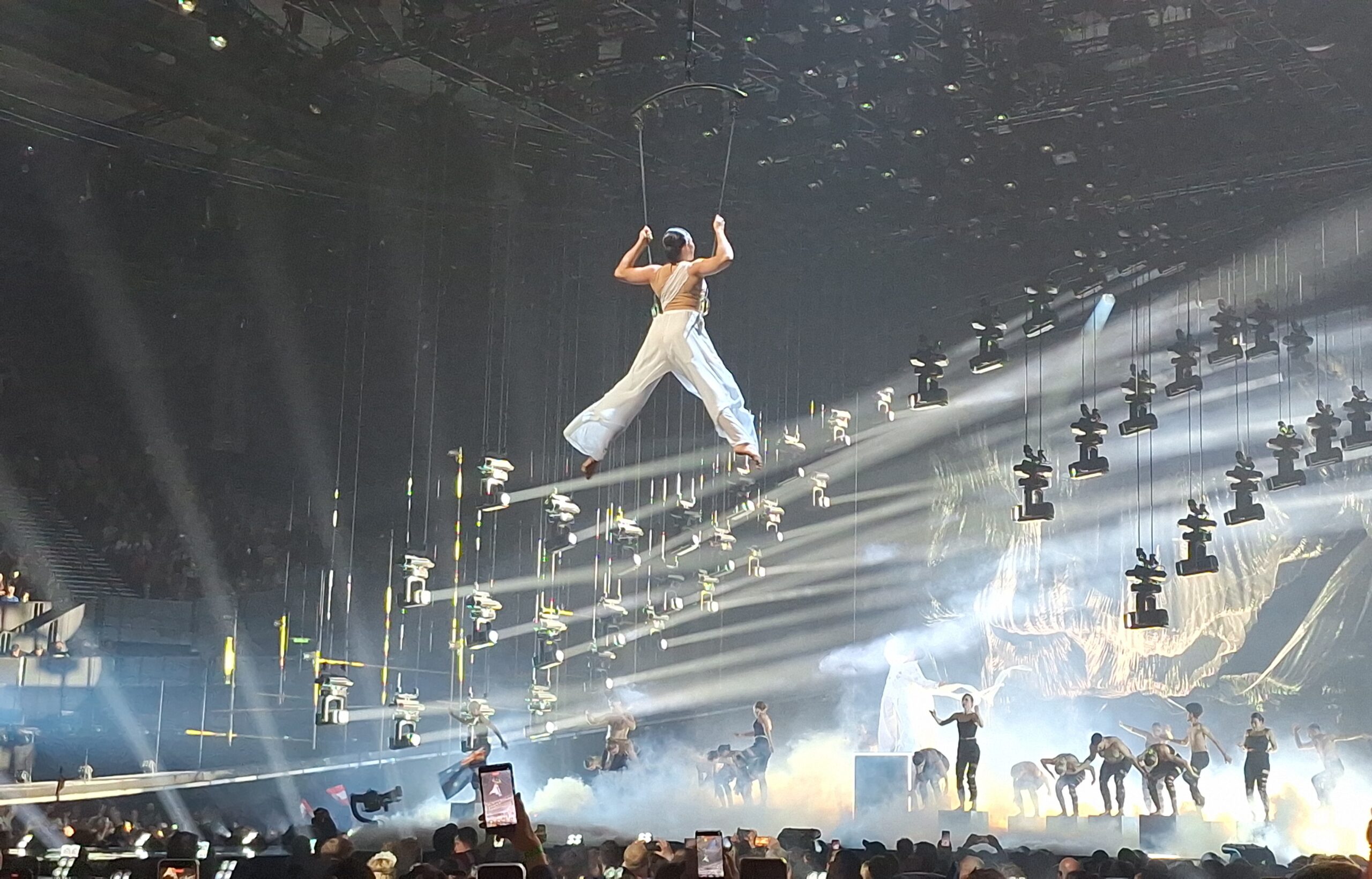
Eurovision Performance
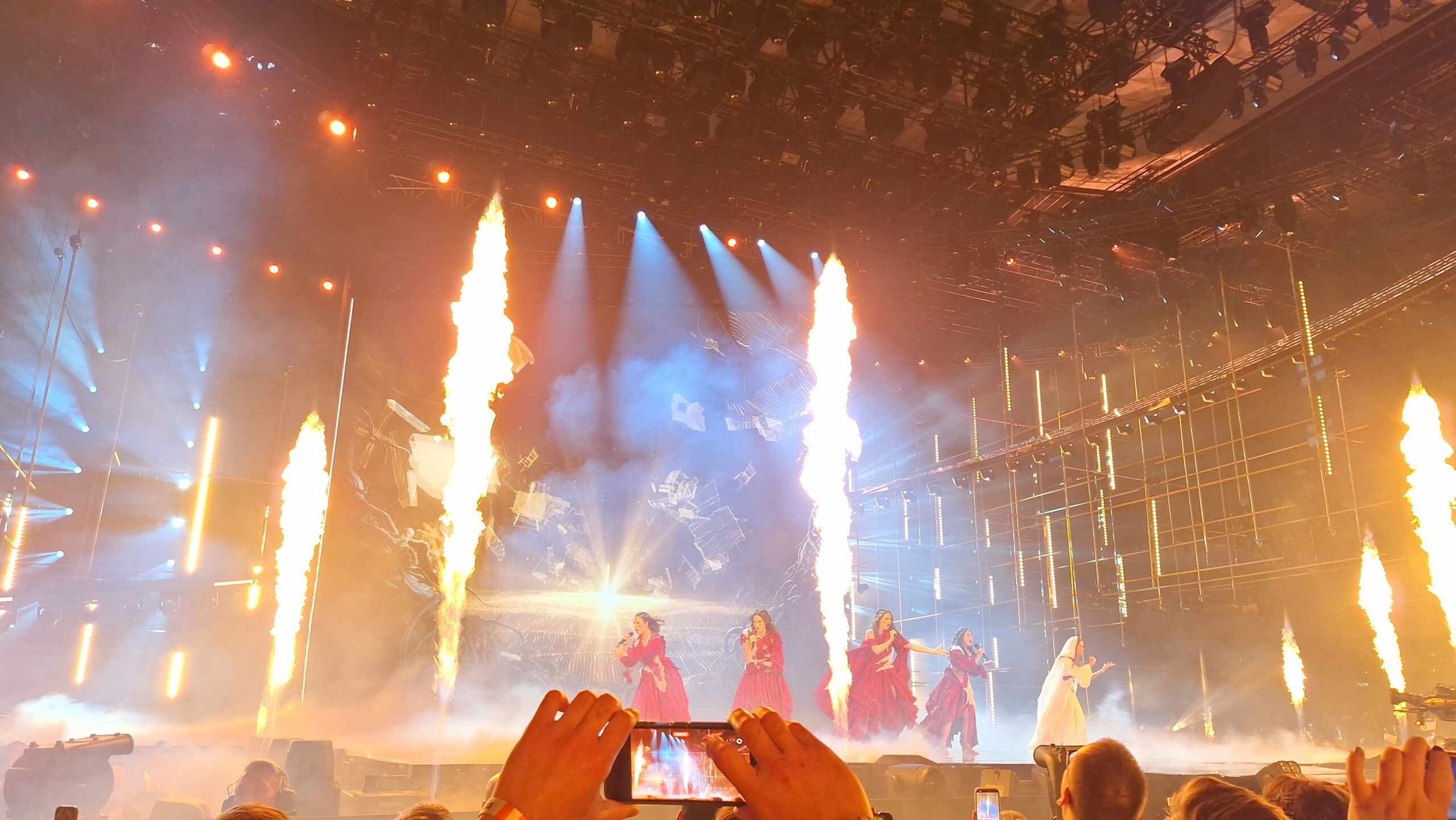
Another Performance
The most incredible moment of the entire competition came during the Grand Final. As the results were being announced, the competition between Bulgaria and Israel became incredibly close. Then came the nail-biting finale, when Bulgaria received its fan votes and overtook Israel to win Eurovision. I could feel the energy in the room as they awarded the final points.
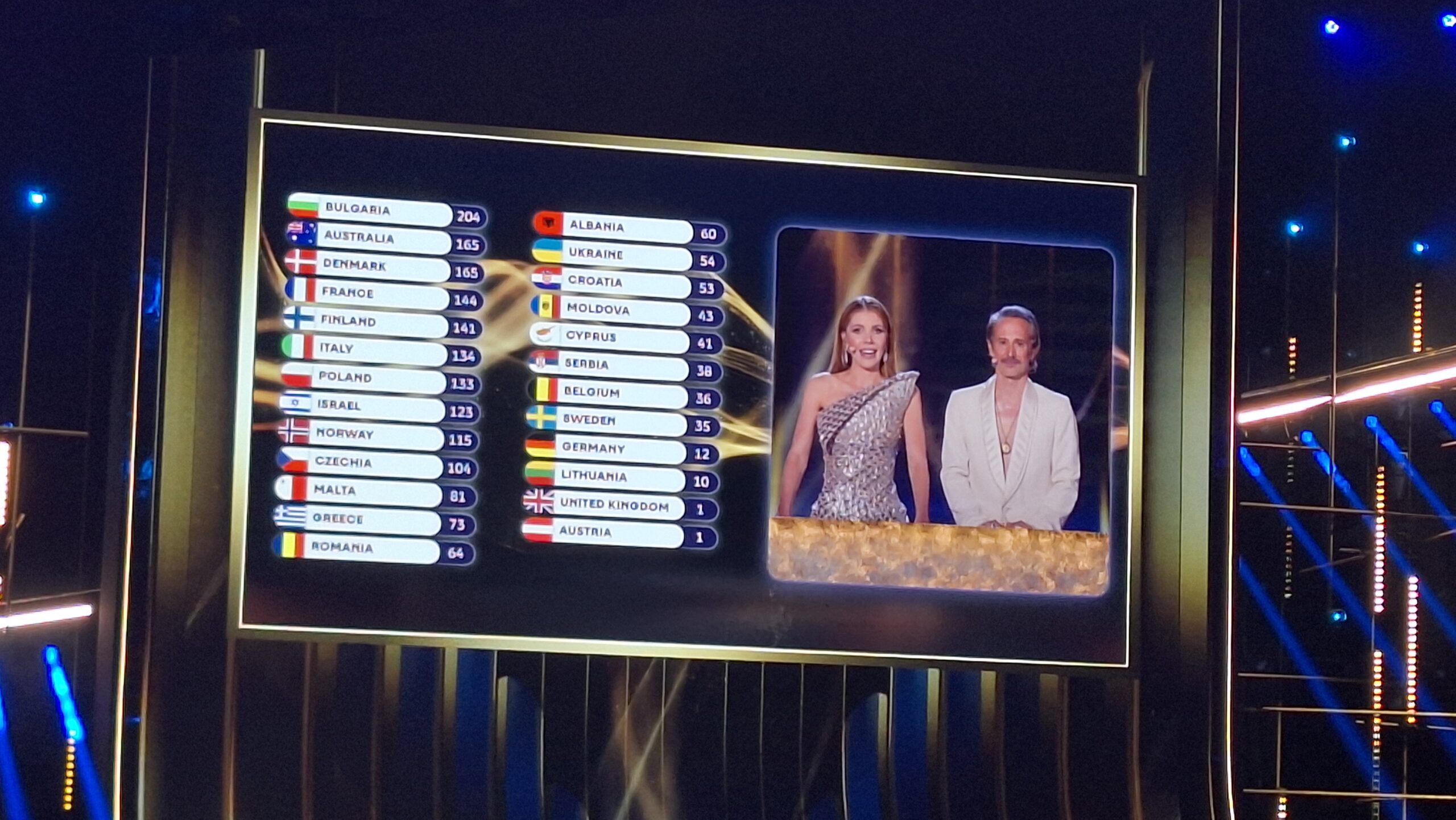
Eurovision – Tallying the winner
When Bulgaria overtook Israel to claim victory by a record margin, the stadium was pure euphoria. Witnessing that moment, surrounded by thousands of screaming fans, is something I’ll never forget. Bulgaria’s winning performance was “Bangaranga” by Dara. You can watch the performance here: Watch Dara perform Bangaranga — Eurovision 2026. And please don’t blame me if you can’t get the tune out of your head for the next few days! 😊
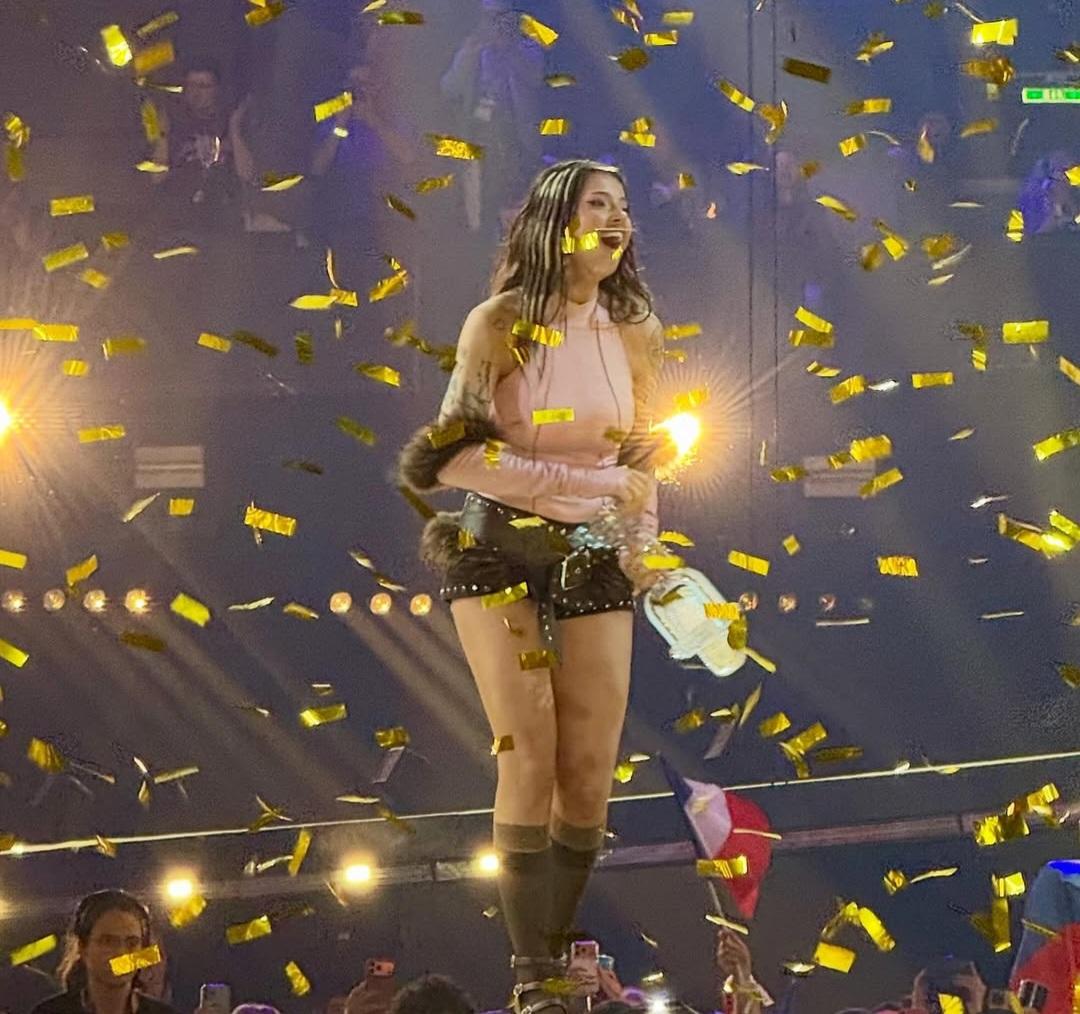
Eurovision – Winner
With Bulgaria winning this year’s competition, Eurovision will head there next year. And for Canadian fans, there’s another reason to be excited. Next year’s competition will also feature Canada’s inaugural Eurovision entry, which was coincidentally announced on Canada Day.
