
Table of Contents
Points Miles and Bling (blog) contains referral or affiliate links. The blog receives a small commission at no additional cost to you. Thank you for your continued support. Credit Card issuers are not responsible for maintaining or monitoring the accuracy of information on this website. For full details, current product information, and Terms and Conditions, click the link included.
September has begun, bringing with it the back-to-school season. Frosh activities likely started last week and if you’re a student reading this — enjoy it, because it really is a special time of life. But between studying for classes and learning how to live with roommates, dedicate a small portion of your time to learning about the world of credit card rewards; I promise it’s worth it.
Credit cards for students are a near-and-dear topic to my heart because I started my own miles & points journey as a university student. On the redemption side, students can take particular advantage of frequent flyer miles thanks to frequent mid-semester breaks and a long summer break, which offer plenty of date flexibility. Students are also paying high tuition fees, making it easy to meet minimum spend requirements.
Just by redirecting your existing expenses, you can use points to travel in premium cabins for less than the price of economy. When you can travel surprisingly affordably, even a modest amount of disposable income can go a long way.
A Beginner’s Guide for Students
Before talking about specific credit cards, it’s worth covering the basics if you’re completely new to the world of credit card rewards. The basics are simple: sign up for a credit card, meet the spending requirement, pay any applicable annual fee, and collect the welcome bonus. Use the points to offset travel expenses or transfer them to an airline to book economy, business, or even first class flights.
If you’re not after big, flashy trips and just want a return in cold, hard cash, we have cashback and fixed-point rewards recommendations as well. PMB mostly recommends flexible rewards since those can achieve outsized value when redeeming for premium cabin flights.
You can also sign up for hotel-specific credit cards to pay for accommodation, although my recommendation for students is to pay for flights with points (tends to be way better value than redeeming for hotels) and slum it in a hostel. Hostel life is the road well-travelled for good reason, as there’s nothing quite like meeting other like-minded travellers your own age and exploring a new city together.
Consider your fall, spring, and summer breaks: using the right credit card is the difference between taking a road trip to Montreal and flying first class to Japan (not that there’s anything wrong with the former, just an analogy).
Income Requirements and Building Your Credit Profile
You might notice that many recommended credit cards online have income requirements in the range of $60,000, $80,000, or sometimes $200,000. The key to qualifying is to use your household income; for example, your parents’ income (note household income requirements are usually higher than personal, but you’re able to count multiple people’s income).
Another consideration is building your credit file. Years of credit history are an important factor in keeping your credit score healthy, so I’d recommend signing up for a few no-annual-fee credit cards that you can keep indefinitely.
Get a “Starter Credit Card” As Your First Card
It’s difficult to get approved for new cards without any credit history, so I always recommend getting a starter student credit card with your chosen main bank. Speak to someone in person if you’re having trouble being approved online and get a basic rewards card. Banks are eager to sign on new customers, and all have student-specific credit cards, so I’d recommend just signing up for one of those and using it for all your regular expenses. For inspiration, PMB has a well-rounded selection of the best credit cards with no annual fees.
Just to make it clear: pay your credit card in full every statement cycle. Paying interest defeats the entire purpose of accruing rewards points.
After 6-12 months of credit history, you’ll be in a much better position to apply for other cards on the market, including American Express.
PMB isn’t a personal finance blog, but know the importance of having at least one credit card and building credit history. It’s a major help down the line when you want to get a car loan or a mortgage.
Top 5 Credit Cards for Students
Let’s get into it. Many of these recommendations come from my personal experience earning miles & points as a student, and I trust they’ll serve you just as well. These are fantastic cards to get after you’ve established some credit history with your starter card.
Note that these cards aren’t necessarily student-specific, and that’s intentional. Starter and student credit cards are designed to help you build your credit, not accrue meaningful rewards. To me, there’s little reason to keep putting your everyday spending on a card with a low return when the exact same purchases could be earning considerably more points elsewhere.
Amex Cobalt
Did you know all Amex cards have no income requirement? It applies across their entire portfolio, even the high annual fee cards.
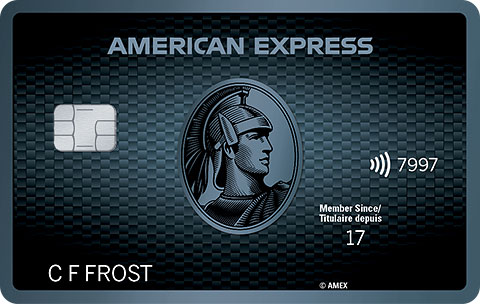
Whether student or not, the Amex Cobalt launched in 2017 and has taken Canada by storm (well, the miles and points community, anyway). This card earns an incredible 5X points on groceries, restaurant expenses, and takeout. It also earns 3X on streaming services, 2X on transit, rideshare, and gas, and finally, 1X on everything else.
The elevated earning categories cover a large portion of a typical person’s daily expenses, and Amex Membership Rewards (MR) are the most powerful rewards on the market when it comes to redeeming for business and first class flights. Amex has the most transfer partners in Canada, so you can transfer MR to Aeroplan, British Airways Avios, Air France Flying Blue, and more to unlock flights like ANA first class, Air Canada Signature Class (business class), and Lufthansa’s new Allegris business class.
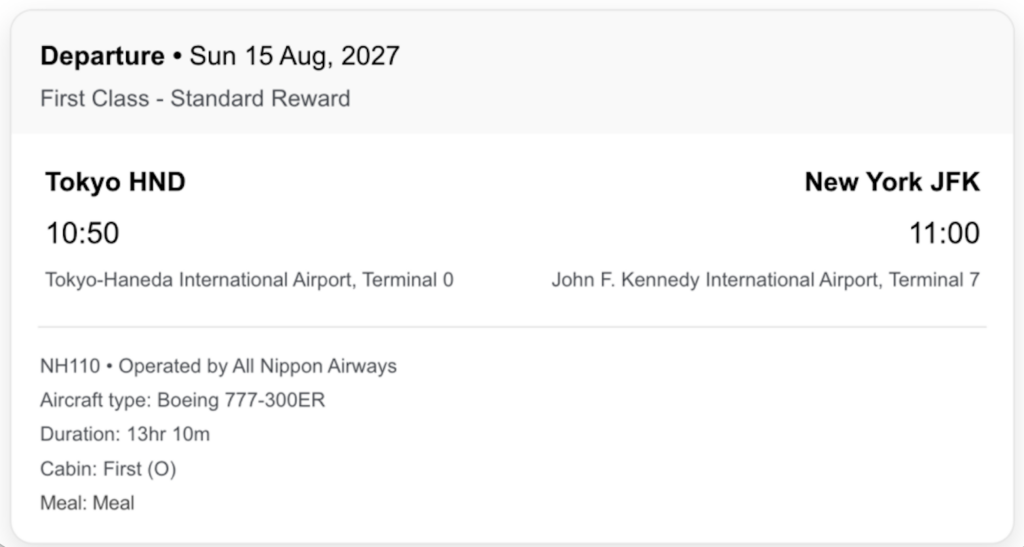
Transfer your Amex MR to Aeroplan to book ANA First Class to Japan
Check out our Membership Rewards posts for the how-to guide.
There is a monthly fee of $15.99, or $191.88 charged annually if you’re in Quebec.
TD First Class Travel Visa Infinite – Apply Now
You might have trouble getting approved for this one even with a year or two of credit history; I certainly did as a 20-year-old. I’d recommend moving some banking over to TD and establishing a good relationship, as that goes a long way.
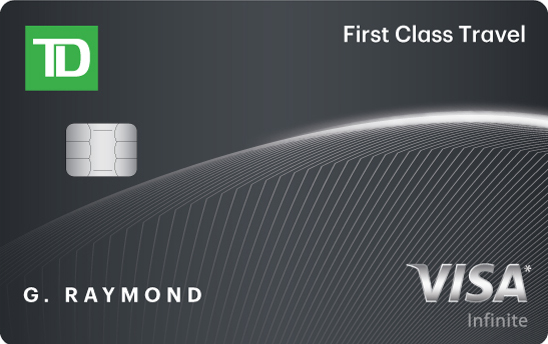
Think of TD Rewards points as Expedia spending money; each point is worth 0.5 cents towards anything on the Expedia for TD platform. The offerings are identical to regular Expedia, so you can book flights, hotels, tours, or even Disney tickets.
The TD First Class Travel Visa Infinite offers up to 160,000 TD Rewards broken down as follows:
- 20,000 points after first purchase
- 140,000 points upon spending $7,500 within the first 180 days of approval
The annual fee of $139 is waived the first year and you get 4 complimentary airport lounge visits a year. You also get an annual $100 TD Travel Credit, but that requires a single hotel booking of $500+ on Expedia for TD.
160,000 points is worth $800 towards anything on Expedia, making it easy for every person to derive value. Say you’re trying to fly home at the end of the year in April and there’s no award space (because everyone is trying to fly home and it’s peak season); well, you can use your TD points to offset $800 of any flight you want.
If you can’t find what you want on Expedia, you can book any travel directly with the provider and redeem for a slightly lower 0.44 cents per point instead. The good news is TD is exceedingly generous with what qualifies as travel, so you can even redeem at 0.44 CPP for things like gas, meals, and theatre tickets.
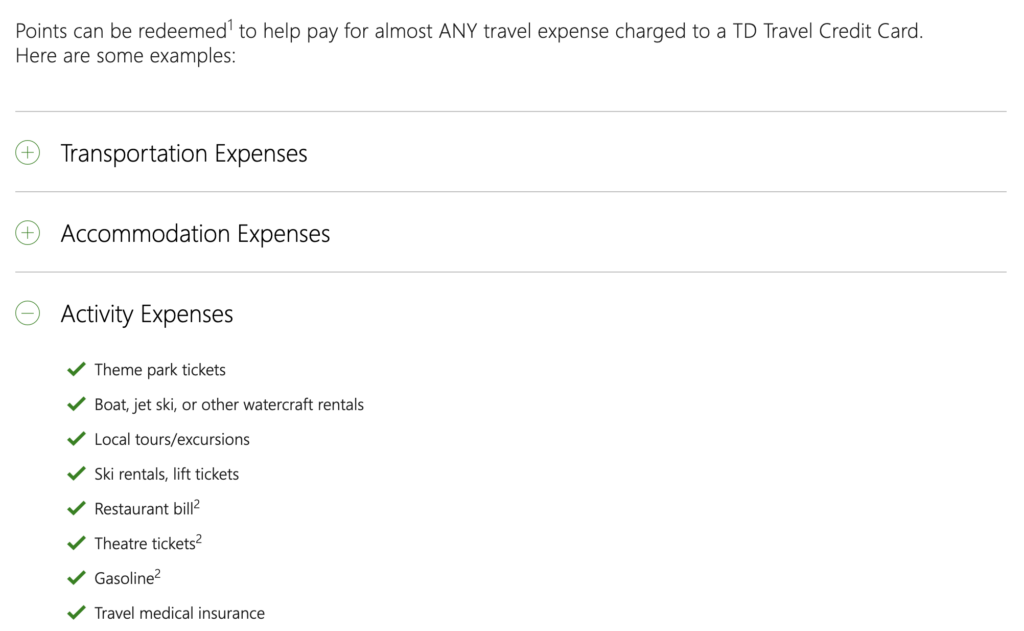
Redeem TD Rewards points at 0.44 cents per point towards any travel expenses
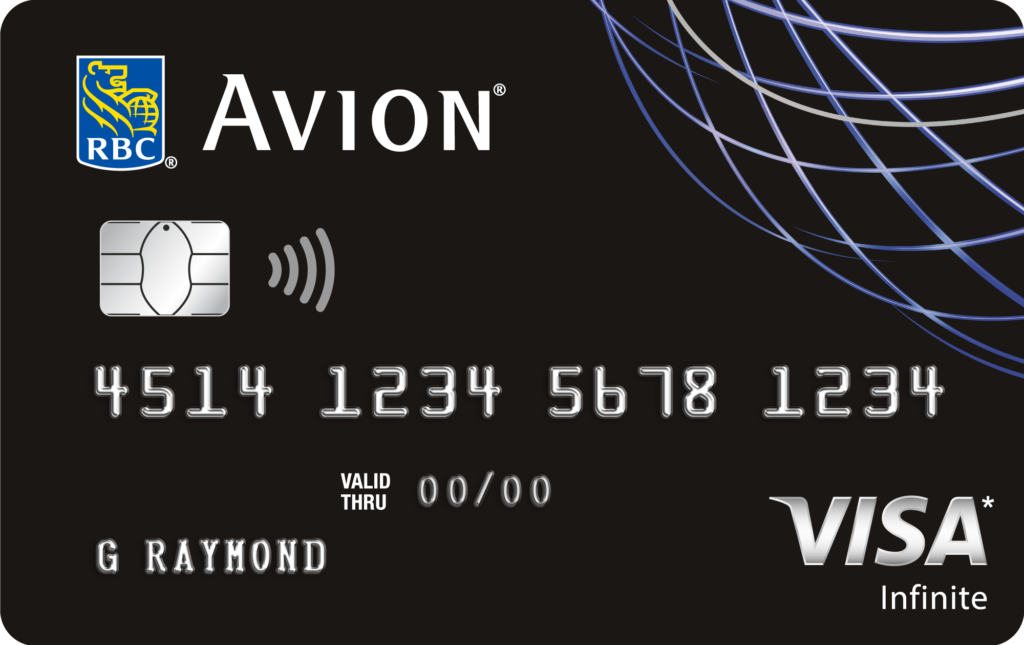
RBC Avion Visa Infinite Card – Apply Now
RBC Avion points are some of the strongest in the business, with a unique transfer partner in American Airlines AAdvantage.
Transfer your Avion points to AA to fly the spectacular Etihad A380 First Class Apartments.
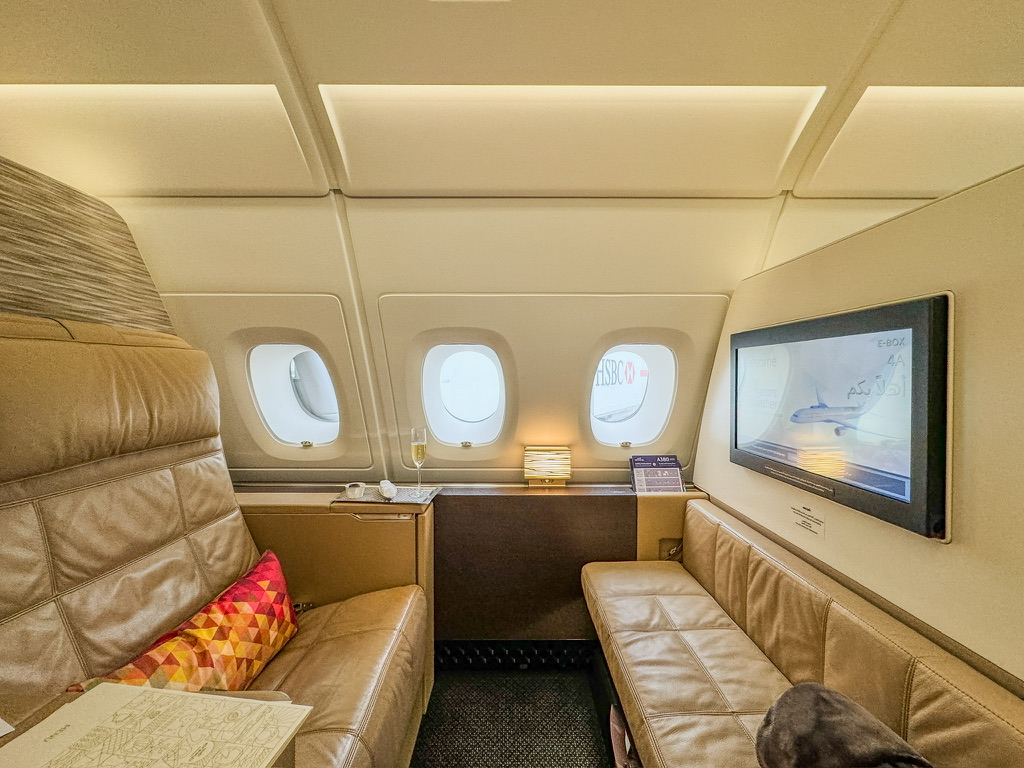
Transfer your RBC Avion to AAdvantage to fly Etihad A380 First Class Apartments
The welcome bonus offers 35,000 points on approval, with a further 20,000 points after spending $5,000 in the first six months. If you hold the card for a second year, you’ll get another 15,000 points after your first-year anniversary. That’s a total of 70,000 points and to put that figure into perspective, you can transfer Avion to British Airways Avios to book Qatar Airways Qsuites business class for 70,000 points from Toronto to Doha. RBC will also run 30% transfer bonuses to Avios a few times a year so it can cost even less than 70,000 Avion points.
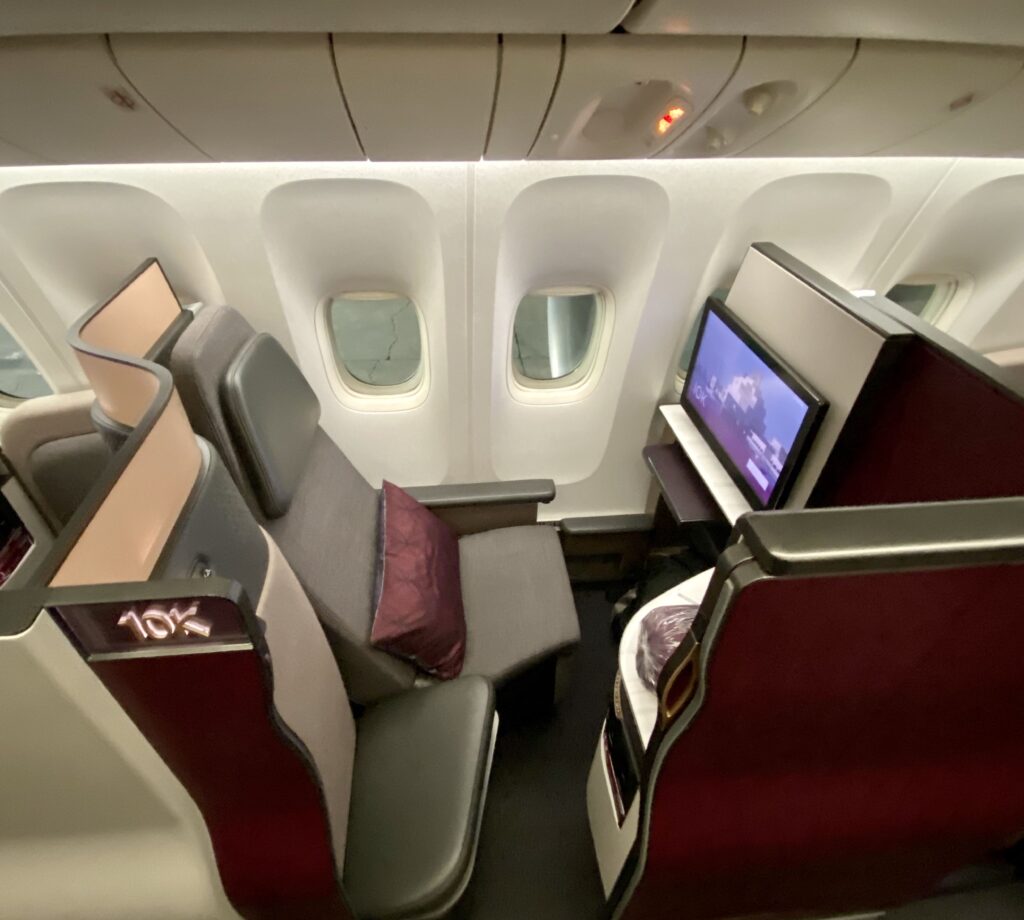
Qatar Airways Qsuite is my favourite business class product in the sky
For the welcome bonus alone, the $120 annual fee is well worth it.
If you don’t meet the income requirement for the Visa Infinite version, get the RBC Avion Visa Platinum instead; the welcome bonus in points is the same with the same annual fee, but there is just less travel insurance coverage as a lower-tier card.
Scotia Momentum Visa Infinite + Card – Apply Now
I did promise a cash back card, and this one is my favourite. The $120 annual fee is waived in the first year, and you get 15% cash back on all purchases in the first 3 months up to $2,000 of total purchases. If you need a one-year interest-free loan on your tuition, the Scotia Momentum Visa Infinite + also offers a 0% interest rate on balance transfers for the first 12 months (a one-time 2% transfer fee applies).

The earn rate is excellent with 4% cash back on groceries, recurring bills, and subscription payments. You’ll get 2% back on food delivery, gas, and daily transit and 1% on everything else.
My favourite feature is being able to redeem your cash back anytime ($25 minimum) instead of waiting for an annual payout.
BMO VIPorter World Elite Mastercard — Apply Now
The BMO VIPorter World Elite Mastercard is an often-overlooked credit card, but I think it’s especially beneficial for students because of Porter’s low fares. For many domestic routes, Porter frequently offers the most competitive prices, but with a catch: no free seat selection, no digital boarding pass, no carry-on or checked bags when flying in basic economy.
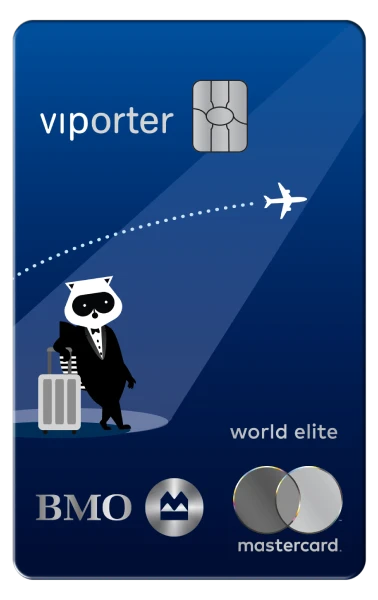
This credit card solves that by offering all of these as perks to the primary cardholder. The annual fee is $199, but that’s cheaper than upgrading your fare to regular economy or buying baggage on every flight. Even better, BMO is offering the first year free, so all these perks are free for your first 12 months.
Even after the free first year, the savings can quickly offset the annual fee if you fly Porter a couple of times a year and would otherwise pay for these extras.
You also get complimentary VIPorter Venture status, and I’ve heard of multiple people who got free upgrades to Porter Reserve, although not a published perk.
In my experience, Porter also offers a great onboard experience with free wi-fi, no middle seats, and consistently friendly flight attendants.
Amex Business Platinum
The title is top 5, but I had to mention the Amex Business Platinum as the “if you’re ready to go all in” card. In exchange for braving the $799 annual fee and $15,000-in-3-months spending requirement, you get 100,000 Amex MR and another 50,000 after you make a purchase between months 15 and 17 of Cardmembership.
You also get unlimited lounge access through the end of 2026. Starting January 1, 2027, that changes to 12 complimentary Priority Pass and Plaza Premium visits per year, while access to Amex Centurion Lounges and other eligible Global Lounge Collection lounges remains unlimited. You also get a $200 annual travel credit.
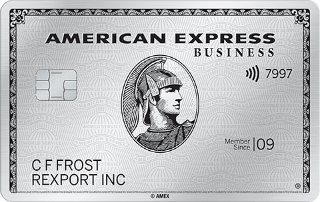
150,000 MR is enough to book a round-trip to Europe in business class, a one-way to Asia in business class with plenty of points left over, or about 15 one-way short domestic trips in economy. This card also offers the best referral perks; you get 25,000 MR every time someone is approved with your referral link, up to 225,000 MR a year.
Meeting the Spend Requirement
For many of the above cards, the spending requirements can be quite daunting: $7,500 in six months means $1,250 a month, which not everyone can easily reach.
On top of the regular groceries, streaming services, and normal everyday expenses, you can meet the spending requirement by thinking outside the box and paying tuition and rent on your credit card. For example, you can pay tuition to universities that don’t accept credit card directly via Chexy for a 1.75%.
For a large minimum spend requirement like the Amex Business Platinum, try asking your friends if you can pay their tuition and have them reimburse you (this was my number one spending method back in the day).
If you can’t pay rent directly on a credit card, you can also use Chexy. Here’s how it works: pay Chexy with your credit card, and Chexy sends an e-Transfer to your landlord. Rent is a big enough expense to make it worth the effort to earn points for it.
Takeaway
University is one of the best times to get started with miles & points. Students have large expenses like tuition that can help meet spending requirements, while school breaks and long summers provide the flexibility that makes finding good award space considerably easier.
How deep you want to jump in is entirely up to you. Start with a basic student credit card and build your credit history. From there, put all your spending on the Amex Cobalt to earn 5X points on groceries and dining out or sign up for a TD First Class Visa Infinite to earn $800 worth of Expedia money. Or, if you have the spending capacity and want to go all in, there’s nothing inherently wrong with jumping straight into something like the Amex Business Platinum. In fact, that was the first rewards card I got as a student.
I started earning miles & points in university, and even on a student budget, they opened up travel opportunities I otherwise couldn’t have afforded. Whether that means flying home for the holidays or flying business class halfway around the world, those four years are a pretty great time to start.

2 comments
I find it hilarious that you think undergraduate students can spend enough money to redeem for first class travel. You must have had a privileged upbringing?
That said, I know many students whose mommy and daddy pay their bills, to the extent that many of these redemption opportunities become reality… perhaps retitle this to “best cards for students whose parents pay their bills!”
Hi Courtney — valid criticism. Students aren’t necessarily travelling frequently during school, and many of my own points went toward “necessary” expenses like flying home over Christmas and summer breaks. Reducing the cost of those trips is already a meaningful win.
The article is primarily focused on sign-up bonuses and directing high-volume expenses students may already have onto a credit card to potentially earn a large sign-up bonus, not assuming that someone will earn a first class redemption through daily coffee and grocery purchases alone. That could include tuition, rent, or student club expenses reimbursed by the university. If the money is being spent anyway, you might as well earn the maximum available points or cash back. But even using an Amex Cobalt to earn 5X on groceries and dining out adds up to a significant sum compared to using a 1X-earning or 1% cashback card.
Students’ financial situations also vary considerably. Some have family support, while others have substantial income during co-op terms or internships. A larger graduation trip is also an aspirational moment for many students, and accumulating enough points for one can take a year or two, so better to get started early.