Table of Contents
Points Miles and Bling (blog) contains referral or affiliate links. The blog receives a small commission at no additional cost to you. Thank you for your continued support. Credit Card issuers are not responsible for maintaining or monitoring the accuracy of information on this website. For full details, current product information, and Terms and Conditions, click the link included.
The Great Migration — one of nature’s greatest spectacles — involves the annual movement of millions of wildebeest from the plains of the Serengeti to the Masai Mara. It’s a bucket list activity for many, and one Mohammed was able to visit during his African safari trip of 2024. Mohammed wrote a fantastic piece on planning a safari, and I’ve edited this guide to include a few of my own experiences both in East and South Africa.
This guide draws on our first-hand safari experiences and aims to provide a comprehensive resource for planning a safari in Africa. Too many safari lodge reviews fail to disclose that the trip was sponsored. This is just something to be aware of as you embark on selecting your lodge amongst the hundreds of options you’ll find across the continent.
Safari in East Africa
East African safaris include Kenya and Tanzania, with more adventurous travellers heading to Uganda and Rwanda to go gorilla trekking. The best flight options would be Qatar via Doha or Air France/KLM via Paris or Amsterdam, balancing points that are easy to accrue with decent availability.
Flights
Avios and Flying Blue are both easy to earn in Canada through Amex Membership Rewards (MR) and RBC Avion. Booking through Qatar costs 95,000 Avios one-way in business class per person, while Air France/KLM costs 115,000 Flying Blue miles, though it can be lower with a Promo Reward.
Of course, you can also use Aeroplan for 90,000 points one-way if you find award space on Turkish Airlines or a member of the Lufthansa Group or EgyptAir.
Hotels
Hotels are the much harder part when it comes to safari, as most luxury safari lodges are not part of a loyalty program. In Kenya, though, you can redeem Marriott points at the JW Marriott Masai Mara Lodge for about 120,000 points per night. Make sure to book for 5 nights if you can, to take advantage of the 5th night free benefit.
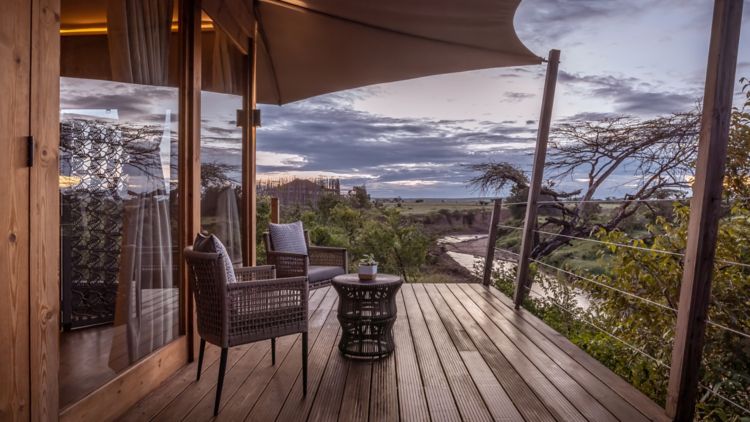
JW Marriott Masai Mara Lodge
The Ritz-Carlton, Masai Mara Safari Camp is also newly opened and accepting guests at a high price point starting at around 210,000 points per night.
Both Mohammed and I opted to book either a group tour or a custom safari itinerary, paying cash for lodging.
The Great Migration
The Great Wildebeest Migration, or the Great Migration as it is often referred to, is the annual migration of over two million wildebeest, zebras and gazelles as they move through the Serengeti and Masai Mara in search of grazing lands. This cyclical journey across Northern Tanzania and Kenya is the largest animal migration in the world and one of nature’s great wonders.
Aside from the sheer spectacle of seeing this moving mass of muscle in unison, the migrating herds are closely followed by Africa’s most prolific hunters. From the giant crocodiles of the Mara and Grumeti rivers to territorial packs of hyenas and lion prides to the more reclusive leopards and cheetahs — everyone’s looking for their pound of flesh (quite literally) when the migrating herds pass through their turf.
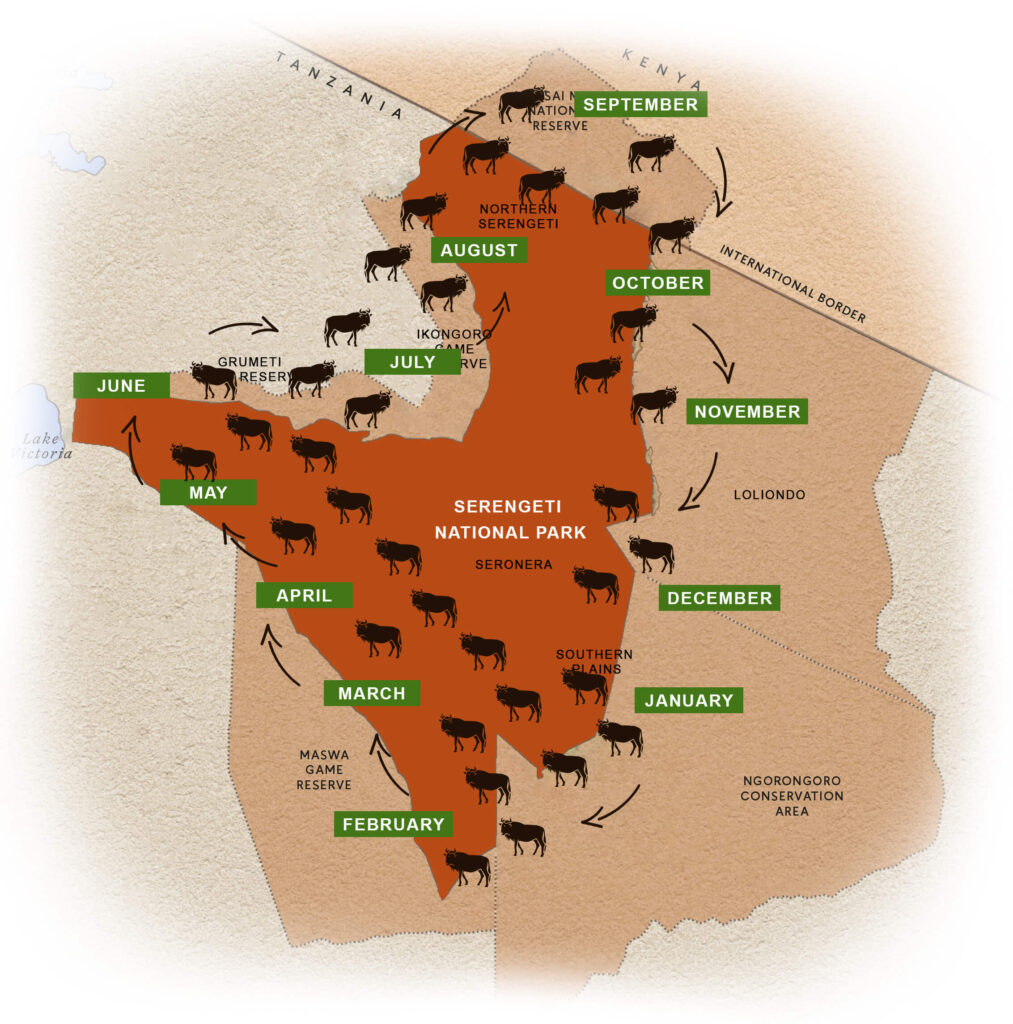
The Great Migration – seasonal migration patterns (source: whileinafrirca.com)
What time of year should you go?
What most people probably envision when they hear Great Migration is the spectacle that is the river crossings, which you’ve probably seen on countless nature documentaries. To maximize your chances of viewing these, you’ll want to pick a time of year when the herds are in the northwestern corridor of the park near the Grumeti and Mara rivers (labelled June-July-August on the map above). The first crossings could start as early as the end of May, but usually in June, when the Grumeti River crossings happen, followed by the Mara River crossings that typically occur in September.
The challenge of timing these events is that weather patterns, specifically rain and water levels, largely dictate when they occur. It’s also no surprise that the river crossings, along with the accompanying onset of warmer/dryer weather, result in most tour operators switching to peak/high-season pricing, usually in the very first few days of June. Loosely speaking, June- October is usually drier and warmer, with a short rainy season beginning in November, followed by a more prominent rainy season into March and April.
Following a short rainy season in November and December, the herds tend to arrive on the southern plains of the Serengeti in January and remain in this part of the park through most of March. The calving season occurs during February, when approximately 8,000 calves are born daily and duly attract a high concentration of predators looking for an easy meal.
Aside from the famed river crossings, the calving season was something that I was very interested in as well. This happens during a brief window in February when the herds are in the southern portion of the park around the Ndutu area (labelled February in the map above). In April and May, the herds begin to make their way north again in search of fresh grasslands and water. For a more illustrative guide on herd movements, check out this page from whileinafrica.com.
Planning a Safari to East Africa
Once you’ve had a chance to do some early research and to think over some of the more important questions, I (Mohammed) would highly recommend seeking out an experienced operator/travel agent who specializes in safaris in Africa. Agents specializing in safaris tend to have years of experience organizing, scouting and visiting the many operators they deal with. Thus, they have first-hand knowledge and direct contact with the properties. Just as importantly, they can provide invaluable insight into where to stay, what wildlife to expect in different regions throughout the year, and first-hand comparisons of the camps and lodges they’ve visited.
I (Rachel) was perhaps a bit lazy in my research, and since I was going to Africa with a friend, we opted to take an Intrepid “Essential East Africa” overland bus tour through Kenya and Tanzania, visiting the Masai Mara, the Serengeti, and the Ngorongoro Crater over 10 days. The price was very fair, and we took the budget 18-35-year-olds-only version that involved participation camping. Therefore, we had to help wash dishes at night and put up and take down our own tents.
It might sound like a hassle and I certainly felt that way at 4AM trying to take down my tent in time to catch a sunrise safari, but I would do it again in a heartbeat. Group tours with others my age from around the world are a great way to meet people, and I’m still in touch with people I met on that trip today. Late-night beer drinking over a fire while we share photos of a lion hunt we saw a few hours earlier is for sure a core memory.
I’ll also say, while I have no doubt the JW provides a much more comfortable safari experience, we did see the same JW Marriott jeeps while driving around in ours — the animals do not discriminate.
Mohammed liked The Safari Partners, a small travel agency based in Vancouver. From his early emails exchanged with Chris Ronneseth, the founder of the Agency, it was clear that Chris had a ton of first-hand experience with the continent. Chris explained the realities of trying to catch the Great Migration, answered specific questions about the lodging options that were on offer, and helped manage the itinerary. A no-nonsense, non-sale-sy personality with no bells and whistles travel agency with a cringe name and a social media account.
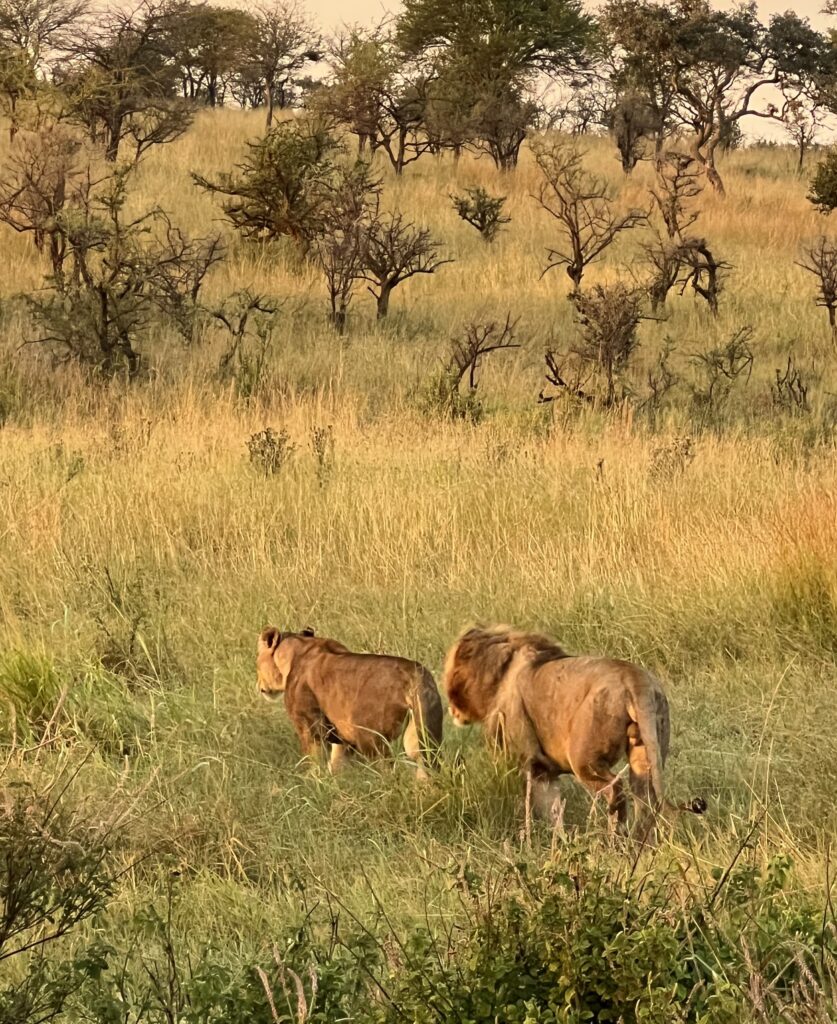
2 of the 4 lions were probably within a km radius of our lodging.
Choosing Amongst Tanzania’s Parks
Arusha National Park, Kilimanjaro National Park, Lake Manyara National Park, Tarangire National Park, Ngorongoro Conservation Area, and the Serengeti are popular stops during a typical African Safari in Northern Tanzania.
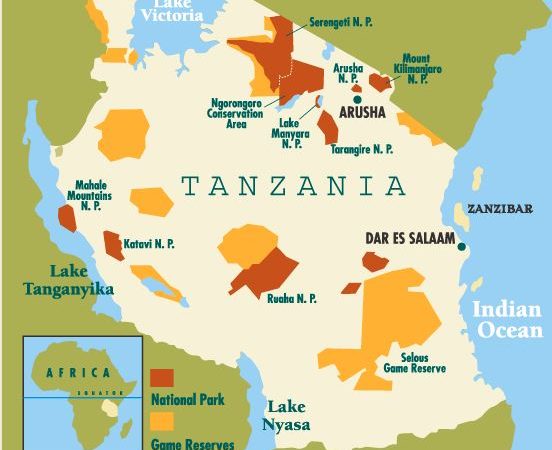
There are situations where visiting multiple parks might make sense, but what if you need to only pick one or two? The Serengeti and Ngorongoro crater stand head and shoulders above the neighboring parks as a final ultimate destination.
While the Serengeti is the largest of the surrounding parks and boasts incredible animal biodiversity and hosts the Great Migration, the Ngorongoro Conservation Area also offers a unique and spectacular experience. Located in a crater formed by a gigantic volcanic eruption, the park is a self-contained ecosystem with one of the largest concentrations of resident animals in Africa. All of the ‘big 5’ can be spotted within the crater (including the Black Rhino), and the animals here are well accustomed to safari vehicles, making viewing and spotting animals very easy.
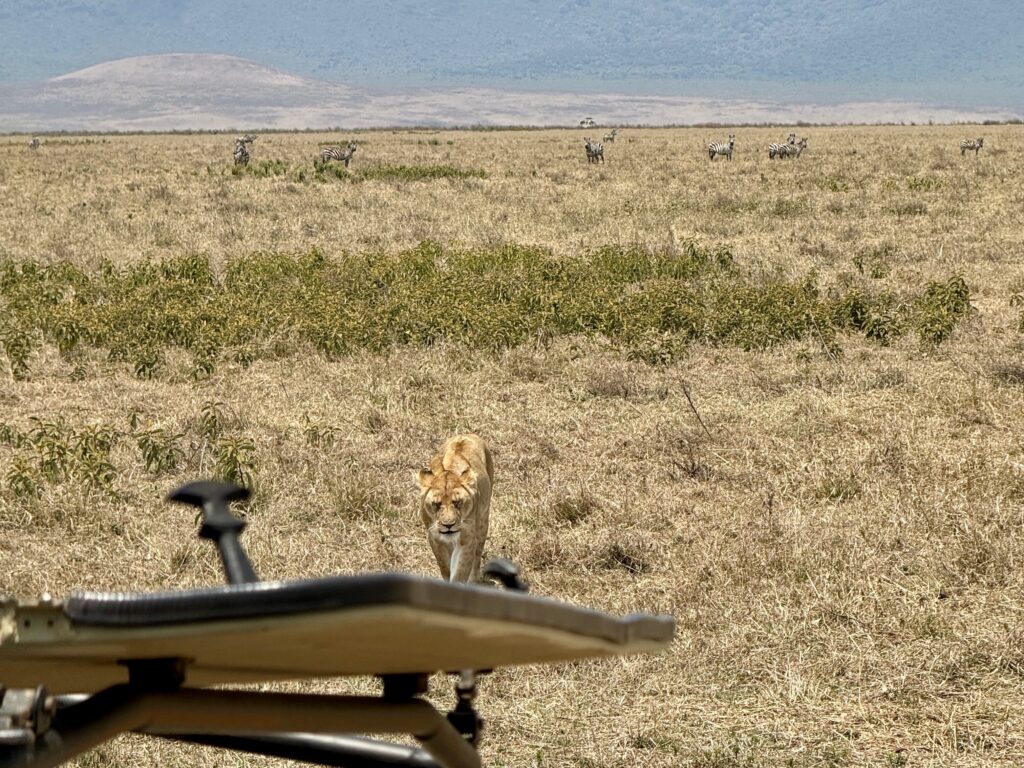
Lion in Ngorongoro Crater
The ideal times to visit would be starting in June when the rainy season has dissipated, and the high season crowds have not come in yet (which usually begins in July). It’s worth noting that the migrating herds do not pass by the crater.
Fly-in/Fly-out Safari
You have two options for the kind of safari you can do. A fly-in/fly-out would typically mean flying from Arusha into one of the airstrips in the National Park. From there, you would be picked up by your safari lodge and driven straight to your lodging with a game drive.
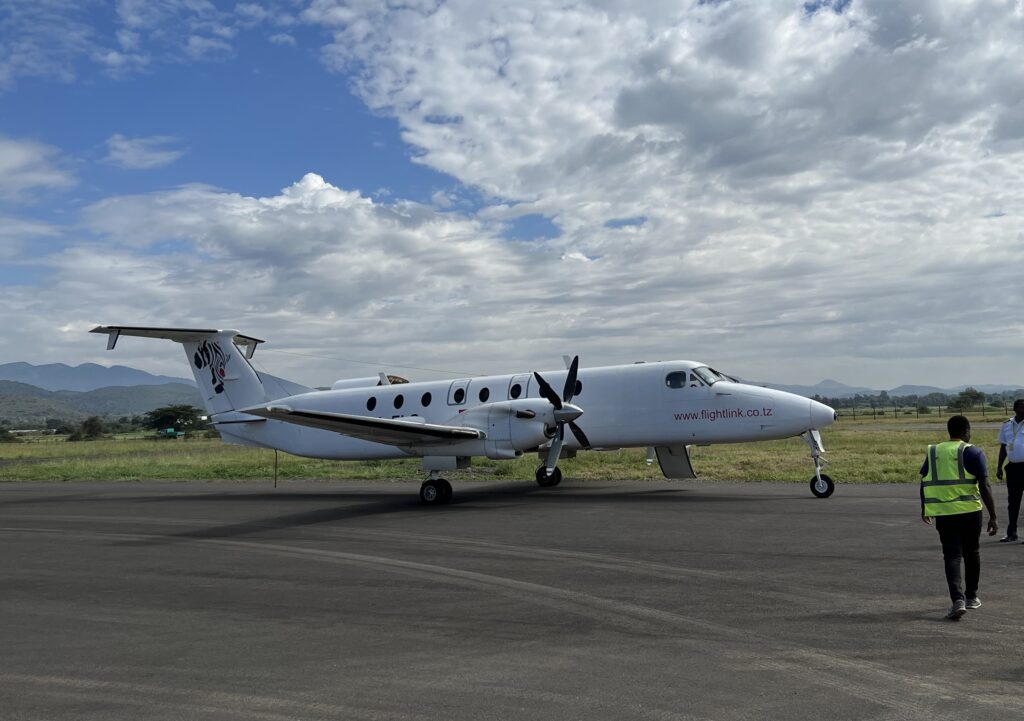
Catching our plane to the Seronora Airstrip in the Serengeti
The other option usually entails leaving Arusha by car and driving with your guides to your destination(s). You’re likely to do this in an itinerary where you are changing accommodations multiple nights during your trip and, along the way, are visiting multiple parks.
Some important considerations in deciding which type of trip you will take include the following:
- Additional Drive Time: The biggest trade-off is drive time. Driving from Arusha through Manyara, Tarangire, and Ngorongoro before reaching the Serengeti adds significant travel, with some legs taking up an entire day. While you’ll enjoy game drives along the way, you’ll have much less flexibility. For example, if your guide hears about a large elephant herd on the opposite side of Tarangire the morning you’re due to leave for Ngorongoro, you likely won’t have time to change plans and pursue the sighting.
- Weather and Road Conditions: If you’re travelling during the rainy or shoulder season, keep in mind that heavy rainfall can significantly affect road conditions. Most park roads are unpaved, and sustained rain can make some routes nearly impassable. For trips outside the dry season, I recommend a fly-in safari with no more than one or two lodges. Staying in one area allows your guide to drive in whichever direction offers the best conditions. If one part of the park is flooded, you can simply explore another. By contrast, a driving safari through multiple parks leaves you far more exposed to weather-related delays.
- Local Guides: Your guide will likely have the biggest impact on your safari experience. They’ll not only drive the vehicle but also explain the wildlife, identify animal behaviour, and know where to find sightings. If you hire a guide in Arusha, they’ll typically accompany you throughout the trip. These guides are knowledgeable generalists but may not know each park in great detail. Lodge-based guides, on the other hand, specialize in a much smaller area. They often know individual lion prides, where the cheetahs are currently roaming, and which locations offer the best wildlife viewing.
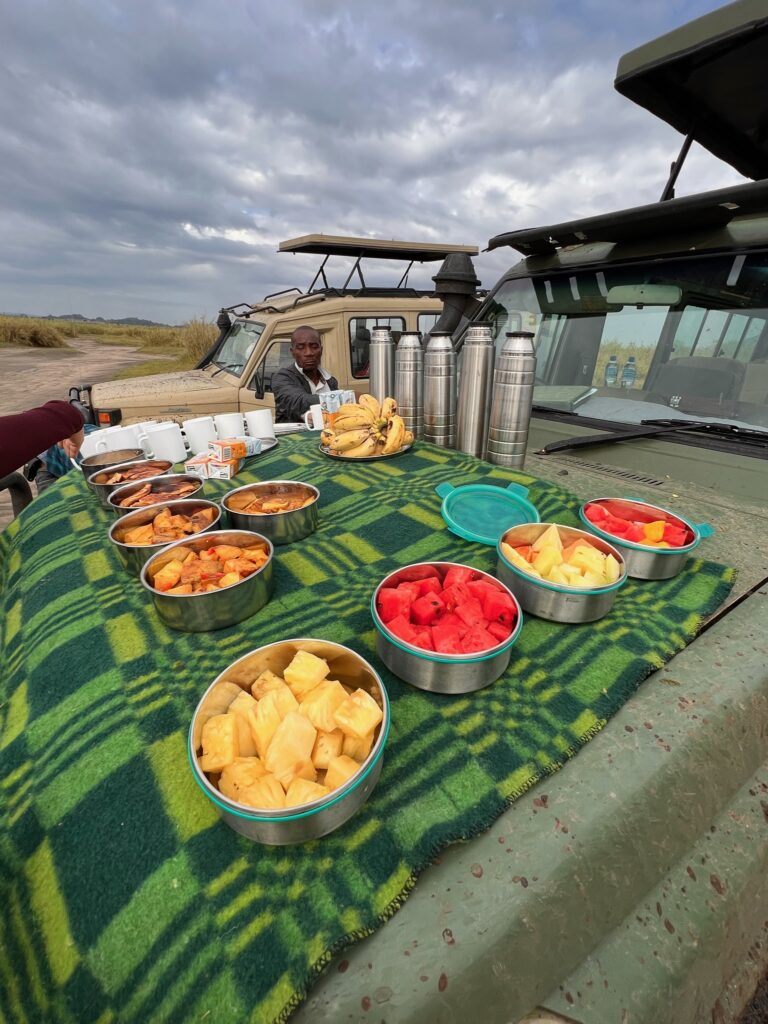
‘Bush Breakfast’ – one of many activities safari operators offer to keep your days fun
Mohammed’s Trip to Tanzania
Ultimately, for our trip, we booked the very last week of the shoulder season (end of May) for a safari camp in the Serengeti, followed by a flight with the family to Zanzibar, where we would all enjoy some R&R before people started heading back.
As much as I wanted to, I just couldn’t logistically fit in Ngorongoro for this trip. I had considered returning to Ngorongoro with my wife after Zanzibar, but it would have coincided with the beginning of Peak season. The goal was to avoid Ngorongoro during the peak season, as the crater and road descending (all Ngorongoro-based lodges are up at the rim) can become heavily trafficked during busy days.
I was particularly excited for the small safari camp I managed to secure, as 14 of people booking rooms would likely lead to us having the place to ourselves, which is exactly what happened. Our camp was close to the Western Serengeti corridors and within driving distance to the Grumeti River, but was also very centrally located in the Moru Kopjes region in the Serengeti — famous for its unique rock formations, lion pride and for being home to the Black Rhino — allowing us to venture off in multiple directions for game drives should we need to avoid any inclement weather.
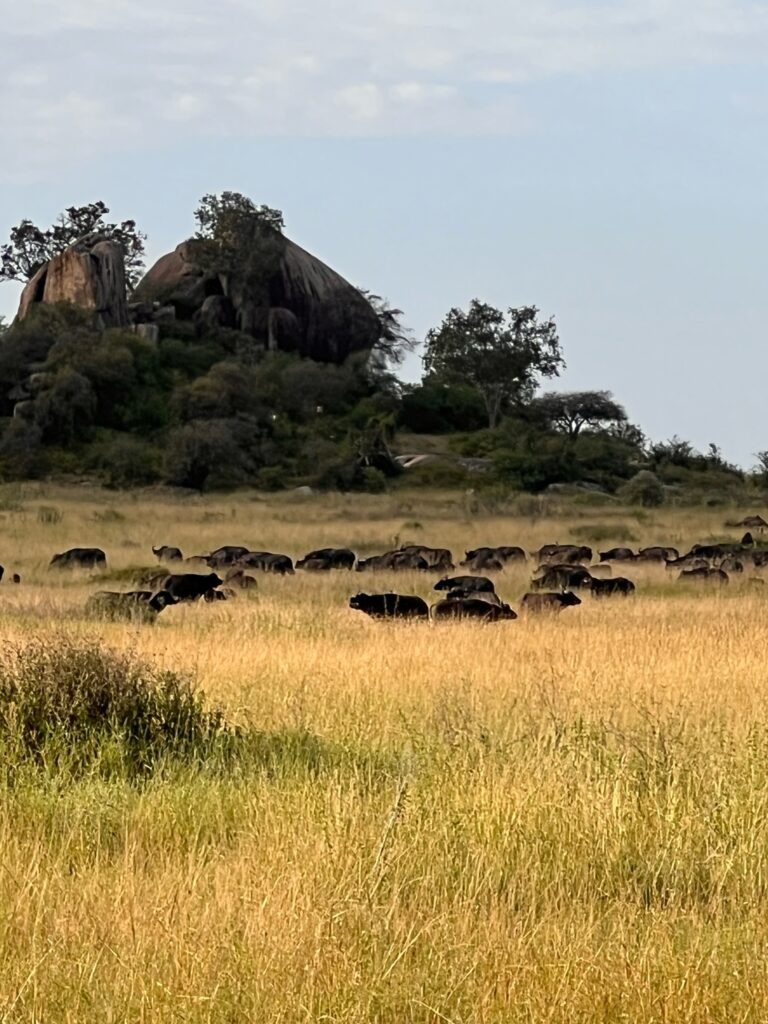
Moru Kopjes region
Safari in Southern Africa
Southern Africa has more than its fair share of photo-worthy safari spots, starting with the famous Kruger National Park and surrounding private reserves like Sabi Sands. One underrated country in my opinion is Namibia as my 8 days there far surpassed expectations. There is Etosha National Park, which offers guaranteed rhino sightings (often the rarest of the “Big 5” to spot), but otherwise is not a standout (at least based on my safari experience).
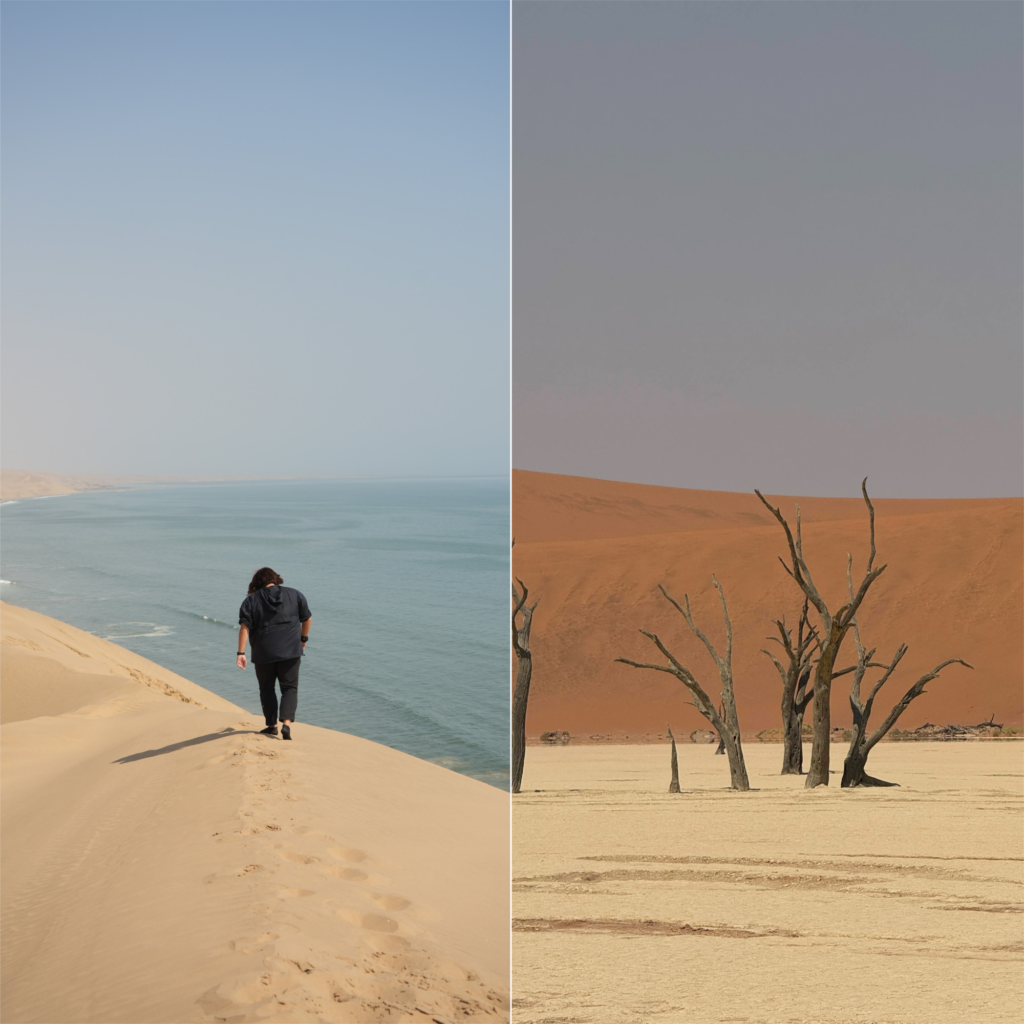
Namibia, where the dunes meet the sea
Rather, Namibia’s landscape of quiver trees, dunes meeting the sea, and perfectly preserved 900-year-old trees takes the headlines as the reasons to visit. There’s also the Skeleton Coast, endless, massive sand dunes, and, really, Namibia should top the list of “must-visit” destinations.
I visited with 3 others, and we booked a private tour including a driver/guide for the full 8 days. Zannier Sonop stood out as the highlight hotel stay, reminding me of Al Maha, where you live in luxury tents in the desert with oryxes in the surroundings. Meals and activities are included. Getting to the resort involves first taking a 4×4 through the desert, then riding a golf cart up winding, narrow tracks, which certainly makes a strong first impression.
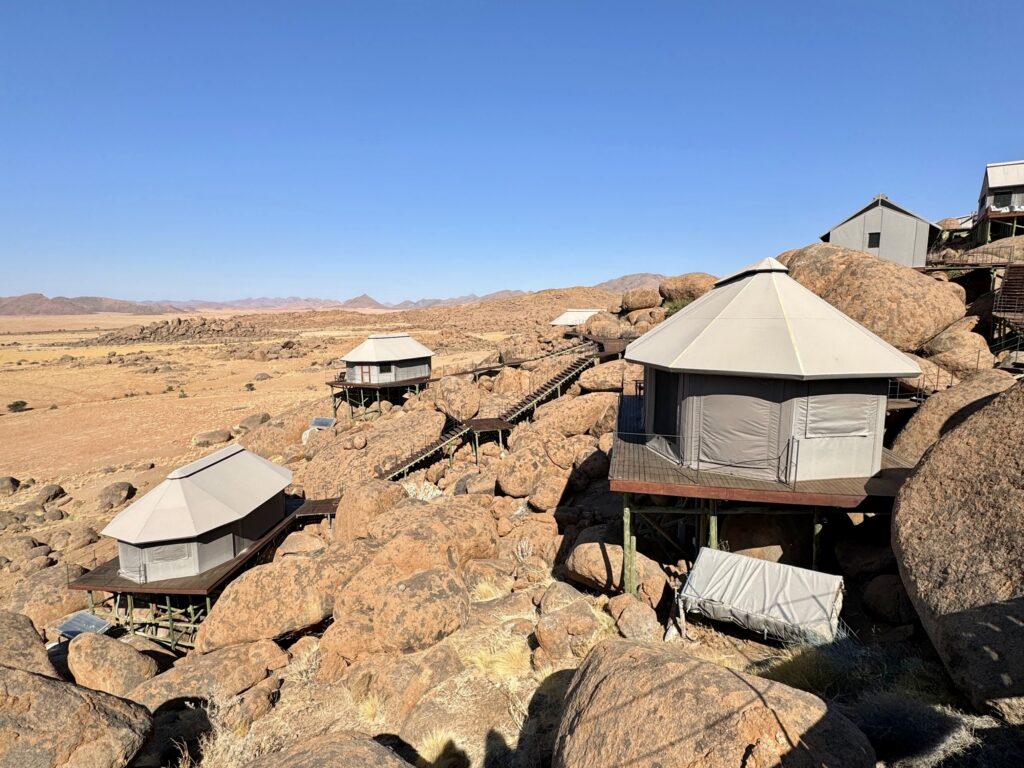
Zannier Sonop
Flights
After my time in East Africa, I flew Ethiopian Airlines to Victoria Falls, Zimbabwe, to check out Victoria Falls, which really did live up to the hype. Regrettably, I did not have enough time to go to the Zambia side for Devil’s Pool. My Ethiopian flights from Kilimanjaro cost 25,000 Aeroplan points in economy, and while not geographically logical, it was certainly cheaper than paying some $800 for the direct flight from Arusha.
For a trip to Africa, I highly recommend going to either East or South Africa, as flying between them can be difficult and flying around Africa can be surprisingly expensive.
If you’re targeting South Africa, the most logical airports are Johannesburg (JNB) and Cape Town (CPT), with JNB offering direct flights. You can book South African Airways using Aeroplan points, and of course, Qatar is still a great option with Avios. If you can find availability on Condor, flying from Toronto (or Vancouver) all the way to Johannesburg for 85,000 Alaska Atmos Rewards points is also a great deal.
In my case, I took a Eurowings fifth freedom flight from Victoria Falls to Windhoek, Namibia, for 7,500 Aeroplan points and then cash flights on Airlink down to Cape Town and around South Africa (but you can book Airlink with United MileagePlus now).
For more flight inspiration, check out PMB Contributor Sash’s recent 2026 trip and what he booked.
Safari
Compared to East Africa, I’d say Southern Africa is more conducive to a “DIY safari” if you wish to self-drive. Both Namibia and South Africa are self-drive-able, with Kruger National Park possibly being the most famous self-drive safari in the world.
Indeed, that’s what I did, flying into Kruger from Cape Town and picking up a car rental from Mpumalanga International Airport (MQP) (one-way to Skukuza Airport [SZK], the only airport inside Kruger). Booking your safari lodges inside Kruger via SanParks is very easy, and I’d recommend booking early for better availability. Prices are very reasonable; I paid under $200/night in high season for a bungalow (2 people). Even if you do rent a car, you can book sunrise and sunset safaris through the visitor’s desk after you check in.
I highly recommend a detour to Sabi Sands and splurging at one of the luxury safari camps. Sabi Sands is famous for its leopards, and I had the best game-viewing experience of my life here when multiple leopards came within inches of our safari vehicle. Unlike the Masai Mara and the Serengeti, Sabi Sands allows guides to drive off-road for closer wildlife encounters, and only three safari vehicles may gather around each leopard at a time. The difference is enormous. In the Masai Mara, I watched 20 or more vehicles jockey for position whenever someone spotted a leopard or cheetah.
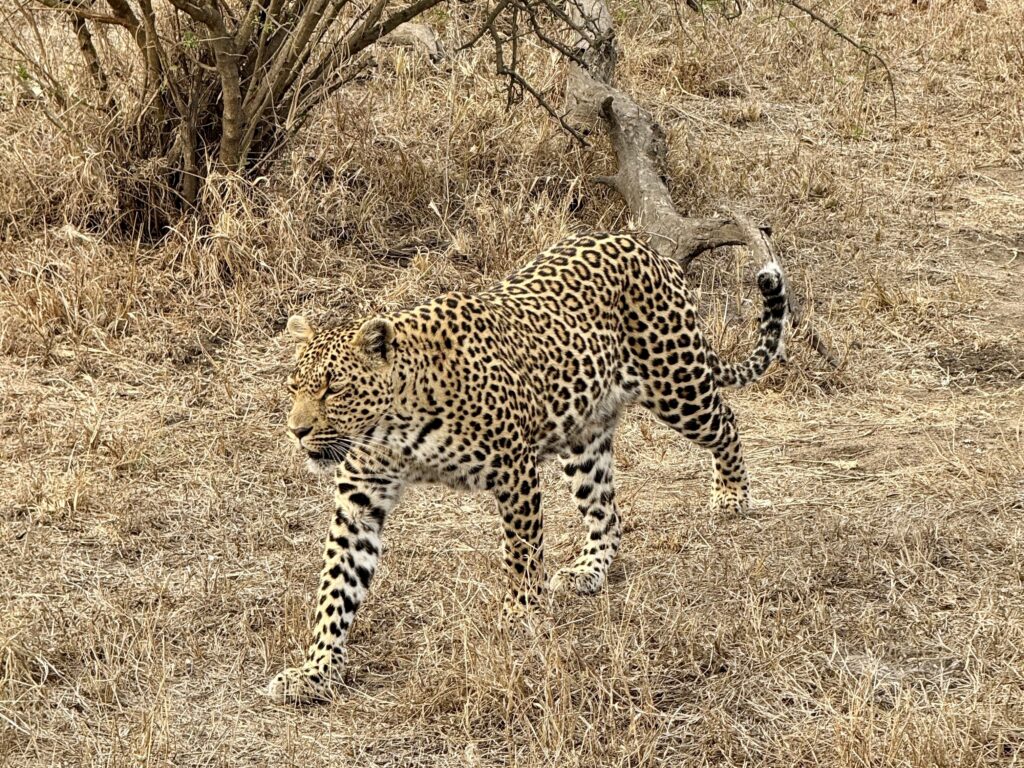
Leopard in Sabi Sands, taken with iPhone 15 Pro Max at 1x zoom
I stayed at Arathusa, and an air-conditioned lodge with a pool was exactly what I needed after driving around Kruger for a few days. PMB Contributor Sash will be visiting Inyati on his most recent safari trip. Arathusa was fantastic in any case, and absolutely no regrets there.
My only warning about self-driving is driving yourself from Kruger to Sabi Sands. While it’s not a long drive, it was probably the most treacherous driving I’ve ever done through the backroads. Much of the journey was on unpaved dirt roads with a ditch on either side, and I would either not do that drive again or take a much easier but longer route after an Arathusa staff member offered me alternative directions.
How Much Time is Enough Time
Needless to say, flying all the way to Africa for 3 nights would be quite extreme for most, and I would personally go for at least 5 nights if, say, booking 5 nights at the JW Marriott Masai Mara. Both Mohammed and I agree that 7-10 days is a good amount of time to go on safari, especially if you’re planning to switch lodges in between.
Since both East and South Africa are a ways away, combining Kenya and Tanzania, or Namibia and South Africa, could make sense for a single trip.
Takeaway
To this day, planning a safari trip to Africa has been my most difficult trip, but also the most rewarding.
Planning a safari is more complicated than simply picking a lodge and showing up. Between seasonality, migration patterns, park selection, transfer logistics, and the quality of your guides, the choices you make before arrival can meaningfully shape the entire experience.
East Africa remains the classic choice for the Great Migration, the Serengeti, and the Ngorongoro Crater, while Southern Africa offers more flexibility for self-driving and still provides easy access to private, luxury reserves like Sabi Sands. Either way, a safari is one of those trips where doing the research, or working with someone who knows the region well, is absolutely worth it.
Getting to and from Africa on points is very doable with advance planning and flexibility between currencies and airlines, although using points for accommodation is a more questionable call. My recommendation is to book the business and first class flights, then be flexible on the ground when it comes to the safari lodge.
If you have any questions about going on safari, please comment below. Most might not know this, but Anshul is a treasure trove of information about the continent, as he spent much of his early career there for work.


12 comments
If you’re curious to explore further into South Africa, I highly recommend Hluhluwe-Imfalozi National Park. It’s a different ecosystem than the Kruger and has lots of rhinos. You can stay in St Lucia where hippos roam the streets after sunset. iSimangaliso is also there with a wide range of animals and crocodile-watching boats.
It’s a place to use Scene or TD points.
And don’t forget about the Caprivi strip and Chobe areas.
Ooh, thanks Heather, I’m going to look into it for my next trip to South Africa (I’d like to check out Eswatini Lesotho).
Nice Post
perfect article thanks a lot
Thanks Mohammed – I really enjoyed reading this – extremely helpful to me to know where to start my planning
Awesome, been waiting for this review and the others to follow for a while
My bad – it’s been a long time coming! With the family growing by one, time (more attention span) has been at a premium – but hoping to catch up on my posts soon!
Very interesting, thanks!
Can’t wait to have your toughts about Massa Marai. I’m considering going next November.
Hi Pascale – thanks for your comment. Excited for you to go. I have been to the JW yet – but hope I can shed some perspective on what to expect/ how it might differ from some of the other options. Irrespective of that – I’m sure you’ll have a great time.
With no A/C or 5 star amenities, no Uncle Lee. 😅😅😅 Mr & Mrs Uncle Peach bruise easily.
Simple solution Uncle Lee – just go during shoulder season or off peak season. The temperatures during these season drop quite a bit during the night and early mornings and you’ll be more concerned about layering up then you will about wanting AC.