Table of Contents
Points Miles and Bling (blog) contains referral or affiliate links. The blog receives a small commission at no additional cost to you. Thank you for your continued support. Credit Card issuers are not responsible for maintaining or monitoring the accuracy of information on this website. For full details, current product information, and Terms and Conditions, click the link included.
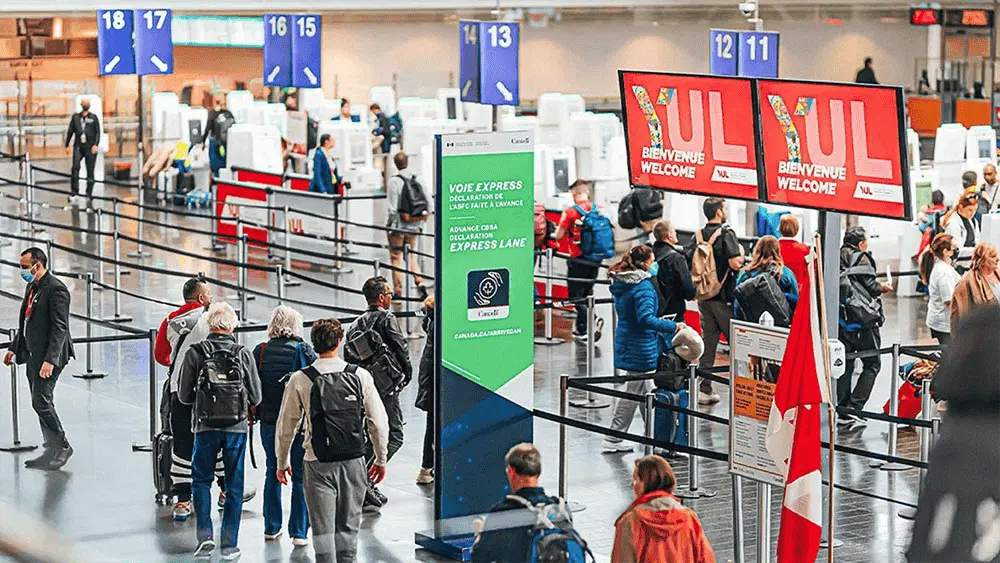
Canada airport transit is getting a little easier, as the Canada Border Services Agency (CBSA) has permanently streamlined the process for eligible travellers connecting between two international flights at select Canadian airports with a process called “Free Flow”.
Rather than visiting a customs kiosk, airlines will electronically transmit the required passenger information to the CBSA before arrival, allowing you to proceed directly to your connecting (international) flight without reporting to customs.
To be clear, Canada has long allowed passengers to connect between two international flights without formally entering the country. Previously, however, eligible travellers still had to stop at a CBSA kiosk or speak with a border services officer before continuing to their departure gate.
How the New Process Works
If you’re travelling between two international destinations via Canada, you’ll simply follow the signs for international connections after landing. As long as you’re eligible, you can proceed directly to the international departures area without stopping at a CBSA kiosk or speaking with an officer. For clarity, Free Flow in the following circumstances:
- You’re connecting from one international flight to another international flight
- Your onward flight departs within 24 hours
- You remain in the secure international transit area
- Your checked baggage is transferred automatically to your final destination
- You meet Canada’s applicable transit requirements, including holding a valid Temporary Resident Visa (TRV) or Electronic Travel Authorization (eTA), where required
The travel requirements for transit have not changed
Free Flow changes the airport process, not Canada’s transit requirements. Eligible travellers no longer need to report to the CBSA in person, but they must still meet all applicable documentation requirements before travelling.
If you need to collect your checked baggage and recheck it, or if you leave the secure transit area, you’ll instead follow the normal arrivals process and clear Canadian customs before continuing your journey.
Regarding checked baggage, passengers connecting from an international flight to a domestic Canadian flight generally need to collect their luggage after clearing customs, then recheck it for their onward flight. By contrast, international-to-international connections can remain entirely airside provided the airline transfers checked baggage to the final destination.
Passengers connecting onward to the United States will also continue to follow the existing U.S. preclearance process rather than proceeding directly to their gate.
Where Is It Available?
Notably, Free Flow is not available everywhere. For now, the Free Flow International-to-International Transit program is available at:
- Toronto Pearson Terminal 1 (YYZ)
- Montréal-Trudeau (YUL)
- Vancouver (YVR)
The CBSA says other Canadian airports may adopt the program in the future now that the regulatory framework has been made permanent.
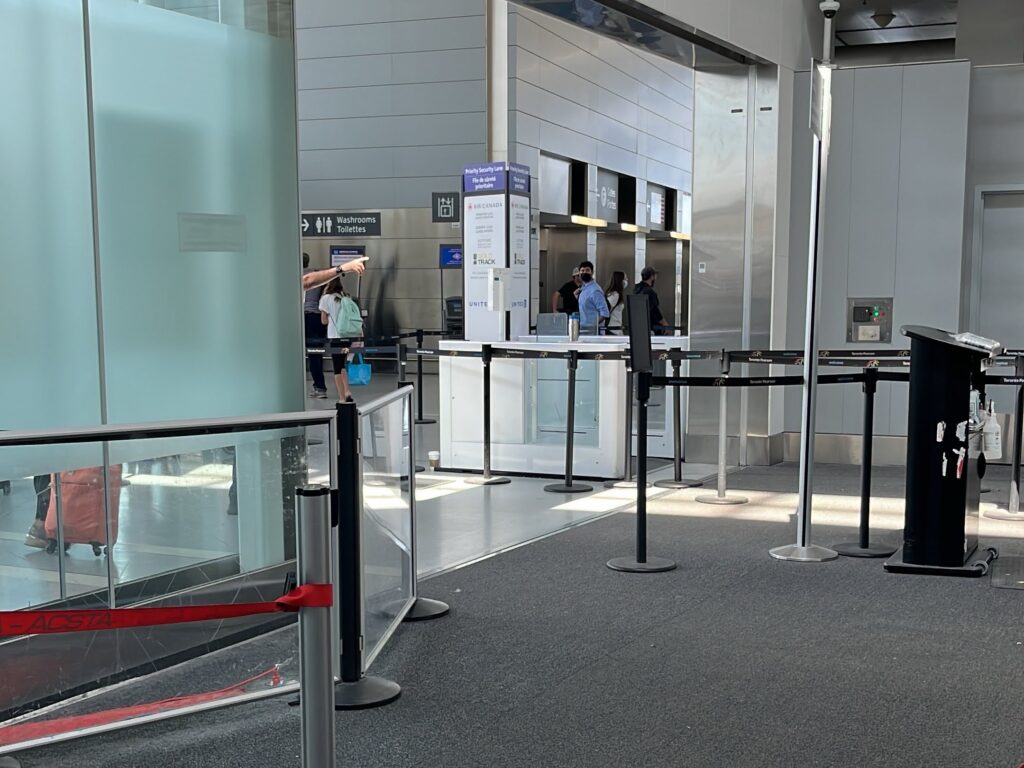
Free Flow is available at YYZ T1, YUL, and YVR
Why This Matters
On the surface, removing a kiosk stop might not seem like a significant change. In practice, however, every checkpoint adds time and uncertainty, particularly during shorter connections.
By allowing airlines to submit passenger information electronically ahead of arrival, the CBSA can eliminate an unnecessary step for transit passengers while continuing to screen travellers behind the scenes.
The change should also make Canadian airports slightly more competitive as international connecting hubs. Airports like Amsterdam, Singapore, and Doha have long offered streamlined airside transfers, and reducing friction for connecting passengers is an important part of attracting additional international traffic.
Takeaway
This isn’t a revolutionary change, but it is a sensible one.
If you’ve connected internationally through Canada before, there’s a good chance you’ve wondered why you still had to stop at a CBSA kiosk despite never entering the country. The biggest change isn’t that reporting to the CBSA has stopped; it’s that the airline now reports the required passenger information electronically on your behalf, eliminating the need for an in-person stop before proceeding to the departure gate.
For most passengers, the time savings will likely only amount to a few minutes. Still, removing an unnecessary checkpoint is a welcome improvement, particularly as Canadian airports continue to compete for international connecting traffic.
Featured Image Credit: Aéroports de Montréal

1 comment
What flights would this help? It’s not passengers to and from the U.S. I can think that it helps Mexican passengers. Australia to the UK could conceivably connect at YVR. Perhaps a few passengers between Japan or Taiwan traveling to/from Europe might choose flying through Canada.